
What are the main types of motorcycle riding gear?
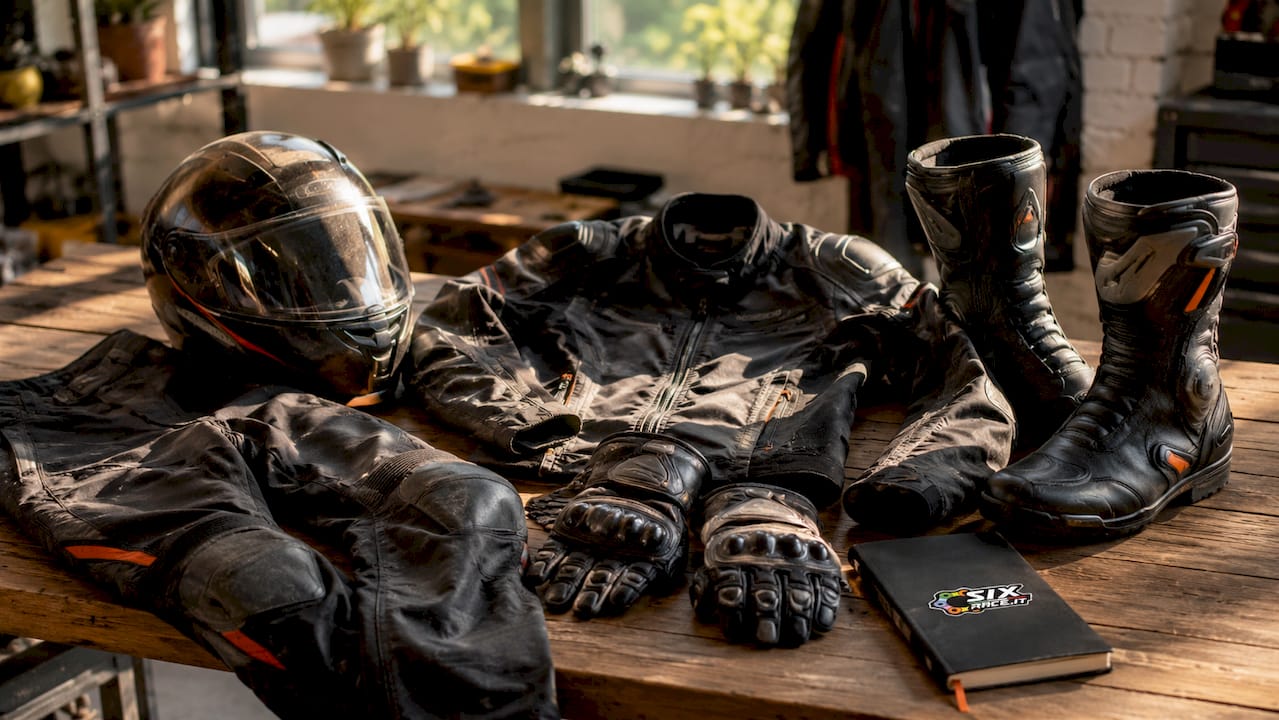
Motorcycle riding gear falls into six core categories: helmets, jackets, trousers, gloves, boots, and protective armour, with airbag systems increasingly joining that list as a seventh layer of protection. Each category carries its own safety certification framework, and understanding those frameworks is what separates a well-protected rider from one who simply looks the part.
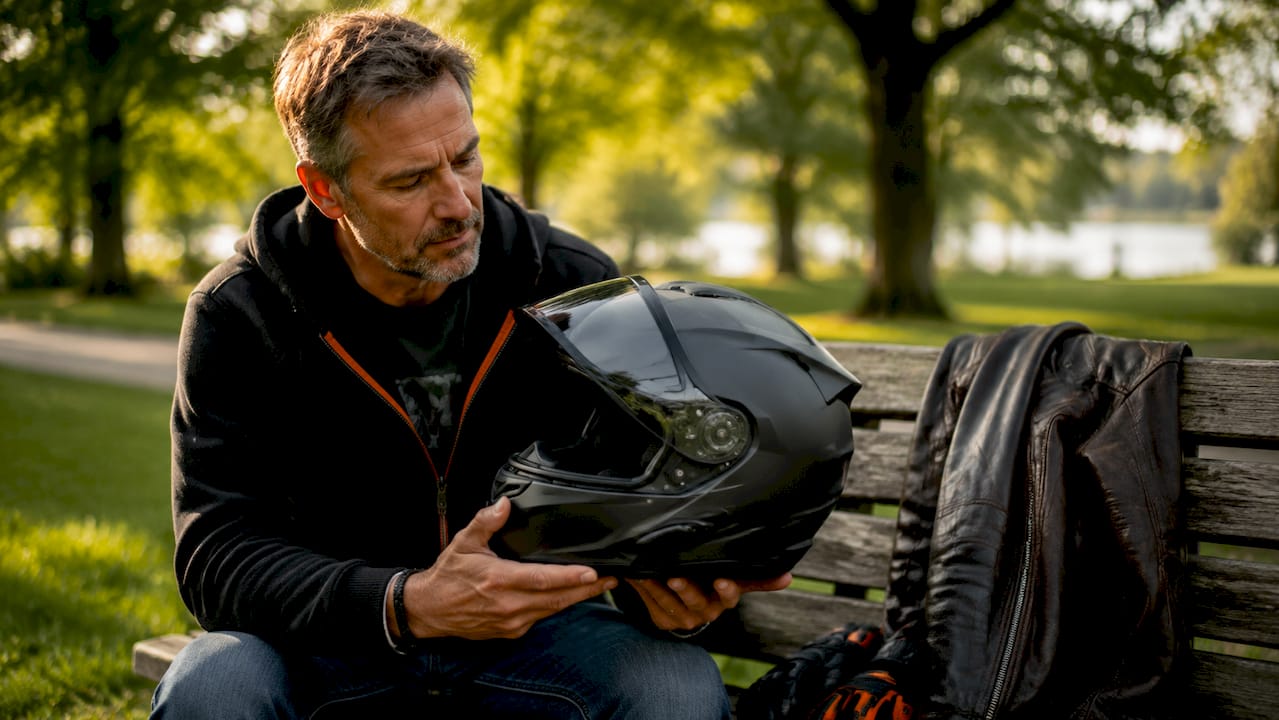
The EN 17092 standard replaced the older EN 13595 to give riders a more realistic set of protection classes, ranging from AAA at the top through AA and A down to B. For helmets, the current benchmark across Central Europe is ECE 22.06, which introduced oblique impact testing and tougher visor standards that previous versions did not require. Gear that carries neither of these marks is, quite simply, not up to 2024 standards.
Here is a quick-reference summary of the core gear categories:
- Helmet: legally required across Central Europe; must meet ECE 22.06 as of 2024
- Jacket: leather or textile; CE-rated under EN 17092 (AAA, AA, A, or B)
- Trousers: standalone or suit lower half; CE-rated with knee and hip armour
- Gloves: summer, winter, racing, or touring; CE-certified for abrasion and impact
- Boots: ankle support, abrasion resistance, and transverse rigidity are the key criteria
- Protective armour: CE Level 1 or Level 2 inserts for shoulders, elbows, knees, hips, and back
- Airbag systems: electronic or mechanical; integrated into jackets or worn as standalone vests
Selecting gear suited to your riding style and the Central European climate matters as much as the certification label. A touring rider covering long distances across Austria or the Czech Republic in October needs different priorities from a summer commuter in Milan.
Table of Contents
- 1. Helmets: which type and standard should you choose?
- 2. Protective jackets, trousers, and suits: what do the CE classes mean?
- 3. Gloves and boots: protection features and styles compared
- 4. Protective armour and airbag systems: how they work together
- 5. Choosing motorcycle gear for safety and comfort in Central Europe
- Sixrace: your source for certified motorcycle gear and accessories
- Key takeaways
1. Helmets: which type and standard should you choose?
The helmet is the single piece of gear where there is no room for compromise, and the ECE 22.06 standard is the reference point every rider in Central Europe should know. From January 2024, helmet manufacturers have been able to gain approval for new designs under ECE R22-06, which tests oblique impacts and applies higher visor stress loads than the older 22.05 standard. SHARP, the UK government’s helmet safety programme, recommends choosing an ECE R22-06 approved helmet over an older 22.05 model wherever you have the option.
Helmet styles explained
- Full-face: the most protective option, covering chin, jaw, and face entirely; marked “P” on the approval label
- Modular (flip-front): converts between full-face and open configurations; must carry a “PJ” marking under ECE 22.06 to confirm certification in both positions
- Open-face (jet): covers the skull and sides but leaves the face exposed; marked “J”; popular for urban riding but offers less facial protection
- Off-road/motocross: designed for dirt and adventure riding with a peak visor and chin guard; typically not road-legal without an additional visor
The “PJ” marking on a modular helmet is worth looking for specifically. It confirms the helmet has been tested and approved in both the open and closed configurations, not just one.
Pro Tip: Never buy a helmet on price alone. A helmet that fits poorly will shift during a crash, reducing the protection the shell provides. Try it on for at least ten minutes before purchasing, and prioritise the ECE 22.06 certification mark over any other feature.
SHARP ratings, which score helmets from one to five stars, offer an independent layer of guidance on top of the legal minimum. A five-star SHARP rating alongside ECE 22.06 approval is the strongest combination available to riders today.
2. Protective jackets, trousers, and suits: what do the CE classes mean?
Riding jackets and trousers are classified under the EN 17092 standard, which replaced EN 13595 to provide a more practical framework for road riders. The four main classes are:
| CE class | Protection level | Typical use case | Comfort trade-off |
|---|---|---|---|
| AAA | Highest abrasion and impact resistance | Track and high-speed road riding | Less flexible; heavier |
| AA | High protection with good wearability | Touring, commuting, sport riding | Good balance for daily use |
| A | Basic road protection | Urban commuting, short trips | Lighter and more comfortable |
| B | Abrasion resistance only; no impact protection | Casual or low-speed use | Most comfortable |
Class AA certified gear strikes the best balance between protection and comfort for most road riders. Class AAA can feel restrictive for long days in the saddle, while class A remains a reasonable choice for urban commuting at lower speeds.
Leather vs textile: which material suits you?
Leather jackets offer excellent abrasion resistance and have a long track record in motorcycle sport. They tend to be heavier and less adaptable to changing weather, which is a real consideration in Central Europe where temperatures can swing dramatically between seasons. Textile jackets are lighter, often include removable thermal liners and waterproof membranes, and adapt far more readily to the variable conditions a touring rider encounters crossing from Germany into the Alps. For riders who want a single jacket that works across spring, summer, and autumn, textile is usually the practical choice.
Trousers follow the same CE classification system. Riding jeans reinforced with aramid fibres such as Kevlar should hold at least a CE A rating for road and urban use; AA or AAA provides meaningfully better abrasion resistance for faster riding. Sixrace carries motorcycle trousers across the full range of CE classes, matched by make and model where relevant.
- Leather: superior abrasion resistance; less weather versatile
- Textile: waterproof options; removable liners; better ventilation
- Aramid-reinforced jeans: urban-friendly appearance; CE A minimum for road use
- One-piece suits: maximum protection for track days; less practical for touring
3. Gloves and boots: protection features and styles compared
Motorcycle gloves
Gloves are the piece of gear riders most often underestimate. Your hands instinctively go out first in a fall, and without CE-certified gloves that balance abrasion resistance with impact protection, the consequences can be severe. Knuckle protection (marked “KP” on certified gloves) is a specific feature that reduces injury from direct impact, not just sliding contact.
The four main glove styles each suit different conditions:
- Summer gloves: short cuff, perforated leather or mesh; prioritise ventilation and dexterity
- Winter gloves: insulated, waterproof, often with longer gauntlet cuffs to seal against jacket sleeves
- Racing gloves: reinforced palm, carbon knuckle guards, tight fit for maximum feel; less suited to cold weather
- Touring gloves: all-season versatility, waterproof membranes, longer cuffs; the most practical choice for Central European touring
Fit is critical. A glove that is too large reduces throttle feel and can bunch up during a crash, shifting the protective panels away from where they are needed. Sixrace stocks motorcycle gloves from brands including Gaerne and others across the full range of riding styles.
Motorcycle boots
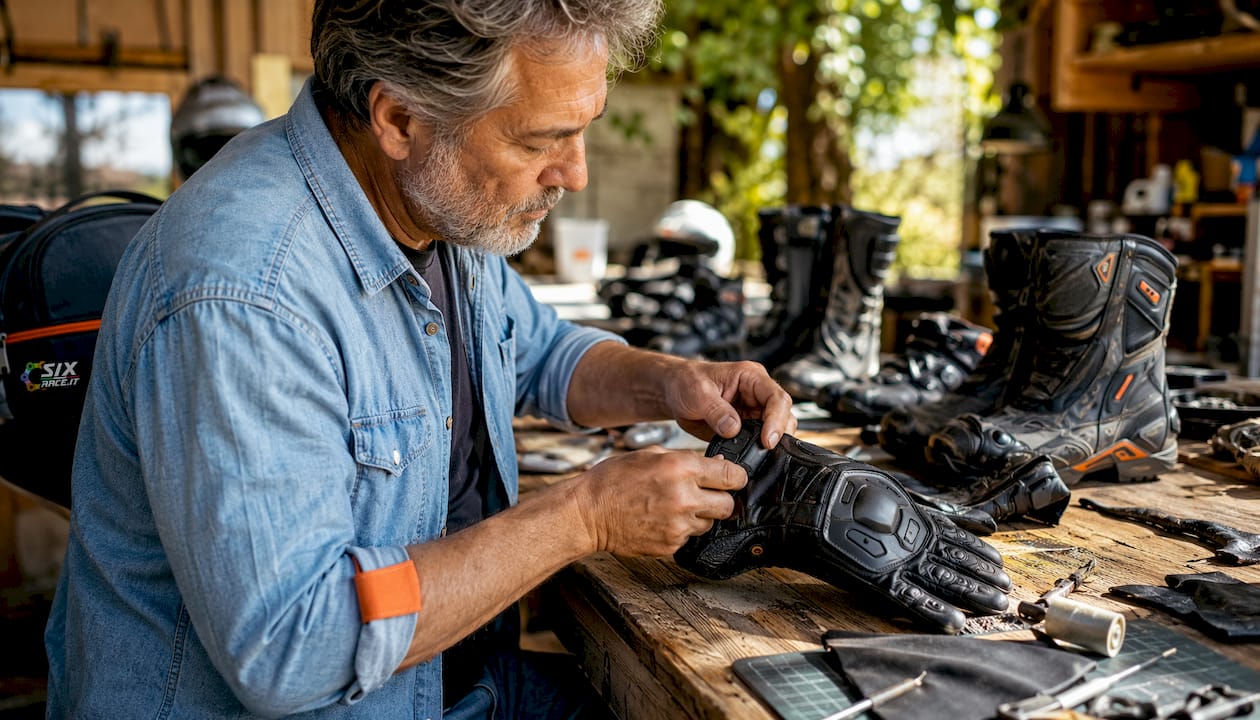
Motorcycle boots must provide three things that ordinary footwear cannot: ankle support to resist rotation in a crash, abrasion resistance across the toe box and heel, and transverse rigidity to protect the foot from crushing if the motorcycle falls onto it. A secure fastening system, whether buckles, laces, or a zip with a storm flap, keeps the boot in place during impact rather than being pulled off.
Boot styles range from short urban boots that resemble everyday footwear to tall adventure boots designed for mixed terrain:
- Urban/commuter boots: low profile, CE-rated, practical for walking; suit city riders
- Touring boots: mid-height, waterproof, comfortable for all-day wear; popular across Central Europe
- Adventure/off-road boots: tall shaft, reinforced shin plate, aggressive sole; suited to gravel and trail riding
- Racing boots: maximum ankle and shin protection; not designed for walking
Gaerne, one of the brands available through Sixrace, produces boots across the touring and off-road categories with CE certification built in. Browse the boots range to match footwear to your riding style.
4. Protective armour and airbag systems: how they work together
CE Level 1 vs Level 2 armour
Armour inserts sit inside pockets built into jackets and trousers at the shoulders, elbows, knees, hips, and back. CE Level 1 protectors meet the basic impact absorption requirement; CE Level 2 protectors absorb significantly more force and are the standard recommended for any rider doing regular road miles. Many jackets ship with Level 1 inserts as standard, but upgrading to Level 2 protectors is straightforward and does not require replacing the jacket itself. The improvement in shock absorption is meaningful, particularly for back protectors where the spine has no secondary protection.
Pro Tip: Check the armour pocket dimensions in your jacket before buying replacement protectors. Level 2 inserts are often slightly thicker, and not every jacket pocket accommodates them without modification.
Standalone back protectors worn as a vest or brace under the jacket are worth considering if your jacket’s back pocket is shallow or the supplied insert is thin.
Airbag systems
Modern airbag gear integrates with CE-rated armour rather than replacing it. Electronic systems use sensors to detect a crash and inflate within milliseconds, cushioning the neck, chest, and hips. Mechanical systems, tethered to the motorcycle, inflate when the rider separates from the bike. Both types are now available in jacket-integrated and standalone vest formats, covering road, touring, and adventure riding styles.
Visibility and reflective gear
Reflective strips and high-visibility panels on jackets and trousers reduce accident risk in low-light conditions, particularly relevant for commuters riding before dawn or after dusk in Central European winters. Many textile jackets include reflective piping as standard; riders who prefer darker gear can add adhesive reflective strips or wear a high-visibility vest over their jacket.
- CE Level 1 armour: meets basic impact standard; often factory-fitted
- CE Level 2 armour: higher shock absorption; recommended for regular road use
- Electronic airbag: sensor-triggered; works independently of the motorcycle
- Mechanical airbag: tether-activated; simpler and lower cost
- Reflective panels: passive visibility aid; no certification required but strongly advised
5. Choosing motorcycle gear for safety and comfort in Central Europe
The Central European climate creates a genuine challenge for gear selection. Riders in Germany, Austria, Poland, or the Czech Republic face cold, wet springs, warm summers, and unpredictable autumns, often within a single touring weekend. The practical answer is a layering system: a CE AA or AAA rated textile jacket with a removable thermal liner and waterproof membrane covers the majority of conditions without requiring multiple jackets.
Experts consistently advise prioritising correct CE certification and proper fit over spending on premium branding. Beginners in particular tend to focus on price, but a well-fitted CE AA jacket at a mid-range price point protects better than an expensive jacket that gaps at the shoulders or rides up when seated. Uncomfortable gear is a distraction, and distraction on the road carries its own risk.
Practical tips for gear maintenance and longevity
- Inspect armour inserts every season; replace any cracked or deformed protectors immediately
- Clean leather gear with a dedicated conditioner to prevent cracking and maintain abrasion resistance
- Wash textile jackets according to the manufacturer’s instructions; avoid tumble drying waterproof membranes
- Check helmet shell and liner annually; replace any helmet that has sustained an impact, even if damage is not visible
- Store gear away from direct sunlight and heat, which degrade both textile fibres and foam padding over time
- Test boot fastening systems before each ride; worn buckles or frayed laces reduce retention in a crash
Gear from brands such as Acerbis, available through Sixrace, is designed with Central European riding conditions in mind, covering off-road and adventure categories where seasonal adaptability matters most.
Safety note: Certified gear reduces injury severity in crashes. The combination of an ECE 22.06 helmet, CE AA or AAA jacket and trousers, CE-certified gloves with knuckle protection, and ankle-supporting boots addresses the most common injury points in motorcycle accidents.
A motorcycle UV cap worn under an open-face helmet adds sun protection on long summer days, a small addition that matters on multi-day touring routes through Central Europe.
Sixrace: your source for certified motorcycle gear and accessories
Riders who have worked through the certification landscape described in this guide know exactly what they need. The harder part is finding it all in one place, matched to your specific motorcycle, at a competitive price.

Sixrace is a specialist European motorcycle retailer stocking gear and accessories from Evotech Performance, Acerbis, Gaerne, HP Corse, and dozens of other established manufacturers, with products matched by make, model, and year so compatibility is never a guessing game. Whether you are sourcing CE AA textile jackets for Central European touring, Level 2 armour upgrades, or Evotech Performance accessories for your specific bike, the catalogue is organised to get you to the right product without wading through irrelevant options. Sixrace ships across Europe with tracked delivery and multilingual support. Claim your reserved discount and browse the full range of motorcycle accessories at Sixrace today.
Key takeaways
Certified gear matched to your riding style and the Central European climate is the most effective combination for rider safety, with CE AA or ECE 22.06 certification as the minimum standard worth accepting.
| Point | Details |
|---|---|
| ECE 22.06 is the current helmet standard | Choose helmets marked ECE R22-06; modular helmets need the “PJ” marking for dual-position certification. |
| EN 17092 replaced EN 13595 | CE classes AAA, AA, A, and B give riders a realistic framework; AA suits most road and touring use. |
| Level 2 armour upgrades existing gear | Replacing Level 1 inserts with Level 2 protectors improves impact absorption without buying a new jacket. |
| Fit matters as much as certification | Poorly fitted gear shifts in a crash, reducing protection; comfort also reduces rider distraction on the road. |
| Sixrace stocks certified gear across categories | Brands including Gaerne, Acerbis, and Evotech Performance are available with model-matched compatibility checks. |
 Italiano
 Deutsch
 Français
 Español
 English
 Polski