
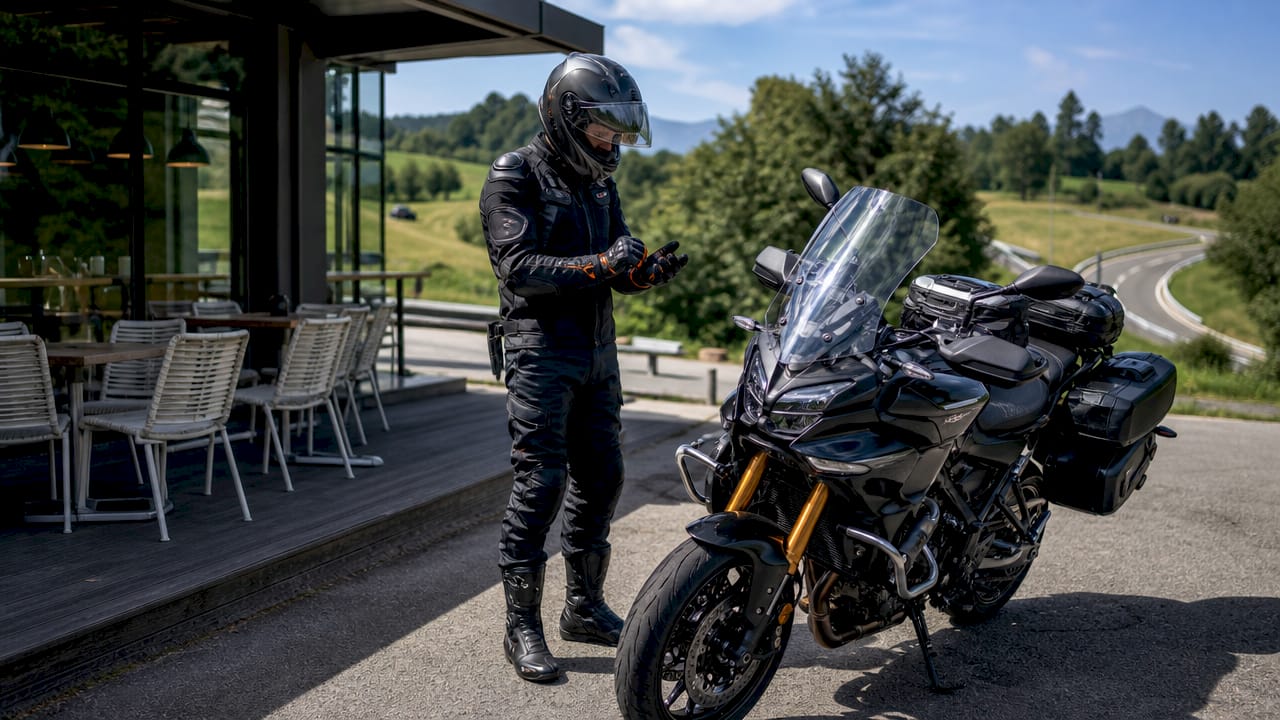
A motorcycle protection kit is defined as a complete system of certified safety gear and maintenance products designed to protect riders from injury and protect bikes from mechanical damage. The term “protection kit” is widely used in retail, but the recognized industry term is personal protective equipment (PPE) for rider gear, combined with corrosion and maintenance products for the bike itself. Understanding both sides of this system is the foundation of safe riding in Europe. Certified helmet use alone reduces rider fatalities by 37% and brain injuries by 67%. That single statistic shows how much a properly assembled protection kit can change the outcome of a crash.
What is a motorcycle protection kit?
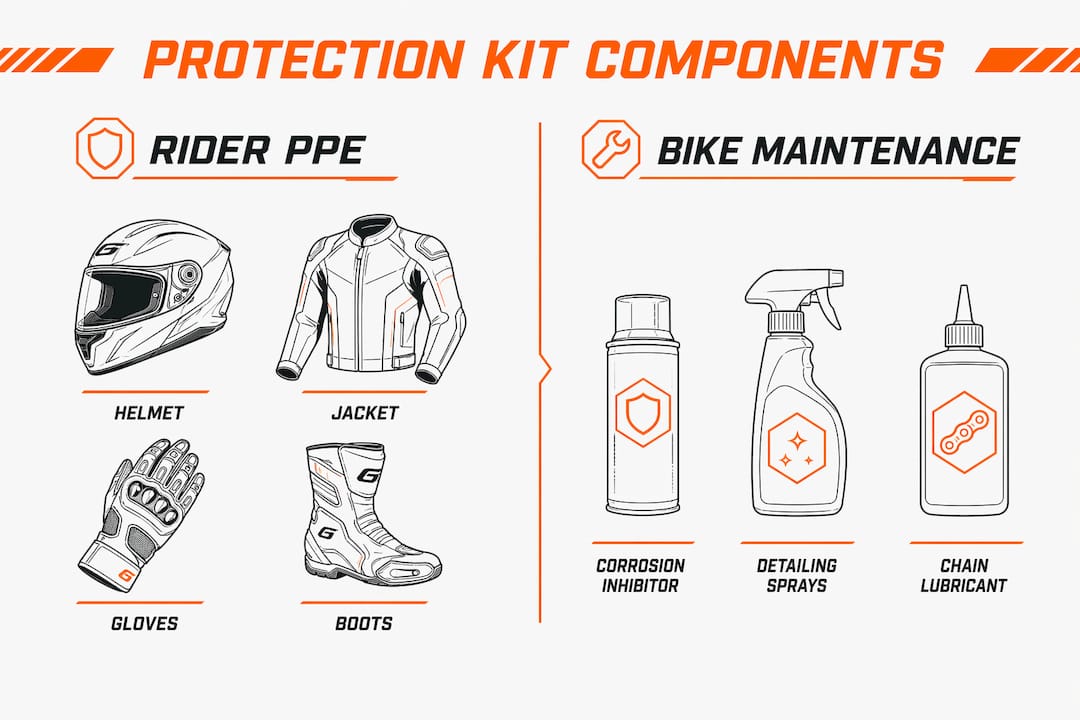
A motorcycle protection kit covers two distinct categories: rider PPE and bike maintenance products. Rider PPE includes every piece of gear worn on the body, from helmet to boots. Bike maintenance products include corrosion inhibitors, cleaning kits, and surface treatments that preserve the motorcycle’s mechanical integrity. Both categories work together. A rider who wears certified armor but neglects bike maintenance faces a different set of risks, including brake failure from corrosion or reduced visibility from a dirty visor.
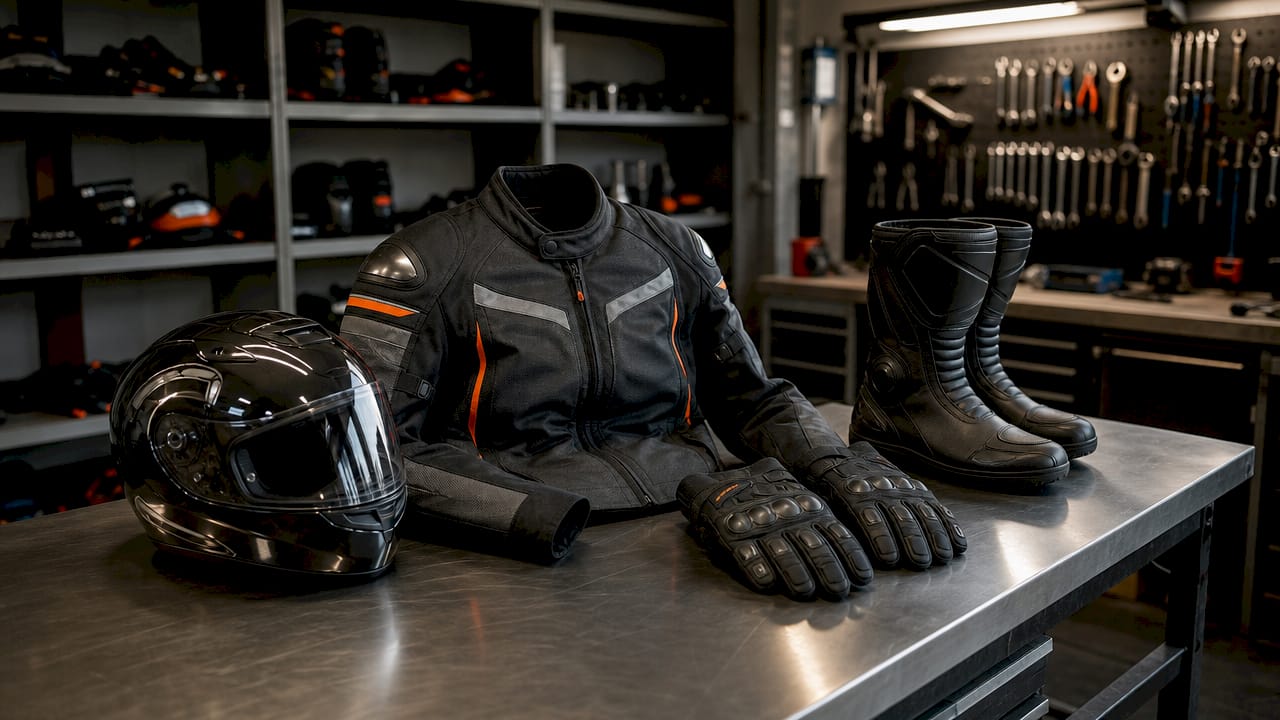
The kit concept matters because protection is only as strong as its weakest point. A jacket with CE-rated armor means little if the rider wears sneakers and no gloves. Exposure gaps between gear pieces are a leading cause of preventable injuries during slides. Treating protection as a complete system, rather than a collection of individual items, is the correct approach.
What components make up a complete motorcycle protection kit?
A full rider protection kit includes five core items, each with a specific function.
- Helmet: The single most critical item. Certified helmets meeting ECE 22.06 or equivalent standards protect against head trauma and are legally mandatory across Europe.
- Jacket with CE armor: A riding jacket must contain CE EN-1621 certified armor at the shoulders, elbows, and back. Abrasion-resistant materials like Cordura or leather add a second layer of defense.
- Gloves: Gauntlet-style gloves extend over the jacket sleeve, eliminating the gap at the wrist. Short cuff gloves leave that zone exposed.
- Pants with armor: Riding pants with CE-rated knee and hip armor complete the lower body coverage. Many jackets and pants include a zipper connection to prevent separation during a crash.
- Boots: Motorcycle-specific boots protect the ankle, heel, and shin. Standard footwear provides no meaningful impact protection.
Beyond rider gear, a complete kit also includes bike protection products. Corrosion inhibitors, detailing sprays, and cleaning kits fall into this category. Professional motorcycle detailing also serves as a maintenance check, allowing early detection of mechanical wear before it becomes a safety issue.
Pro Tip: When assembling your kit, start with the helmet and work outward. Every other item should connect or overlap with the next to eliminate exposed skin zones.
How do certification standards affect safety gear effectiveness?
Certification is the single most reliable indicator of gear effectiveness. Appearance tells you nothing about protection. A jacket can look like serious riding gear and still fail to absorb impact energy if it lacks certified armor inserts.
CE EN-1621 certification is the European standard for motorcycle armor. It defines two protection levels. Level 1 armor absorbs a transmitted force of no more than 35 kN on average. Level 2 armor reduces that to 20 kN, making it the preferred choice for high-speed riding. Back protectors certified to EN-1621-2 Level 2 offer the strongest protection for the spine.
Helmet standards follow a separate certification path. ECE 22.06 is the current European regulation, replacing the older ECE 22.05. The newer standard includes more rigorous oblique impact testing, which better reflects real-world crash dynamics. In the UK, helmet use is legally mandated with fines up to £500 for non-compliance. The rest of Europe enforces similar requirements under national road traffic laws.
The most common mistake riders make is buying gear based on style rather than certification level. Fashion-grade jackets and pants with decorative padding provide no verified protection. Always check for the CE label and the specific EN standard number before purchasing.
Abrasion resistance is the second key metric. Materials are rated in seconds of contact with a grinding surface before failure. Leather at full thickness typically outperforms textile at equivalent weight, but modern Cordura fabrics with high denier counts perform well at lower price points. The key is to verify the abrasion rating, not assume it based on material type.
What is motorcycle corrosion protection and how does it relate to a protection kit?
Motorcycle corrosion protection is the practice of applying chemical treatments to metal, electrical, and painted surfaces to prevent rust and degradation caused by moisture, road salt, and environmental exposure. European riders face particularly aggressive corrosion conditions from october through march, when road salt is applied heavily across most of the continent.
Corrosion affects brake lines, electrical connectors, frame welds, and exhaust systems. Left untreated, it compromises structural integrity and creates safety risks that no amount of rider PPE can offset. This is why corrosion protection belongs in any complete motorcycle protection kit.
| Product type | Primary function | Best application |
|---|---|---|
| Corrosion inhibitor (e.g., ACF-50) | Penetrates and displaces moisture from metal and electrical parts | Frame, connectors, brake components |
| Ceramic coating | Protects painted surfaces and adds gloss | Tank, bodywork, fairings |
| Rust-inhibiting spray | Seals exposed metal against oxidation | Exhaust, bolts, chassis welds |
| Detailing spray | Cleans and adds light surface protection | General exterior surfaces |
Industry-tested corrosion inhibitors like ACF-50 outperform ceramic coatings for protecting metal and electrical parts. Ceramic coatings excel at aesthetic surface protection but do not provide the chemical barrier needed to stop rust on bare metal. Both products serve different roles and should be used together, not as substitutes for each other.
A motorcycle detailing kit typically includes microfiber cloths, pH-neutral cleaners, dedicated wheel brushes, and surface protectants. Detailing kits with soft bristle brushes avoid swirl marks on chrome and painted surfaces. This matters because scratched paint exposes bare metal, accelerating the corrosion process the inhibitors are meant to prevent.
Pro Tip: Apply a corrosion inhibitor like ACF-50 at the start of winter and again in early spring. Focus on electrical connectors, brake caliper bolts, and any area where two different metals meet, since those junctions corrode fastest.
How to properly wear and coordinate motorcycle protection gear
Wearing certified gear incorrectly produces the same result as wearing no gear at all. Fitment and coordination between pieces determine whether protection holds during a crash.
- Start with the base layer. A moisture-wicking base layer keeps the skin dry and reduces friction between skin and gear during a slide. It also improves comfort on long rides, which means riders are less likely to remove gear due to heat.
- Put on pants before the jacket. Pants with a jacket zipper connection must be attached before riding. The zipper prevents the jacket from riding up and exposing the lower back and kidneys during a crash.
- Check armor placement. Shoulder, elbow, knee, and hip armor must sit directly over the joint, not shifted to the side. Shifted armor protects the wrong area. Adjust the fit before every ride if the gear has been washed or stored.
- Seal the wrists and ankles. Gauntlet gloves should overlap the jacket sleeve by at least 5 cm. Boots should cover the ankle fully and tuck under the pants leg. These two zones are the most common exposure gaps in otherwise complete kits.
- Inspect gear condition regularly. Gear in poor condition or with compromised fitment increases injury risk even when worn correctly. Check armor for cracks, stitching for separation, and closures for function before each season.
The systemic approach to gear means treating every ride as a reason to wear the full kit. Riders who skip gloves for short trips or wear casual shoes in summer are statistically more likely to sustain hand and foot injuries. Integrated connection zippers and gauntlet gloves exist precisely because partial gear use is a documented injury pattern.
Key takeaways
A motorcycle protection kit is only effective when every component meets certification standards and fits together without exposure gaps.
| Point | Details |
|---|---|
| Certification over appearance | Always verify CE EN-1621 and ECE 22.06 labels before buying gear. |
| Corrosion protection is part of the kit | Apply dedicated inhibitors like ACF-50 to metal and electrical parts, not just ceramic coatings. |
| Seal all exposure gaps | Use gauntlet gloves and jacket-to-pants zippers to eliminate unprotected zones. |
| Inspect gear every season | Cracked armor or failed stitching reduces protection even when gear is worn correctly. |
| Detailing prevents hidden damage | Regular cleaning and surface treatment expose early mechanical wear and slow corrosion. |
Why I think most riders underestimate the kit concept
Most riders I speak with think of protection gear as individual purchases. A helmet here, a jacket there, boots when the budget allows. That mindset is the problem. Protection gear functions as a system, and a system with one weak link fails at that link every time.
The corrosion side is even more overlooked. Riders spend serious money on certified jackets and then let road salt eat through brake line fittings over winter. A corroded brake system is a safety failure that no amount of body armor can compensate for. The rust prevention routine is as much a part of the protection kit as the helmet.
My recommendation for European riders in 2026 is to budget for the full system from the start. Prioritize a certified helmet and CE Level 2 back protector first, since those two items address the highest-consequence injury zones. Then build out the rest of the kit and add a corrosion inhibitor and detailing kit before the first winter. That sequence gives you the best protection per euro spent.
— Matteo
Certified gear and maintenance products at Sixrace
Sixrace carries a carefully organized catalog of certified motorcycle protection gear and maintenance products for European riders.
From CE-certified riding clothing including jackets, pants, gloves, and boots, to protective accessories and maintenance consumables for corrosion prevention and detailing, Sixrace covers both sides of the protection kit. Products are matched by motorcycle make, model, and year, so compatibility checks are straightforward. Brands like Acerbis, Gaerne, and R&G are stocked alongside a full range of cleaning and corrosion treatment products. Whether you are building your first complete kit or replacing worn gear before the season starts, Sixrace offers the full selection in one place with tracked shipping across Europe.
FAQ
What is a motorcycle protection kit?
A motorcycle protection kit is a complete system of certified rider PPE (helmet, jacket, gloves, pants, and boots) combined with bike maintenance products such as corrosion inhibitors and detailing kits. Both components work together to protect the rider and preserve the motorcycle.
What does CE EN-1621 mean on motorcycle armor?
CE EN-1621 is the European certification standard for motorcycle impact protectors. Level 1 armor transmits no more than 35 kN of force on average; Level 2 armor reduces that threshold to 20 kN, offering stronger protection for high-speed riding.
What is motorcycle corrosion protection?
Motorcycle corrosion protection refers to the regular application of chemical inhibitors to metal, electrical, and structural components to prevent rust caused by moisture, road salt, and environmental exposure. Dedicated inhibitors like ACF-50 outperform ceramic coatings for this purpose.
Do I legally need to wear a full protection kit in Europe?
Helmets are legally mandatory across Europe, with fines up to £500 in the UK for non-compliance. Other protective gear such as jackets, gloves, and boots is strongly recommended by safety authorities but is not universally mandated by law in most European countries.
How often should I inspect and replace motorcycle gear?
Inspect gear at the start of each riding season and after any crash, even a minor one. Armor that has absorbed a significant impact should be replaced immediately, since the material compresses permanently and no longer absorbs energy at the certified level.
 Italiano
 Deutsch
 Français
 Español
 English
 Polski