
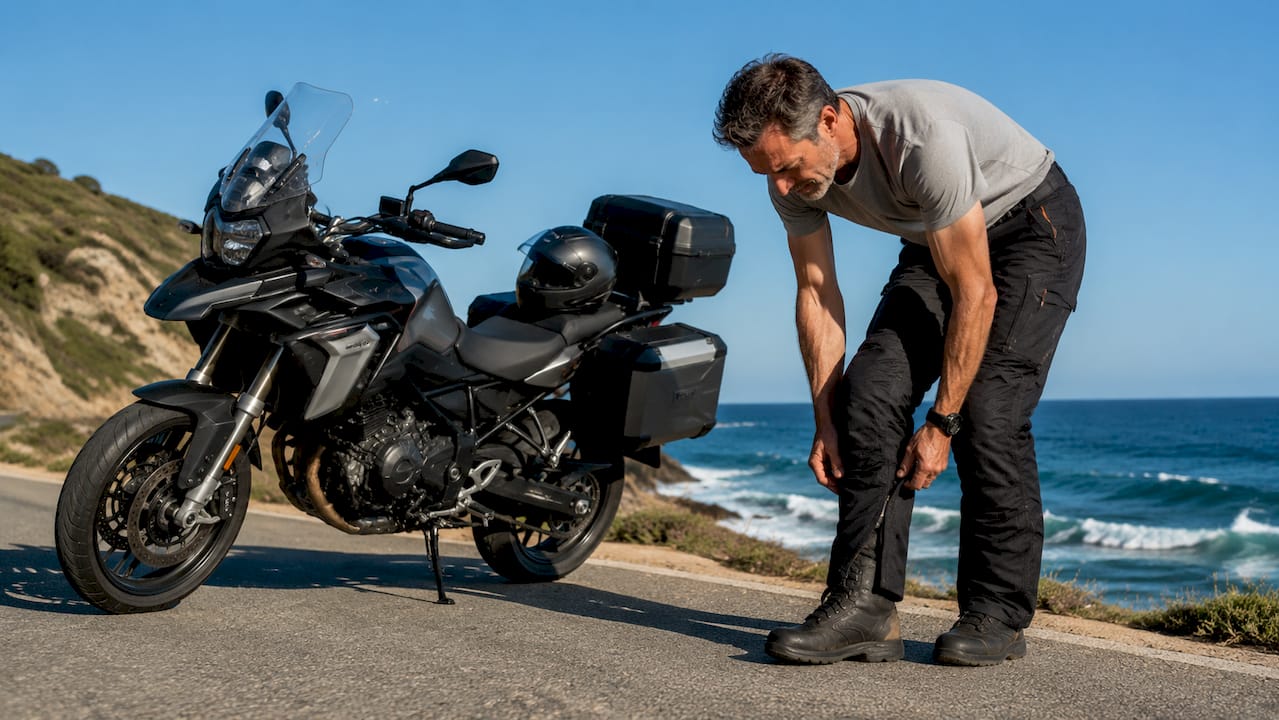
Motorcycle overpants are defined as protective outerwear worn directly over regular clothing, combining abrasion-resistant textiles, CE-certified impact armour, and weatherproof membranes into a single garment. The role of motorcycle overpants in touring is to provide a protective shell that riders can pull on and off quickly, without a full wardrobe change, making consistent gear use far more likely on long-distance trips. Industry analysis confirms that overpants use high-denier textiles like 600D Cordura alongside longitudinal zippers from ankle to hip, enabling fast donning without removing boots. For touring riders who mix riding with stopovers, professional meetings, or varied weather, this combination of protection and convenience is not a luxury. It is the practical standard.
What makes motorcycle overpants essential for long-distance touring?
Motorcycle overpants serve a specific function that standard riding trousers cannot replicate: they layer over whatever you are already wearing. That single feature changes how riders behave on tour.
Protection built into the fabric
The foundation of any quality touring overpant is its textile construction. 600D Cordura fabric delivers high abrasion resistance at a manageable weight, making it the industry benchmark for motorcycle touring pants. The denier rating indicates thread density; higher denier means greater resistance to tearing on tarmac. This matters most at the knees, hips, and seat, where contact with the road is most likely in a slide.
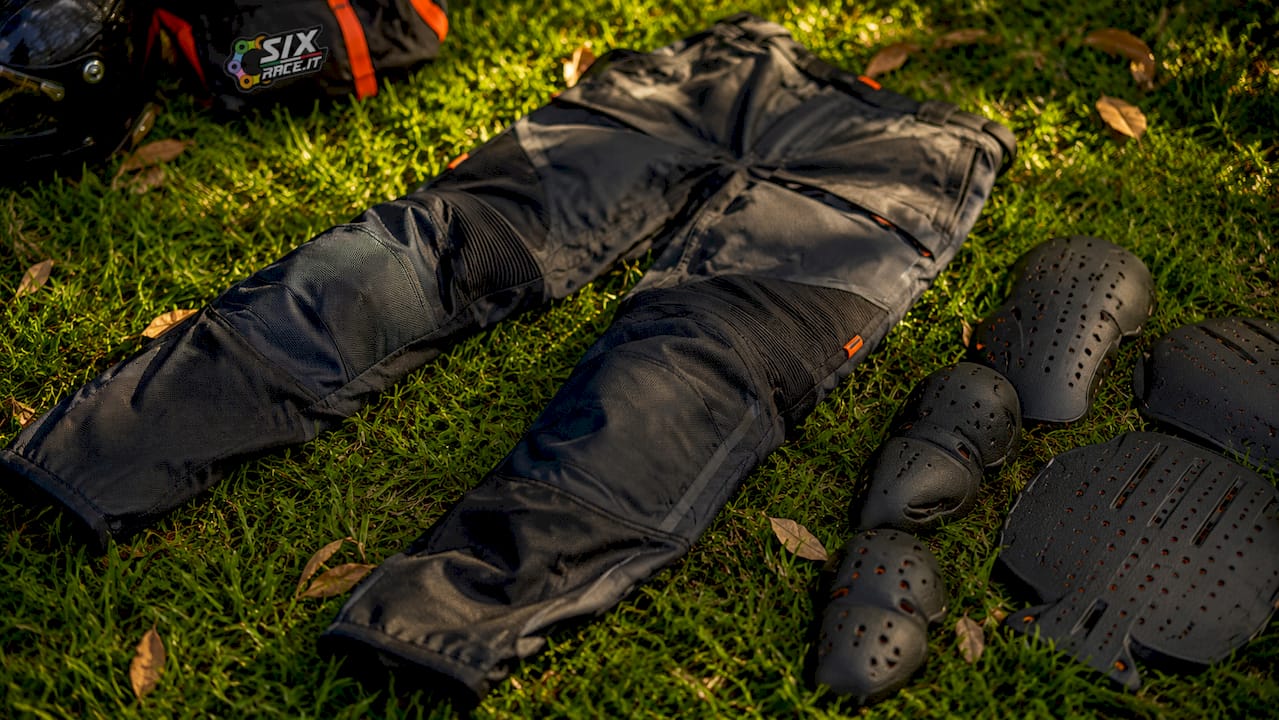
Armour standards and impact zones
CE-certified armour at the knees and hips is the baseline safety requirement for touring. CE Level 2 armour at knees and Level 1 or 2 at hips provides advanced impact absorption at the joints most exposed during a fall. Level 2 certification means the armour absorbs significantly more energy than Level 1 under EN 13158 test conditions. Riders planning multi-day routes should treat CE Level 2 knee protection as non-negotiable, not optional.
Weatherproofing for unpredictable conditions
Long-distance touring means riding through weather you did not plan for. Waterproof membranes such as GORE-TEX and Drystar XF are the leading technologies for keeping water out while allowing moisture vapour to escape. Waterproof membranes rated over 15,000g/m²/24hr manage the moisture balance needed during sustained effort in rain. Without adequate breathability, sweat accumulates inside the garment, reducing comfort and concentration over a long ride.
Ergonomic design for quick transitions
- Longitudinal side zippers run from ankle to hip, allowing the rider to step into overpants without removing boots.
- Over-cut construction provides enough room to layer over jeans, chinos, or suit trousers.
- Adjustable waist and cuff closures keep the garment stable at speed.
- Connecting zips at the jacket hem prevent the overpant from riding up during a slide.
Pro Tip: Always fasten the ankle zips fully before setting off. A loose cuff at motorway speed creates drag and can catch on the footpeg, pulling the garment out of position.
How to choose the best touring motorcycle overpants for protection and comfort
Selecting the right overpants requires balancing certification, fit, and construction quality. The following criteria give you a structured way to evaluate any garment before purchase.
-
Check EN 17092 certification. The EN 17092 safety standard is the European benchmark for motorcycle protective clothing. Any overpant sold for road use should carry this certification. Garments without it offer no verified level of protection.
-
Verify CE armour ratings at knees and hips. CE Level 2 knee armour is the preferred choice for touring. Level 1 hip armour is acceptable, but Level 2 is worth the additional cost on longer routes where fatigue increases fall risk.
-
Assess the fit while seated. Crotch height and length for seated riding must be checked on the bike, not standing in a shop. Tension on the seams when seated accelerates wear and creates gaps in the waterproof membrane over time.
-
Choose laminated 3-layer construction over removable liners. 3-layer laminated construction prevents saturation and heavy waterlogging after extended rain exposure. Removable liners can shift, bunch, and eventually allow water ingress at the seams after repeated washing.
-
Confirm ventilation options. Zippered thigh intakes regulate body temperature on long rides across varying climates. Without them, a waterproof membrane that performs well in rain becomes uncomfortably hot on a dry summer afternoon.
-
Check adjustability at waist and cuffs. Loose over-cut overpants impair aerodynamics and stability above 70 mph. Adjustable closures allow you to tighten the fit for motorway sections and loosen it for urban riding or walking around at a stopover.
Pro Tip: When trying overpants in a shop, sit on a chair and lean forward as if on the bike. If the waistband digs in or the knee armour shifts below the kneecap, the fit is wrong regardless of the size label.
Motorcycle overpants versus other protective pant options for touring
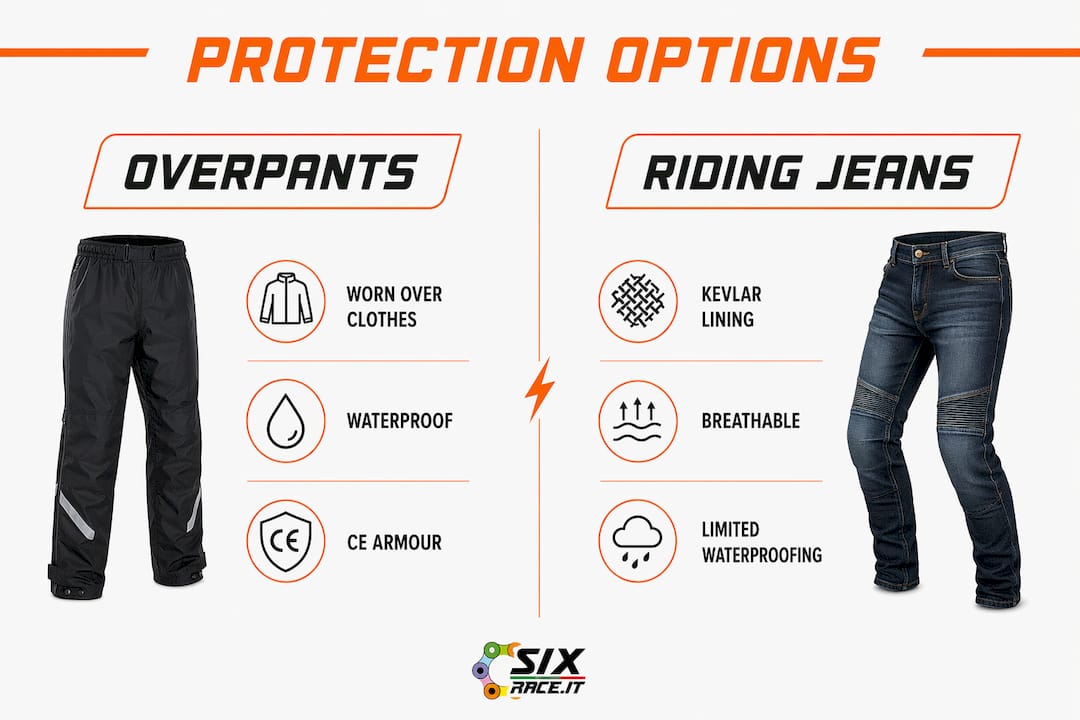
Touring riders have three main categories of lower-body protection to consider. Each serves a different purpose, and understanding the distinctions helps you choose the right tool for the trip.
| Feature | Overpants | Riding jeans | Dedicated riding trousers |
|---|---|---|---|
| Worn over regular clothes | Yes | No | No |
| Full waterproofing available | Yes | Rarely | Yes |
| Quick on/off without boot removal | Yes | No | No |
| CE-certified armour included | Yes | Often Level 1 only | Yes, Level 1 or 2 |
| Suitable for professional environments | Yes, worn over smart trousers | Limited | No |
| Packability for touring | Compact when rolled | Bulky | Bulky |
Overpants function as a secondary outer layer. Their ease of use removes the wardrobe change hurdle, which is the single biggest reason riders skip protection on short legs of a tour. That behavioural benefit is as significant as the physical protection itself.
Riding jeans offer abrasion resistance through Kevlar or Dyneema lining, but most lack a waterproof membrane and require the rider to change trousers entirely at each stop. Dedicated riding trousers provide the highest integrated protection but demand a full wardrobe change, making them impractical for riders attending meetings or dining out mid-tour.
Overpants suit multi-purpose touring best. A rider can wear smart trousers underneath, pull on the overpants at the hotel, and arrive at a restaurant looking presentable without carrying a separate bag of clothes.
Practical tips for using and maintaining motorcycle overpants on tour
Getting the most from your overpants requires correct technique at every stage, from putting them on to washing them after a wet day.
- Fit the overpants while seated on the bike before your first long ride. Armour must sit directly over the knee joint, not above or below it. Seams must have slack in the crotch to avoid tension-related leaks.
- Always wear pant cuffs over the top of your boots. Waterproof overpants worn inside the boot create a funnel that directs rain directly into your socks. Cuffs over boots shed water away from the foot entirely.
- Use the full-length side zippers for every on/off. Forcing the garment on without unzipping stresses the seams and distorts the waterproof membrane at the ankle.
- Reproofing the outer fabric extends membrane performance. Waterproof membranes rely on the outer fabric shedding water rather than absorbing it. When the outer fabric wets out, the membrane still works but breathability drops sharply. A DWR (Durable Water Repellent) spray or wash-in treatment restores the outer layer’s ability to bead water.
- Adapt your layering strategy seasonally. In summer, use the thigh vents fully open and remove any thermal liner. In autumn and winter, close the vents and add a base layer beneath your regular trousers for warmth without bulk.
- Pack overpants in a dry bag or compression sack. Most touring overpants roll to roughly the size of a water bottle. Keeping them in a dedicated dry bag means they are always accessible and dry when you need them.
Pro Tip: After a full day in heavy rain, hang overpants inside out overnight. This allows the inner face fabric to dry fully and prevents the mild odour that builds up when damp gear is packed away immediately.
Key takeaways
Motorcycle overpants are the most practical protective pant option for touring because they combine CE-certified safety, full waterproofing, and the ability to layer over regular clothing without removing boots.
| Point | Details |
|---|---|
| EN 17092 certification is mandatory | Only buy overpants that carry this European safety standard for verified protection. |
| CE Level 2 knee armour is the touring benchmark | Level 2 absorbs significantly more impact energy than Level 1 at the most exposed joint. |
| 3-layer laminated construction outperforms liners | Laminated fabrics resist saturation over hours of rain; removable liners shift and leak. |
| Cuffs over boots prevent the funnel effect | Wearing pant cuffs inside boots directs rain into footwear; cuffs over boots shed it away. |
| Overpants increase consistent gear use | Removing the wardrobe change barrier makes riders more likely to wear protection on every leg of a tour. |
Why overpants changed how I think about touring gear
The first time I rode a full week in mixed weather without a dedicated set of riding trousers, I used a pair of laminated overpants over my regular jeans. What struck me was not the waterproofing, which performed exactly as expected. It was how much more often I actually put the gear on. On previous tours with dedicated riding trousers, I would sometimes skip the full change for a short transfer between hotels. With overpants, that calculation disappeared entirely. Thirty seconds and the zip is done.
The safety compliance argument is the one I now make to every touring rider I speak to. Overpants improve safety compliance by eliminating the hassle of changing into dedicated riding gear. That is not a marketing claim. It reflects a genuine shift in behaviour that I observed in myself and in riders I have ridden with over the years.
My one firm recommendation: do not compromise on the construction. A cheap overpant with a removable liner will feel adequate on a dry day and fail you on day three of a wet tour. Touring riders benefit most from gear combining waterproofness with advanced ventilation, and that combination only holds up in a laminated 3-layer construction. Spend the money once, on the right garment, and it will last you many seasons.
— Matteo
Touring overpants and gear available at Sixrace
Sixrace stocks a carefully selected range of CE-certified motorcycle clothing for touring riders, including overpants built to EN 17092 standards with laminated waterproof membranes and integrated CE Level 2 armour. The catalogue covers products from established brands across road, touring, and adventure categories, with compatibility filtering by make, model, and year to simplify your search.

Sixrace also carries a broad selection of touring accessories and equipment to complement your overpants, from base layers to luggage solutions. Riders across Europe can access competitive pricing and tracked shipping on every order. Use the Sixrace reserved discount to get the best value on your next gear purchase at sixrace.it/discount.
FAQ
What are motorcycle overpants?
Motorcycle overpants are protective trousers worn over regular clothing, featuring abrasion-resistant textiles, CE-certified armour, and waterproof membranes. They are designed for quick on/off use without removing boots.
What safety certification should touring overpants carry?
Touring overpants should carry EN 17092 certification, the European standard for motorcycle protective clothing, with CE Level 2 armour at the knees as the recommended minimum for long-distance riding.
How do I stop rain getting into my boots when wearing overpants?
Always wear the pant cuffs over the outside of your boots. Tucking cuffs inside the boot creates a funnel effect that directs water directly into your footwear.
Are overpants better than riding jeans for touring?
Overpants offer full waterproofing, quick layering over regular clothes, and consistent CE armour coverage. Riding jeans provide abrasion resistance but typically lack waterproofing and require a full trouser change at each stop.
How do I maintain the waterproofing on my overpants?
Apply a DWR spray or wash-in reproofing treatment when the outer fabric starts to absorb water rather than bead it. This restores breathability and keeps the membrane performing correctly over extended rain exposure.
 Italiano
 Deutsch
 Français
 Español
 English
 Polski