
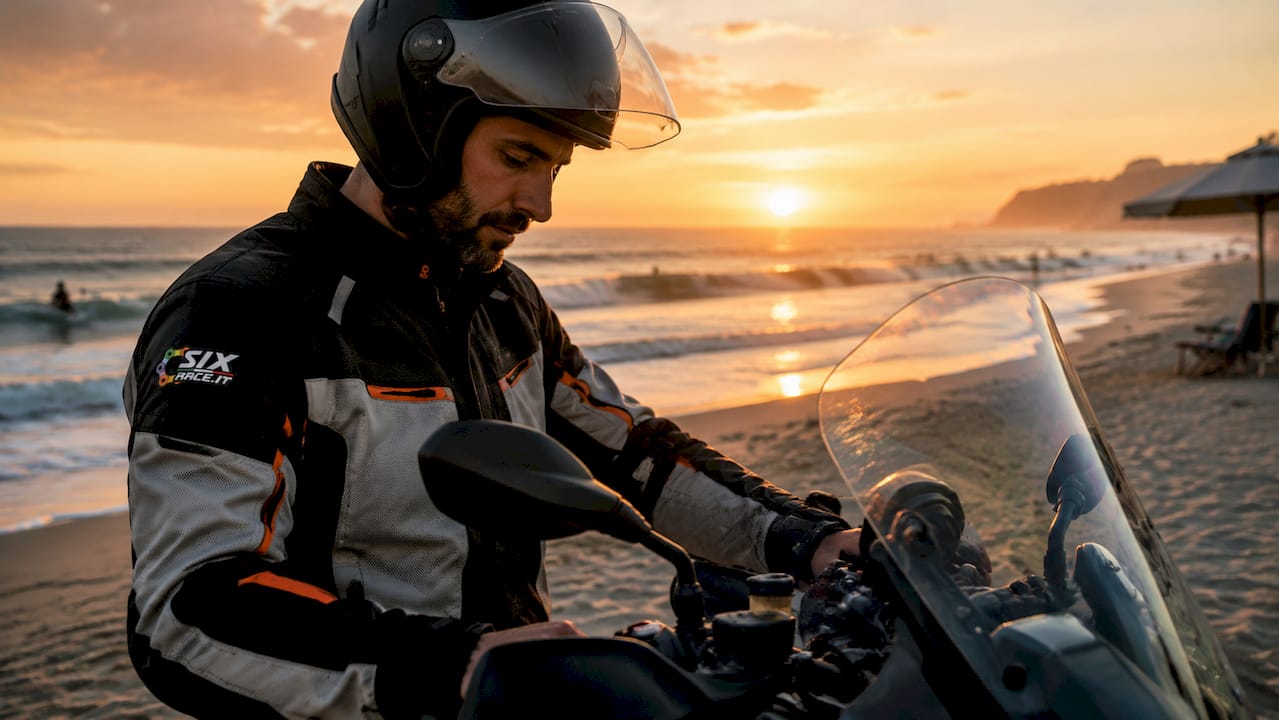
Motorcycle wind protection is defined as the use of aerodynamically designed components, such as windscreens, fairings, and wind deflectors, to redirect airflow away from the rider and reduce wind pressure, turbulence, and fatigue during a ride. These components do not simply block the wind. They manage it, shaping airflow so that it passes over and around the rider rather than striking the chest, neck, and helmet directly. The result is a measurable reduction in physical strain, improved concentration, and greater stability at speed. Understanding what motorcycle wind protection involves, and how to choose it correctly, is the starting point for any rider who wants to cover serious distances in comfort.
What is motorcycle wind protection and how does it work aerodynamically?
Motorcycle wind protection refers to any component that controls the airflow a rider encounters at speed. The primary goal of modern wind protection is to manage airflow so that it reduces helmet turbulence, rather than simply blocking all wind. This distinction matters because a screen that blocks wind completely can create a wall of turbulent air that buffets the helmet and increases noise, making the ride worse, not better.
The correct aerodynamic approach directs air upward and over the rider’s helmet. A well-positioned windscreen creates a pressure zone in front of the rider that lifts the airstream above head height. At motorway speeds, this reduces the constant physical load on the neck and shoulders, which is where most long-distance fatigue originates.
Wind deflectors work on a similar principle but on a smaller scale. They redirect air away from the hands, legs, or lower body without altering the overall aerodynamic profile of the motorcycle. Fairings, by contrast, enclose larger sections of the motorcycle and provide the most complete airflow management, particularly on sport and touring machines.
- Windscreens redirect the main airstream above the rider’s helmet
- Wind deflectors manage localised airflow around hands and legs
- Full fairings enclose the motorcycle’s front end for maximum aerodynamic control
- Belly pans reduce turbulence beneath the engine and improve stability
Pro Tip: If your helmet vibrates or produces a low-frequency roar at speed, the screen is likely directing turbulent air directly at your visor rather than above it. Adjusting screen height by even 20–30mm can resolve this entirely.
What are the material and design considerations for effective wind protection?
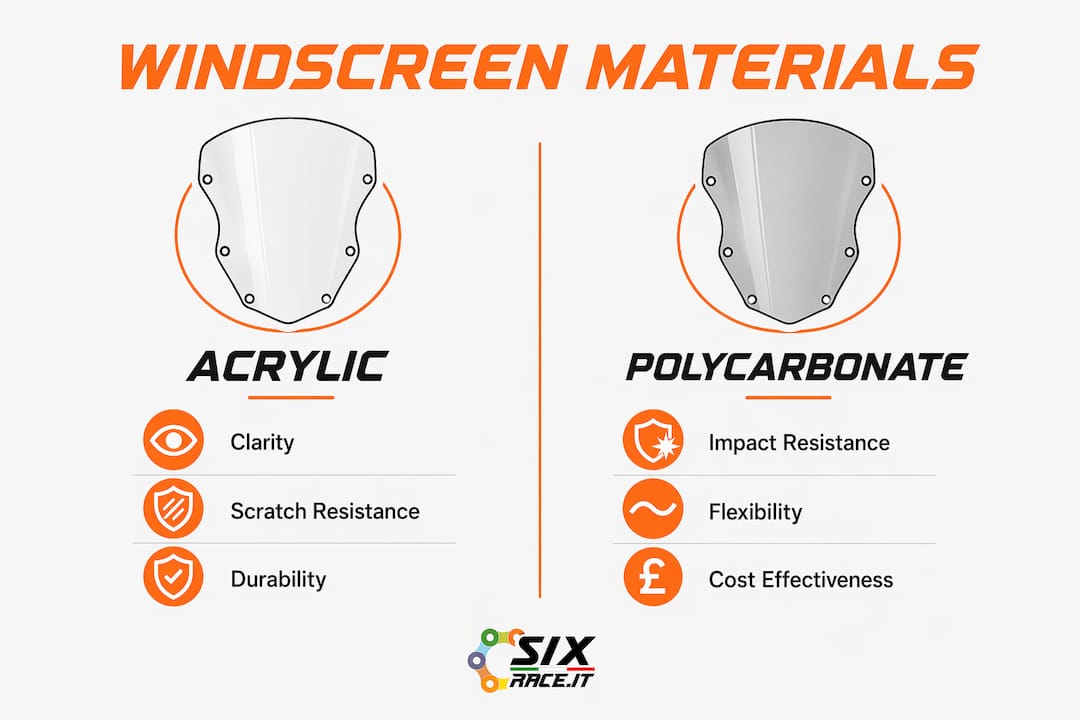
The material a windscreen is made from directly affects its clarity, durability, and long-term performance. The two dominant materials in the industry are Acrylic and Polycarbonate, and each involves a trade-off. Acrylic offers superior optical clarity and scratch resistance, while Polycarbonate is more impact-resistant but more prone to fine surface scratches over time. Riders who prioritise a clear, undistorted view through the screen tend to favour Acrylic. Riders who expect stone strikes or debris impacts tend to choose Polycarbonate.
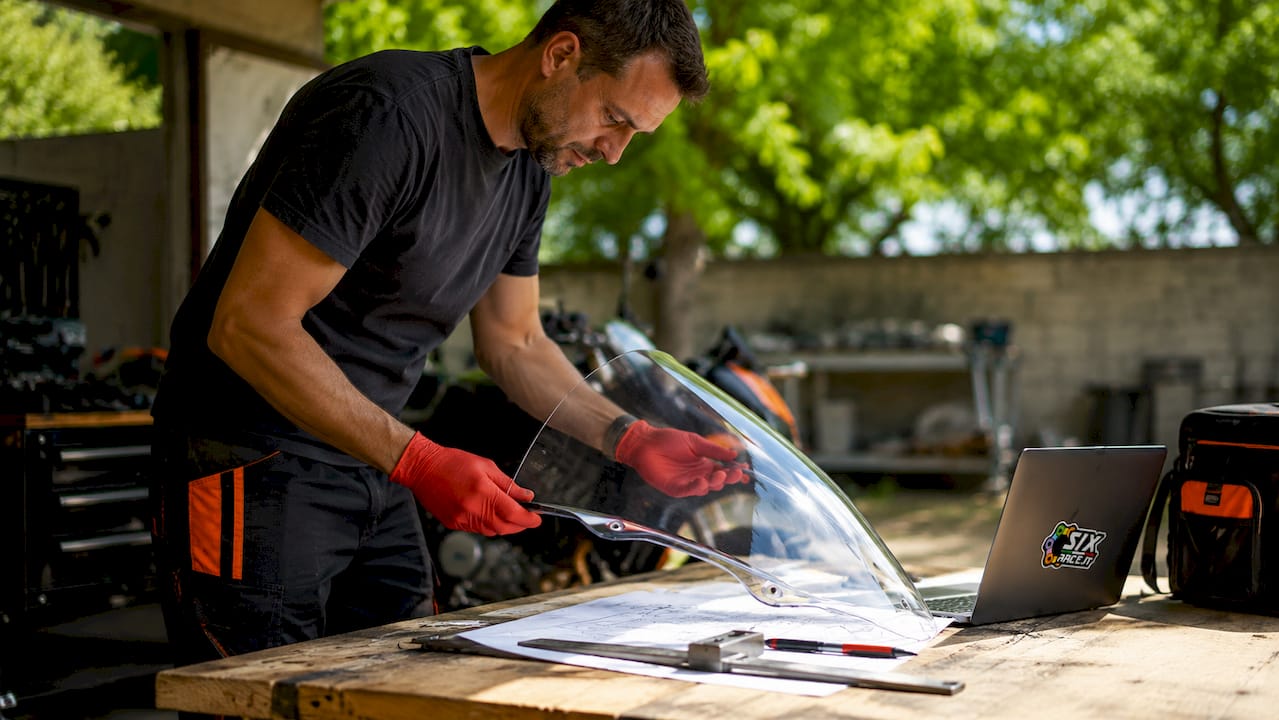
Design factors are equally significant. Screen height is the most critical variable. Improper windscreen height increases turbulence and helmet buffeting, and can make the ride less comfortable than having no screen at all. The ideal height positions the top of the screen at roughly the rider’s nose line or just below the eye line. This allows the rider to look over the screen while the airstream passes smoothly above the helmet.
| Factor | Acrylic | Polycarbonate |
|---|---|---|
| Optical clarity | Excellent | Good |
| Scratch resistance | High | Moderate |
| Impact resistance | Moderate | High |
| Weight | Light | Light |
| Best suited for | Touring, road use | Adventure, off-road |
Screen shape and curvature also influence performance. A flat screen creates a more direct deflection angle, while a curved screen can channel air more smoothly around the rider’s silhouette. Adjustable screens, which allow the rider to alter height or angle without tools, provide the most flexibility across different speeds and conditions.
Pro Tip: Never size a windscreen by what looks proportionate to the motorcycle. Size it by your seated eye line. Sit on the bike in your normal riding position and measure from the top of the headlight to just below your eyes. That is your target screen height.
What are the practical benefits of motorcycle wind protection for riders?
The practical benefits of wind protection extend well beyond simple comfort. Windscreens significantly reduce rider fatigue by shifting airflow from the chest to helmet level, which lessens neck and shoulder strain at speeds above 120 km/h. On a long motorway ride, this difference accumulates over hours and directly affects the rider’s alertness and reaction time.
Physical protection from environmental hazards is equally important. Effective wind protection shields riders from insects, rain, and road debris, which improves concentration and safety during rides. A stone strike to an unprotected chest at 100 km/h is a significant impact. The same strike absorbed by a polycarbonate screen is a minor inconvenience.
The aerodynamic benefits also affect the motorcycle itself. Upgrading to a purpose-designed windscreen can reduce wind pressure on the rider by between 21% and 79%, depending on the model and riding position. That figure reflects a genuine reduction in aerodynamic drag on the rider’s body, which at sustained motorway speeds can contribute to improved fuel efficiency as the engine works against less resistance.
- Reduced physical fatigue from lower wind load on the neck, shoulders, and chest
- Protection from debris, insects, and rain for improved concentration
- Improved motorcycle stability through balanced aerodynamic forces
- Potential fuel efficiency gains at sustained high speeds
- Reduced wind noise inside the helmet, lowering auditory fatigue over long distances
Riders who cover significant distances, whether on touring machines or adventure bikes, consistently report that fitting a correctly sized windscreen is one of the highest-impact comfort upgrades available. The improvement is immediate and requires no adaptation period.
How should riders select and maintain motorcycle wind protection equipment?
Selecting the right wind protection starts with matching the component to the specific motorcycle model and the rider’s physical dimensions. Model-specific and adjustable screens yield the best comfort and least turbulence because they account for the motorcycle’s existing aerodynamic profile. A generic screen fitted to a machine it was not designed for can disrupt airflow in unpredictable ways, particularly in crosswinds. Sixrace organises its catalogue by motorcycle make, model, and year, which makes identifying compatible screens and deflectors straightforward.
The selection process should follow a clear sequence:
- Establish your seated eye line height by measuring from the headlight to just below your eyes while seated in your normal riding position.
- Choose a screen height that sits at or just below that measurement, allowing you to look over the screen rather than through it.
- Select the material based on your primary use: Acrylic for road and touring clarity, Polycarbonate for adventure and off-road durability.
- Check for adjustability if you ride at varied speeds or share the motorcycle with a rider of different height.
- Verify model compatibility using the motorcycle’s make, model, and year to confirm the mounting points align correctly. The importance of year-model fitment cannot be overstated, as even minor production changes between years can affect bracket positions.
Maintenance is straightforward but frequently neglected. Thread-locking compounds on windscreen mounting bolts are essential to prevent loosening from vibration. A bolt that works free at motorway speed can allow the screen to shift or detach entirely. Products such as Loctite applied to mounting threads during installation prevent this reliably. Check mounts at every service interval and after any ride on particularly rough roads.
For optical clarity, clean Acrylic screens with a soft microfibre cloth and a dedicated plastic cleaner. Avoid abrasive cloths or solvent-based products, which cause fine surface scratches that scatter light and reduce visibility. Polycarbonate screens benefit from a UV-protective coating applied annually to prevent yellowing.
Key takeaways
Motorcycle wind protection works by deflecting airflow above the rider rather than blocking it, and selecting the correct screen height relative to the rider’s eye line is the single most important decision in achieving this.
| Point | Details |
|---|---|
| Wind protection deflects, not blocks | Effective screens direct airflow above the helmet to reduce turbulence and buffeting. |
| Screen height is critical | The ideal height sits at or just below the rider’s eye line for smooth airflow over the head. |
| Material choice affects performance | Acrylic gives better clarity; Polycarbonate offers greater impact resistance for off-road use. |
| Adjustable screens suit varied riders | Adjustable designs allow riders to tailor airflow to their height and riding style. |
| Maintenance prevents safety risks | Thread-locking compounds on mounting bolts prevent vibration-induced loosening at speed. |
Why bigger is not always better: a rider’s perspective
The most common mistake I see riders make is choosing the tallest windscreen available in the belief that more coverage equals more protection. The opposite is often true. A screen that sits above the rider’s eye line forces air to strike the helmet directly rather than pass over it. The result is a constant low-frequency buffet that is more exhausting than riding with no screen at all.
The aerodynamic balance of integrated wind protection is genuinely subtle. A well-designed screen does not just reduce wind load on the rider. It also stabilises the motorcycle by managing the pressure distribution across the front end. Improperly designed large-surface screens can cause front-end lift in crosswinds, which is a stability issue that riders rarely attribute to their windscreen.
The maintenance point is one I feel strongly about. Riders spend considerable time choosing the right screen and then never check the mounting bolts again. A screen that rattles at 130 km/h is not just annoying. It is working its way loose. Applying Loctite during installation takes two minutes and eliminates the problem entirely. That is the kind of detail that separates a safe installation from a hazardous one.
For riders considering a touring-focused wind protection setup, the windscreen is only one part of the equation. Combining a correctly sized screen with wind deflectors for the hands and legs creates a layered system that manages airflow across the entire riding position, not just the upper body.
— Matteo
Wind protection accessories available at Sixrace
Sixrace stocks a carefully selected range of windscreens, wind deflectors, and fairings from established manufacturers including Powerbronze, R&G, Acerbis, and Evotech Performance, all matched to specific motorcycle makes, models, and years.

Every product in the Sixrace catalogue is listed with full compatibility data, so you can confirm fitment before purchasing. The range covers road, sport, touring, and adventure motorcycles, with both fixed and adjustable screen options available. Riders looking for quality motorcycle accessories will find screens, deflectors, and fairings organised by category and motorcycle type. For riders focused specifically on bodywork and aerodynamic components, the fairings and plastics section provides a direct route to compatible options. Use the Sixrace discount page to access your reserved price reduction on the full range of wind protection components.
Claim your discount at Sixrace
FAQ
What is the purpose of a motorcycle windscreen?
A motorcycle windscreen directs airflow above the rider’s helmet rather than allowing it to strike the chest and neck directly. This reduces physical fatigue, wind noise, and exposure to debris at speed.
How do I reduce wind buffeting on my motorcycle?
Improper screen height is the leading cause of helmet buffeting. Adjust or replace the screen so its top edge sits at or just below your eye line, allowing air to pass smoothly over your head.
What is the difference between Acrylic and Polycarbonate windscreens?
Acrylic provides superior optical clarity and scratch resistance, making it the preferred choice for road and touring use. Polycarbonate is more impact-resistant and better suited to adventure and off-road riding where stone strikes are more frequent.
Does a larger windscreen always provide better wind protection?
No. Larger screens can destabilise the motorcycle in crosswinds and increase helmet buffeting if the screen height is above the rider’s eye line. The correct size is determined by the rider’s seated eye line, not by the screen’s surface area.
How often should I check my windscreen mounting bolts?
Check mounting bolts at every service interval and after any ride on rough roads. Applying a thread-locking compound such as Loctite during installation prevents vibration-induced loosening and is the most reliable preventive measure available.
 Italiano
 Deutsch
 Français
 Español
 English
 Polski