
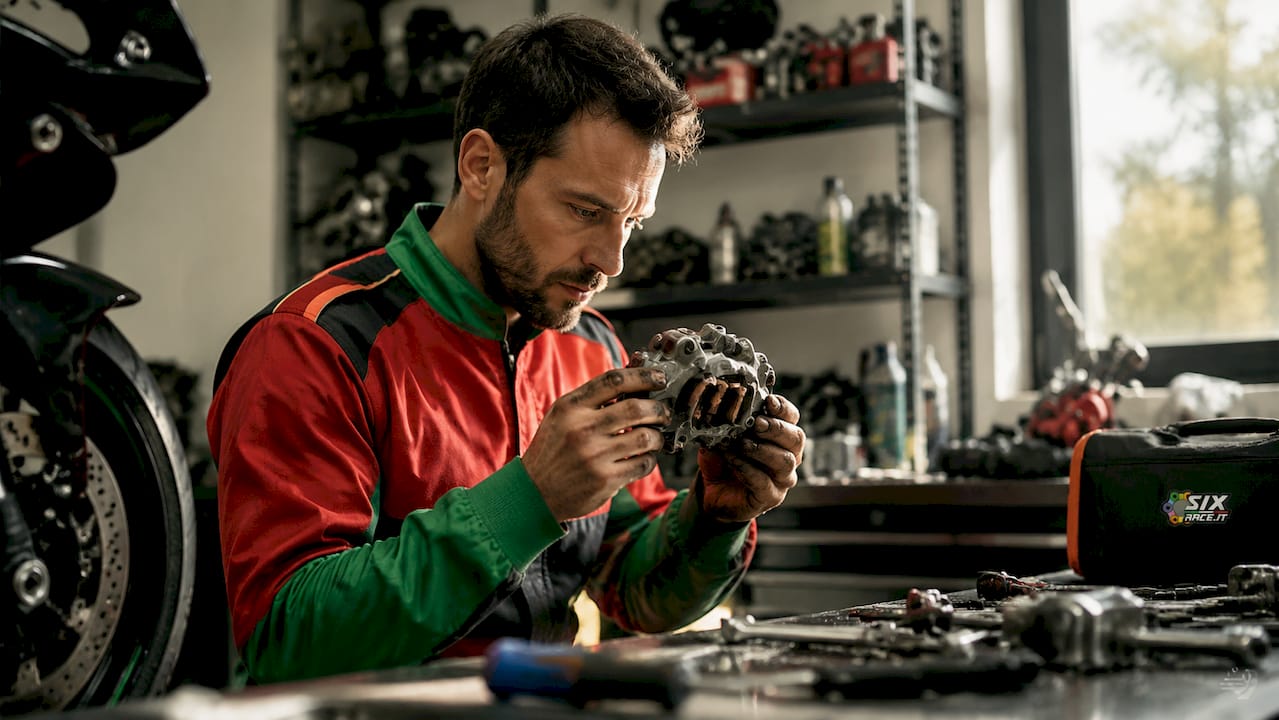
The motorcycle model year is the single most important specification when buying parts. It determines whether a component will physically fit, function correctly, and meet current safety and emissions standards. Riders who ignore this detail risk ordering parts that look right but fail at installation, or worse, create a safety hazard on the road. Understanding why motorcycle year model matters for parts is not optional knowledge. It is the foundation of every reliable parts purchase you will ever make.
Manufacturers do not build the same motorcycle indefinitely. Specifications change between model years, and sometimes within a single production run. Mid-year specification changes include bolt patterns, friction plate thickness, and flange diameters, even within what appears to be the same model year. That means two bikes wearing identical badges can require entirely different parts. The Vehicle Identification Number, or VIN, is the only reliable way to confirm exactly which production variant you own.
Why does motorcycle year model matter for parts compatibility?
The model year significance comes down to one technical reality: manufacturers revise specifications constantly. A brake calliper mounting point that suits a 2019 frame may not align with the 2021 version of the same model. Exhaust flange diameters change. Electronic control unit connectors are updated. Suspension geometry shifts when a manufacturer revises the frame geometry or rake angle.
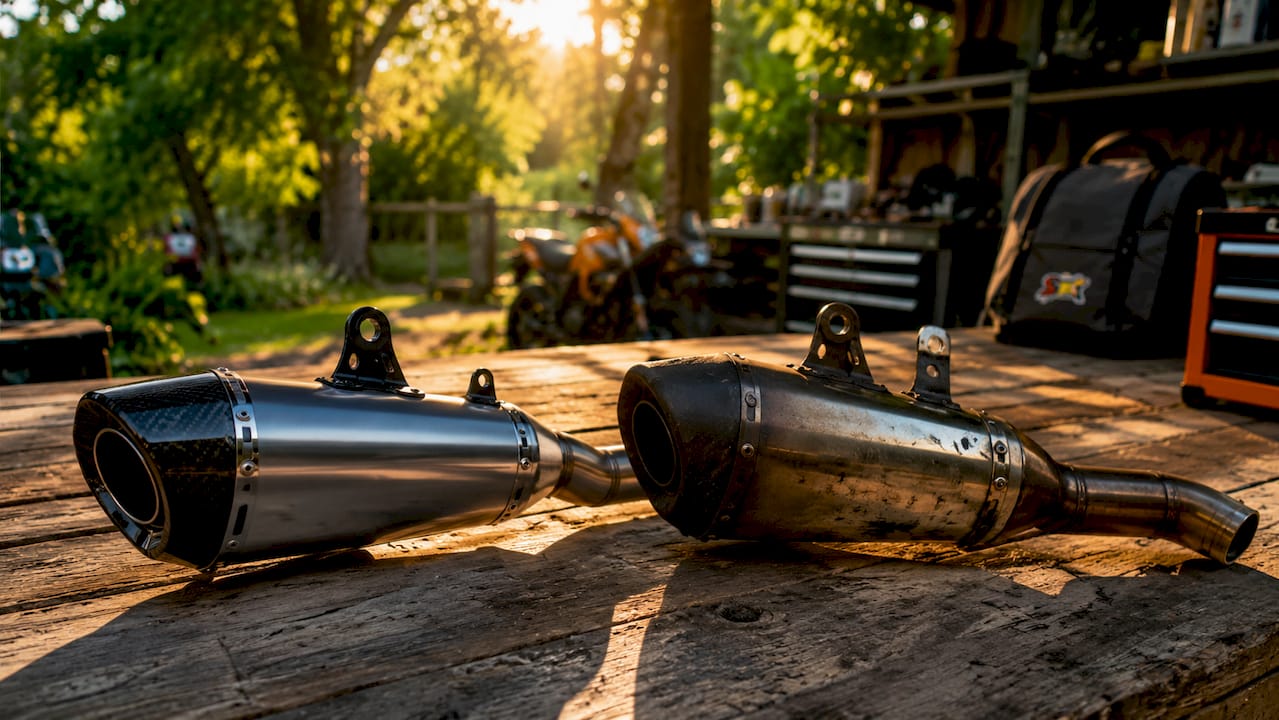
These changes are not always announced with fanfare. A manufacturer may quietly update a component mid-production cycle to address a warranty issue, reduce manufacturing cost, or comply with a new regulation. The result is that two bikes sold in the same calendar year can have different internal specifications. This is why the VIN lookup, not just the model name, is the correct starting point for any parts search.
Regulatory pressure accelerates this process. Euro 5+ emissions standards have driven manufacturers to retune engines across model years, prioritising mid-range torque over peak power for urban riding compliance. Those engine changes cascade into different fuelling maps, revised exhaust systems, and updated catalytic converter configurations. A performance component designed for a pre-Euro 5 engine will not necessarily work correctly on a post-Euro 5 variant of the same model.
How do manufacturers change parts specifications between model years?
Specification changes between model years fall into several distinct categories, each with different implications for parts buyers.
- Mounting and fixing points. Bracket positions, bolt patterns, and thread sizes change when manufacturers redesign subframes or engine mounts. A frame slider or engine guard designed for a 2020 model may have incompatible fixing points on the 2022 version.
- Flange and pipe diameters. Exhaust systems are particularly sensitive. Flange diameters and collector pipe sizes change when manufacturers update headers for emissions compliance. An aftermarket slip-on exhaust must match the exact flange specification of the model year in question.
- Electronic modules and connectors. Ride-by-wire throttle systems, ABS modules, and traction control units use proprietary connectors that change between generations. A HealTech quickshifter or power commander, for example, requires a model-year-specific harness to connect correctly.
- Brake system specifications. Calliper piston diameter, master cylinder bore, and disc rotor thickness tolerances are revised when manufacturers upgrade braking performance or reduce weight. Fitting a brake component from the wrong year can compromise stopping power.
- Engine internals. Piston compression ratios, camshaft profiles, and friction plate counts change when manufacturers retune for emissions or performance targets. Engine rebuild parts must match the exact production specification.
The practical implication is straightforward. Every parts search should begin with the full model designation including the year, and ideally the VIN, before any other filter is applied.
Which part categories are most affected by model year changes?
Experts recommend categorising parts by risk level to determine how strictly the model year match must be enforced. The following table outlines the three main categories and the consequences of a year mismatch in each.
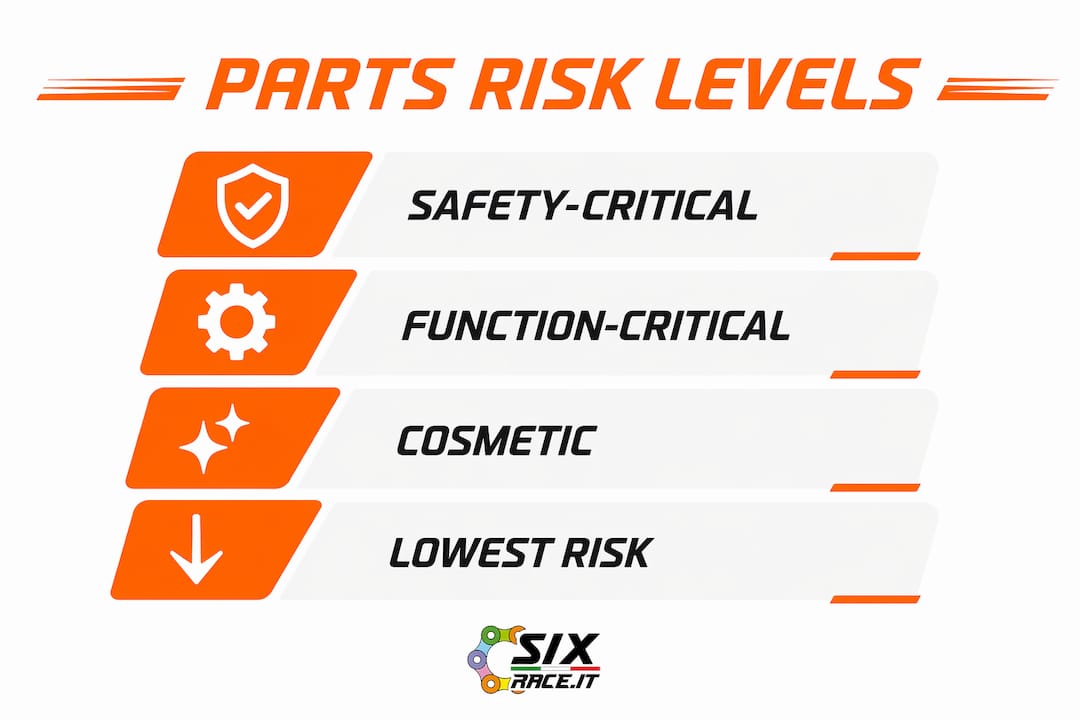
| Category | Examples | Risk of year mismatch |
|---|---|---|
| Safety-critical | Brakes, suspension, engine internals | High. Incorrect fitment can cause mechanical failure or accident. |
| Function-critical | Transmission components, electronics, exhaust | Medium to high. Poor fitment causes performance loss or system errors. |
| Cosmetic | Fairings, seats, mirrors, decals | Low to medium. Minor fit deviations may be acceptable but can affect finish quality. |
Safety-critical parts such as brakes and suspension demand exact year matching without exception. A calliper from the wrong year may mount but leave insufficient pad clearance, creating brake fade under hard use. Suspension components with incorrect spring rates or damper travel will alter handling in ways that are difficult to detect until a corner goes wrong.
Function-critical parts carry a medium to high risk. An exhaust system from the wrong year may physically mount but create back-pressure that disrupts fuelling on a ride-by-wire engine. Electronics from an incompatible year may trigger fault codes or disable safety systems entirely.
Cosmetic parts carry the lowest risk, but visual appeal can mislead buyers into assuming a part fits when it does not. A fairing panel that is close but not exact will leave gaps, require modification, or stress mounting tabs until they crack.
Pro Tip: When ordering fairings or body panels, always cross-reference the part number against your VIN rather than relying on photographs alone. Two panels can look identical in a product image but differ by several millimetres in tab position.
What are the risks of ignoring model year compatibility?
Ordering parts without confirming the model year creates a chain of problems that costs more to fix than the original saving.
- Installation failure. A part that does not fit cannot be installed safely. Forcing it risks damaging the mounting point on the frame or engine, turning a simple parts swap into a repair job.
- Return delays and shipping costs. Generic “fits most” aftermarket listings cause high return rates and installation delays. The time and cost of returning an incorrect part, waiting for the correct one, and potentially paying a mechanic twice adds up quickly.
- Safety hazards. Incorrect brake or suspension components that appear to fit but are dimensionally wrong create failure points that may not be apparent until the bike is under load at speed.
- Warranty voidance. Fitting a part that is not specified for your model year can void the manufacturer’s warranty on adjacent components if a failure occurs.
Fitting the wrong part is rarely a minor inconvenience. For safety-critical systems, it is a decision that can have serious consequences on the road.
The hidden cost of an incorrect fitment is always higher than the visible price difference between a year-specific part and a generic alternative. Labour charges for a second installation, expedited shipping for a replacement, and the risk of damage to surrounding components all accumulate.
How to verify your motorcycle’s model year and select the correct parts
Confirming the exact specification of your motorcycle before ordering takes a few minutes and prevents the problems described above.
- Locate your VIN. The VIN is stamped on the steering head or frame, and printed on your registration document. It encodes the manufacturer, model, year of production, and production sequence. A 17-character VIN decoded through the manufacturer’s official lookup tool will confirm the exact production variant.
- Cross-reference with the owner’s manual. The manual lists the part numbers for every serviceable component on your specific variant. Use these numbers as the baseline for any parts search.
- Use year and variant filters when browsing. Parts catalogues organised by make, model, and year reduce fitment errors and improve purchase confidence. Always apply the year filter before browsing results.
- Check fitment notes on aftermarket listings. Reputable aftermarket brands publish explicit fitment data listing the exact model years and variants their products cover. If a listing does not specify model years, treat it with caution.
- Contact the retailer with your VIN for critical parts. For brakes, suspension, and engine components, provide your VIN directly to the retailer. A specialist retailer can confirm compatibility before you complete the purchase.
Pro Tip: Photograph your current parts before removal, including any part numbers stamped on the component itself. These numbers are often the fastest route to confirming the correct replacement specification.
OEM vs aftermarket parts: how model year shapes the decision
The model year affects not just which parts fit, but which type of part is the right choice for your situation.
| Scenario | OEM recommended | Aftermarket viable |
|---|---|---|
| Safety-critical component, exact year known | Yes | Only from brands with verified fitment data |
| Performance upgrade, Euro 5+ compliant model | Partial | Yes, with emissions-compatible tuning |
| Cosmetic replacement, minor year variation | No | Yes, with visual verification |
| Engine rebuild, older pre-Euro 5 model | Yes | Yes, from established brands with tolerances stated |
| Electronics upgrade, current model year | Partial | Yes, with model-year-specific harness confirmed |
OEM parts guarantee fitment because they are manufactured to the exact specification of your model year and variant. The trade-off is cost. Aftermarket parts cost 30–60% less than OEM equivalents, which makes them attractive for routine maintenance and cosmetic upgrades. That saving is only real when the aftermarket part carries verified fitment data for your exact year.
Aftermarket quality varies significantly, so choosing brands with detailed fitment data and positive reliability records is the correct approach. Established brands such as Evotech Performance, R&G, Acerbis, and Dynojet publish explicit year-by-year fitment lists. A Dynojet power commander, for instance, is mapped to specific model years and engine variants. Fitting the wrong map to a Euro 5+ engine will not produce the intended performance result.
The decision between OEM and aftermarket should always start with the model year. Once the year is confirmed and the correct specification is known, the cost and performance trade-off can be evaluated rationally.
Key takeaways
The motorcycle model year is the primary compatibility filter for every parts purchase, and ignoring it creates safety risks, installation failures, and unnecessary cost.
| Point | Details |
|---|---|
| Model year determines fitment | Specifications change between and within model years, making the year the first filter for any parts search. |
| VIN confirms exact production variant | Mid-year changes mean the VIN, not just the model name, is required to confirm the correct specification. |
| Safety-critical parts require exact matching | Brakes and suspension must match the model year precisely to avoid mechanical failure or accident risk. |
| Aftermarket savings depend on verified fitment | The 30–60% cost saving over OEM is only reliable when the aftermarket part lists your exact model year. |
| Catalogue filters reduce ordering errors | Using make, model, and year filters when browsing parts catalogues prevents the most common fitment mistakes. |
The detail most riders overlook
I have seen the same mistake repeated more times than I can count. A rider orders a part based on the model name, the part arrives, and it does not fit. The bolt pattern is off by a few millimetres. The flange is the wrong diameter. The connector is a generation behind. The frustration is real, and it is entirely avoidable.
What surprises me most is how often this happens with experienced riders, not beginners. Experienced owners sometimes assume that because they know their bike well, they know which parts fit. That confidence is misplaced when manufacturers make mid-year changes that are not reflected in the model name at all.
The other misconception I encounter regularly is the idea that cosmetic parts are always safe to order without strict year verification. A fairing panel from the wrong year may look identical in a photograph but differ in tab position by enough to crack the mount within a few weeks of riding. Aesthetics can genuinely mislead, and visual appeal often overrides functional verification in the buying process.
My advice is simple. Document every part you fit, including the part number, the source, and the date. If a fitment issue appears later, that record is invaluable. And always double-check fitment data against both the manufacturer’s documentation and the retailer’s year-specific listings before confirming any order.
— Matteo
Sixrace: year-specific parts with verified fitment
Finding the right part for your exact model year should not require hours of cross-referencing. Sixrace catalogues its entire range by make, model, and year, so the compatibility check happens before you reach the checkout.
Whether you need safety-critical brake components, replacement parts for a rebuild, or verified accessories from brands including Evotech Performance, R&G, Acerbis, and HealTech, the Sixrace catalogue filters by your exact specification. The team can also verify fitment by VIN for critical components before your order is confirmed. Competitive pricing, multilingual support, and tracked shipping across Europe make Sixrace the practical choice for riders who want the right part the first time. Claim your reserved discount and browse the full catalogue at Sixrace.it.
FAQ
Why does the model year affect motorcycle parts fitment?
Manufacturers revise mounting points, flange sizes, electronic connectors, and engine specifications between model years. A part designed for one year may not physically or functionally fit a different production variant of the same model.
Can I use aftermarket parts without knowing my exact model year?
Reliable aftermarket fitment requires the exact model year. Generic listings without year-specific data cause high return rates and installation failures, particularly for safety-critical components such as brakes and suspension.
How do I find my motorcycle’s exact model year specification?
Decode your 17-character VIN using the manufacturer’s official lookup tool. The VIN confirms the production year and variant, including any mid-year specification changes that the model name alone does not reveal.
Are OEM parts always necessary for year-specific fitment?
OEM parts guarantee fitment but cost 30–60% more than aftermarket equivalents. Quality aftermarket brands that publish explicit year-by-year fitment lists are a reliable alternative, particularly for non-safety-critical components.
Do Euro 5 and Euro 5+ regulations affect which parts I can fit?
Euro 5+ compliance changes engine tuning, exhaust configuration, and fuelling maps across model years. Performance parts such as exhaust systems and power commanders must be specified for the correct emissions standard variant of your model to function as intended.
 Italiano
 Deutsch
 Français
 Español
 English
 Polski