

Motorcycle storage preparation is the process of readying your bike to withstand a seasonal off-use period without suffering corrosion, mechanical failure, or performance loss. The role of motorcycle storage preparation goes well beyond simply parking your bike and throwing a cover over it. Done correctly, it protects the fuel system, battery, tyres, and drivetrain from the specific damage patterns that develop during prolonged inactivity. Seasonal maintenance guidelines for 2026 confirm that full winterisation is required for any motorcycle stationary for three months or longer. The economic and safety case is straightforward: a few hours of preparation now prevents costly repairs and unreliable starts when the riding season returns.
What are the essential steps in preparing a motorcycle for seasonal storage?
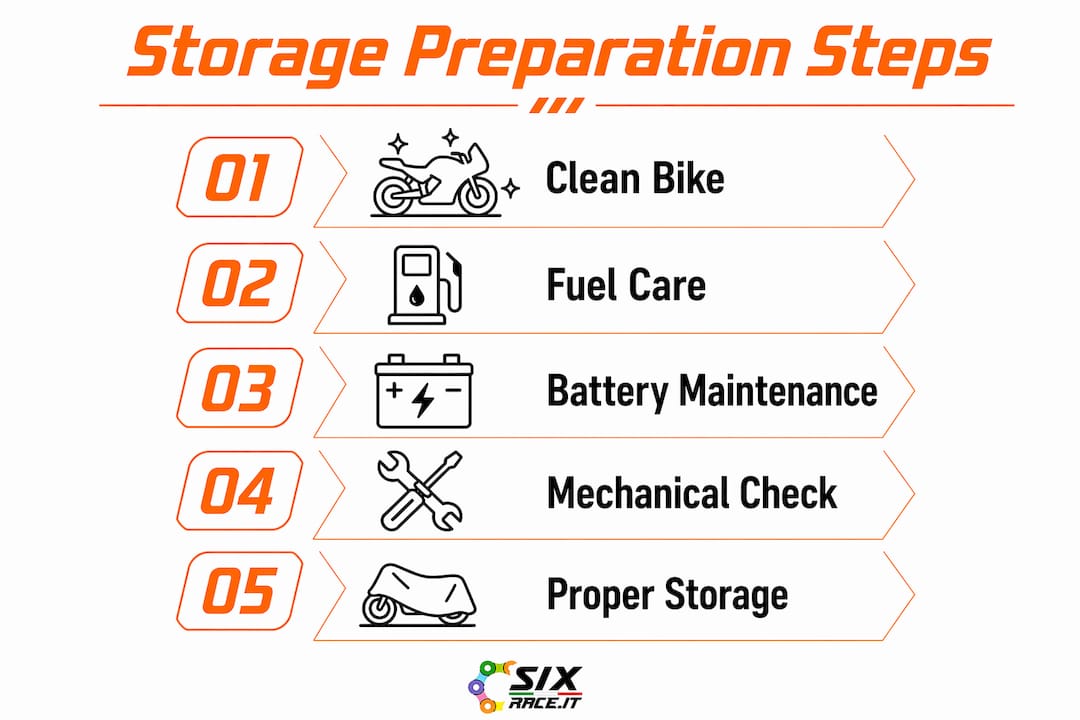
Thorough cleaning is the foundation of effective preservation. Salt and grime left on the bike accelerate corrosion during the off-season, particularly in hard-to-reach areas around the frame, swingarm, and exhaust headers. Wash the entire motorcycle with a dedicated cleaner, rinse carefully, and dry it completely before moving to any other step.
Fuel system preparation
Fuel management is one of the most misunderstood aspects of storage. Many riders assume draining the tank is the safest option, but topping off with fresh fuel and a stabiliser better prevents internal corrosion, particularly in modern fuel-injected systems where residual moisture in an empty tank causes rust. Add a quality fuel stabiliser, run the engine briefly to circulate it through the injectors or carburettor, then switch off.
Battery care
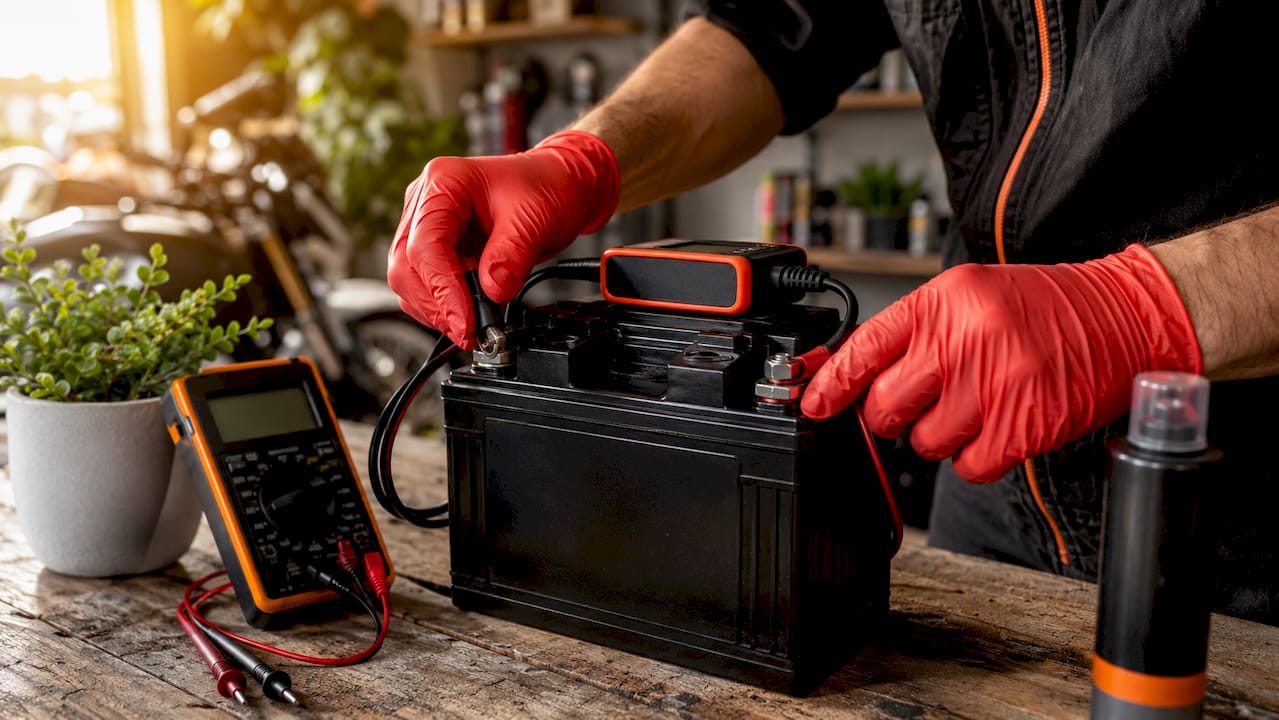
Battery neglect is the single most common cause of storage-related failure. Deep discharge causes irreversible damage to modern motorcycle batteries, and no amount of fast charging will recover a fully discharged cell. Connect the battery to an intelligent maintenance charger throughout the storage period. If the bike is stored away from a power source, disconnect the negative terminal and check the charge level monthly.
Mechanical checks before storage
The following steps complete a thorough pre-storage procedure:
- Chain lubrication: Apply a quality chain lubricant after cleaning. A dry chain corrodes and stretches during storage, causing poor performance on the first ride back.
- Tyre pressure: Neglecting tyre pressures leads to flat-spotting and uneven wear. Inflate to the manufacturer’s recommended pressure before storage, and use a paddock stand if available to keep weight off the tyres.
- Oil and fluids: Change the engine oil before storage, not after. Used oil contains combustion acids that attack internal components during long periods of inactivity. Check brake fluid and coolant levels and top up as needed.
- Protective cover: Fit a breathable fabric cover to shield the bike from dust and light moisture without trapping condensation.
Pro Tip: Apply a thin coat of ACF-50 or a similar corrosion inhibitor to exposed metal surfaces, including the frame, engine cases, and exhaust, before fitting the cover. This creates a barrier against moisture that lasts the entire storage period.
How does the storage environment impact motorcycle preservation?
The storage location determines how much work your preparation needs to do. Closed garages offer the best protection, providing stable temperature and humidity conditions that slow corrosion and prevent freeze damage to fluids. Open storage under a carport or on the street exposes the bike to moisture, salt air, and temperature swings that accelerate deterioration even when the bike is covered.
Comparing storage environments
| Storage type | Protection level | Key risks | Recommended action |
|---|---|---|---|
| Enclosed garage | High | Condensation if unventilated | Use a breathable cover and ensure airflow |
| Carport or lean-to | Medium | Moisture ingress, wind-driven rain | Add a heavy-duty breathable cover and security lock |
| Street parking | Low | Theft, salt, UV, moisture | Avoid where possible; use maximum cover protection |
Humidity control matters more than temperature in most European climates. A damp garage with poor ventilation can cause more corrosion than a cold but dry one. If your garage is prone to condensation, place a dehumidifier or moisture-absorbing sachets near the bike during storage.
The choice of cover is equally critical. Airtight plastic covers trap condensation inside, creating a humid microclimate against the paintwork and metal surfaces. Breathable fabrics allow air to circulate, preventing this build-up. Moisture trapped by a non-breathable cover is more damaging than cold temperatures alone.
Security is a practical concern that riders often overlook during storage. A disc lock, ground anchor, and chain provide layered deterrence. If the bike is stored off-site, check that the facility has CCTV and restricted access before committing to a long-term arrangement.
Pro Tip: If you store your bike on a concrete floor, place a rubber mat or piece of carpet underneath. Concrete draws moisture upward and can cause tyre degradation and corrosion on the underside of the engine and exhaust over a full winter.
What are the common mistakes to avoid in motorcycle storage preparation?
Most storage-related damage is preventable. The following errors account for the majority of problems riders encounter when they return to their bikes in spring:
- Skipping fuel stabiliser: Untreated petrol degrades within four to eight weeks, forming varnish deposits that block injectors and carburettor jets. This is one of the most expensive mistakes to fix.
- Ignoring the battery: Leaving a battery to discharge without a maintenance charger connected is the fastest route to an unrecoverable cell. Smart chargers prevent deep discharge and extend battery service life significantly.
- Using a plastic cover: Fitting an airtight cover traps moisture against the paintwork and metal. The result is corrosion and paint damage that is far more costly to address than the cover saved.
- Neglecting chain and tyres: A dry, uncleaned chain corrodes and stretches. Flat-spotted tyres from sitting at low pressure require early replacement. Both issues are entirely avoidable with ten minutes of attention before storage.
- Overlooking professional diagnostics: DIY preparation covers the visible and accessible items, but complex systems such as suspension and brake hydraulics benefit from professional inspection. Riders who rely solely on their own checks risk missing faults that only become apparent at speed.
- Storing a dirty bike: Salt and road contamination left on the bike continue to react with metal surfaces throughout the storage period. Always wash and dry the motorcycle thoroughly before it goes away for the season.
How to integrate motorcycle storage preparation into a yearly maintenance schedule?
Viewing seasonal storage as part of an annual maintenance plan delivers both economic and technical advantages. Workshops are significantly busier at the start of the riding season, meaning longer wait times and less flexibility on scheduling. Riders who complete preparation in autumn avoid this bottleneck entirely.
A structured yearly approach works as follows:
- Set a preparation date: Identify the point at which you expect to stop riding regularly, typically when temperatures drop consistently below 5°C. Schedule preparation for that week, not after the last ride.
- Replace consumables proactively: Brake pads, air filters, and spark plugs that are near the end of their service life should be replaced before storage, not after. Fitting replacement parts before storage means the bike is ready to ride the moment the season opens.
- Change the engine oil: Fresh oil goes in before storage. Combustion acids in used oil attack bearings and cylinder walls during inactivity. This single step protects the engine more than any other fluid-related action.
- Document everything: Keep a written or digital log of every action taken, including the date, products used, and any observations about component condition. This record is invaluable when planning the following year’s maintenance and when selling the bike.
- Book a professional check: Schedule a workshop inspection for early spring, before the riding season begins. Professional technicians identify issues that DIY checks miss, particularly in braking, suspension, and electrical systems. Booking in advance secures a slot before demand peaks.
The best practices for motorcycle storage align with this annual rhythm. Preparation is not a one-off task but a maintenance milestone that keeps the bike in peak condition year after year.
Key takeaways
Proper motorcycle storage preparation is the single most effective action a rider can take to protect their bike’s condition, reliability, and long-term value during the off-season.
| Point | Details |
|---|---|
| Full winterisation threshold | Bikes stored for three months or longer require a complete preparation procedure, not just basic cleaning. |
| Fuel stabiliser is non-negotiable | Untreated fuel degrades within weeks, causing injector and carburettor damage that is costly to repair. |
| Battery maintenance charger | Deep discharge causes irreversible battery damage; connect a smart charger throughout the storage period. |
| Breathable cover only | Airtight plastic covers trap moisture and cause corrosion; always use a breathable fabric cover. |
| Annual maintenance integration | Treating storage preparation as a maintenance milestone reduces long-term costs and improves spring readiness. |
What I have learned from years of watching riders get storage wrong
The most common misconception I encounter is that storage preparation is optional for riders who “only park up for a couple of months.” The reality is that two months of inactivity is enough for fuel to begin degrading, a battery to drop below recovery voltage, and a chain to develop surface rust. The damage is not dramatic, but it compounds.
What I find genuinely frustrating is the false confidence that comes from a quick wash and a cover. Riders who do this believe they have done the job. They have not. The fuel system, battery, and chain are the three systems that fail most predictably during storage, and none of them are addressed by a cover alone.
My honest recommendation is to treat the pre-storage session as a full service interval. Change the oil, stabilise the fuel, connect the charger, lubricate the chain, check the tyre pressures, and fit a breathable cover. Then book a professional inspection for spring. That combination costs less than a single repair bill and means the bike is ready to ride the day you want it.
The riders I see returning to a bike in perfect condition every spring are not the ones with the most expensive equipment. They are the ones who followed a consistent, documented procedure the previous autumn. Consistency is the only variable that matters.
— Matteo
Sixrace has everything you need for storage preparation
Preparing your motorcycle properly for the off-season requires the right products, and sourcing them from a single trusted supplier saves time and reduces the risk of compatibility errors.

Sixrace stocks a carefully selected range of motorcycle accessories and consumables suited to every stage of seasonal preparation, from chain lubricants and fuel treatments to breathable covers and battery maintenance equipment. The catalogue covers road, sport, touring, adventure, and off-road motorcycles, with products matched by make, model, and year. Sixrace also carries Evotech Performance accessories and components from R&G, Acerbis, and other established manufacturers. Take advantage of your reserved discount and get your bike ready for storage with confidence at sixrace.it/discount.
FAQ
What is the role of motorcycle storage preparation?
Motorcycle storage preparation is the process of protecting a bike’s mechanical and electrical systems from damage caused by prolonged inactivity. It covers fuel stabilisation, battery maintenance, cleaning, lubrication, and correct covering to preserve condition and reliability.
How long can a motorcycle sit before full preparation is needed?
Full winterisation is required for any motorcycle stored for three months or longer. Shorter breaks require only basic care such as cleaning, chain lubrication, and battery monitoring.
Should I drain the fuel tank or use a stabiliser?
Topping off with fresh fuel and a stabiliser is the correct approach for modern fuel-injected motorcycles. An empty tank is prone to internal corrosion from residual moisture, which stabilised fuel prevents.
What type of cover should I use for motorcycle storage?
Always use a breathable fabric cover. Airtight plastic covers trap condensation against the paintwork and metal surfaces, causing corrosion that is more damaging than cold temperatures alone.
Do I need a professional service before or after storage?
A professional inspection is best scheduled for early spring, before the riding season begins. Technicians identify issues in braking, suspension, and electrical systems that DIY checks routinely miss, and booking in advance secures a slot before workshop demand peaks.
 Italiano
 Deutsch
 Français
 Español
 English
 Polski