
The grasso catena moto migliore is not a universal winner. It depends on your chain, weather, and riding routine. A commuter facing rain and road salt needs corrosion protection. A track rider needs low drag and limited fling. An adventure rider needs a film that does not turn wet grit into abrasive paste.
Lubrication affects drivetrain efficiency at operating speed, while durability testing found a wide gap between commercial products. The best lubricant tested caused 7.80 ± 0.26 watts of power loss, compared with 24.16 ± 0.51 watts for the worst, according to the academic chain lubricant durability study. The product matters, but so do application, chain construction, weather, and maintenance habits.
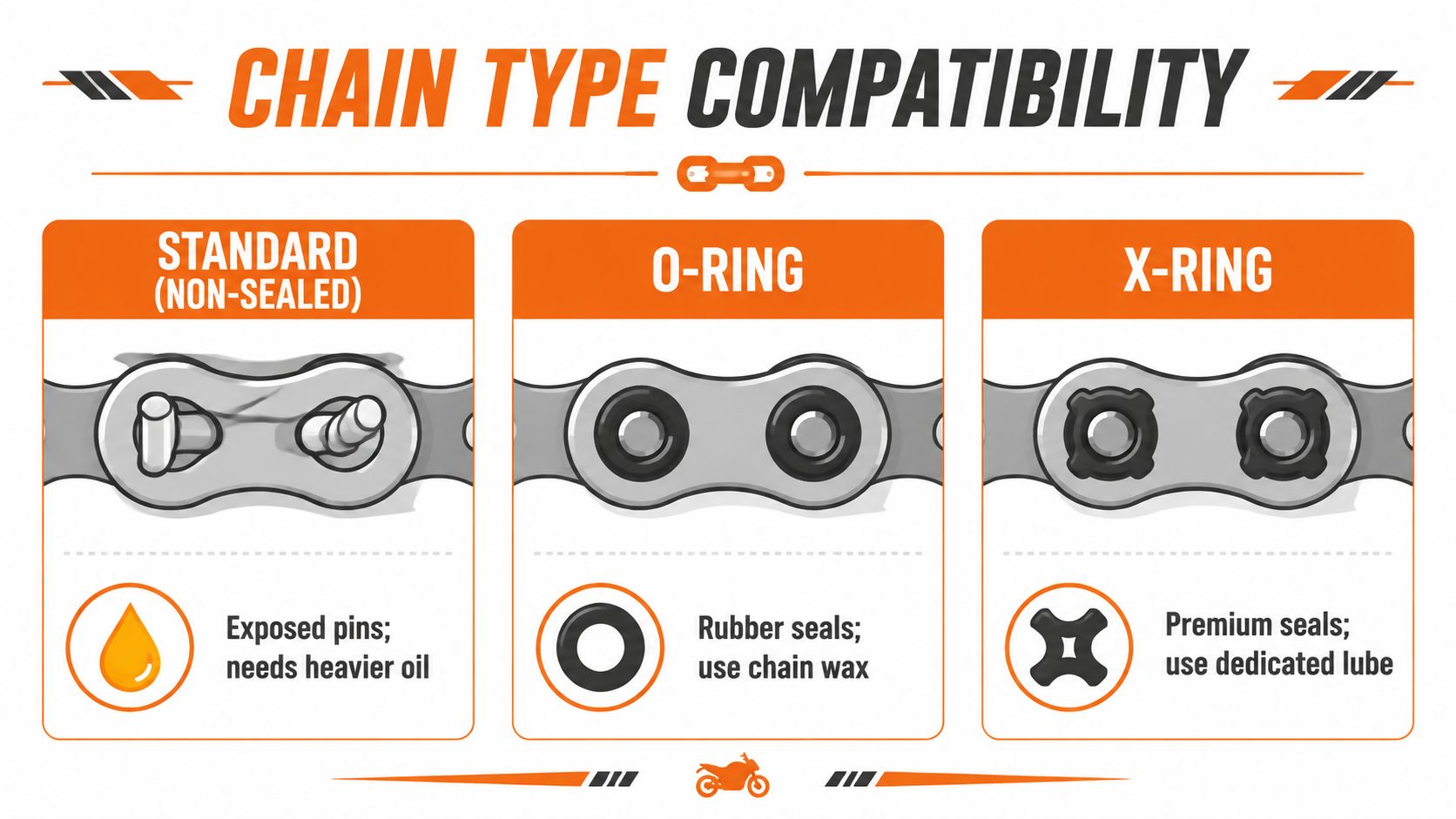
Chain type sets the first limit. O-ring and X-ring chains need lubricant that protects seals without attacking them, while standard chains demand closer attention to exposed metal and corrosion.
Workshop verdict: The stickiest lube is not automatically the best lube. Use the thinnest product that protects your chain in the conditions you ride in.
Table of Contents
- Why the Best Motorcycle Chain Grease Depends on How You Ride
- The Four Main Chain Lube Formats Explained
- Matching Chain Lube to O-Ring, X-Ring, and Standard Chains
- How Lubes Perform in Rain, Dust, and on Track
- The Right Way to Apply Chain Grease Without Overdoing It
- Re-Lube Intervals and the Hidden Cost of Cheap Chain Care
- Which Chain Lube Should You Buy for Your Bike
Why the Best Motorcycle Chain Grease Depends on How You Ride
A chain lube has several jobs at once. It must reduce friction at the rollers and sprockets, protect exposed metal from water and corrosion, stay in place as the chain rotates, and avoid turning road dust into abrasive sludge. Those demands conflict. A product that clings aggressively may resist fling-off, but it can also hold grit against the chain. A clean-running wax may leave less mess, but heavy rain can remove its protective film faster.
The University of Strathclyde's peer-reviewed motorcycle chain study found measurable efficiency differences between dry running and lubricated conditions at 1,250 rpm and 1,400 rpm. The University of Strathclyde motorcycle chain lubrication paper supports a simple garage conclusion, lubrication affects power transmission in practical operating conditions, not only in a laboratory theory model.
Start with the riding environment
A city commuter sees frequent stops, spray from wet roads, grime from traffic, and long periods when the chain may remain damp. Corrosion resistance and easy reapplication matter more than chasing the lowest possible friction.
A sportbike used for fast road riding puts more emphasis on fling-off control and a stable film at high chain speed. A track-day machine faces a different priority again. The rider may prefer a clean, low-friction product that can be checked and reapplied after each session, provided it's safe for the chain's seals.
An adventure bike crossing muddy tracks or gravel roads needs contamination resistance. Independent testing reported by motorcycle chain-lube testing from Bennetts BikeSocial highlights wear-scar performance under extreme pressure and the ability to retain protection after exposure to water and grit. A lube that merely feels tacky isn't enough.
Why mileage changes the answer
A scooter covering only occasional short trips has a different maintenance rhythm from a sportbike ridden hard at high rpm or an adventure bike exposed to dust. Low annual mileage doesn't eliminate maintenance. Short, damp journeys can leave a chain vulnerable even when the odometer barely moves.
Choose by four filters:
- Chain type: Standard, O-ring, or X-ring.
- Weather: Dry asphalt, persistent rain, salt, or humidity.
- Contamination: Clean road use, dust, mud, or sandy grit.
- Maintenance habit: Frequent wipe-downs or long gaps between garage visits.
That's why a universal ranking fails. The best motorcycle chain grease is the one that matches those four conditions without creating a new problem.
The Four Main Chain Lube Formats Explained
The can or bottle on the shelf usually belongs to one of four broad formats. They overlap in chemistry, but their behavior on the motorcycle is distinct enough to guide a purchase.
Spray lubes
Base chemistry: A solvent-carried oil or synthetic lubricant that reaches the links before the carrier evaporates.
Sprays are practical and easy to distribute across the inner run of the chain. They're a strong choice for sealed chains when the label confirms seal compatibility, particularly for riders who want a thin, controlled film. Their main weakness is application discipline. A few seconds too long with the nozzle can coat the rim, tire area, chain guard, and swingarm without adding useful protection.
Spray products range from dry-feeling films to highly adhesive formulas. Don't judge them by the color or the word “racing” on the can. Look for compatibility with O-ring and X-ring chains, resistance to fling-off, and the riding conditions you face.
Paste and grease lubes
Base chemistry: A thickened oil or grease, sometimes with additives such as PTFE or solid lubricants.
Paste products cling well and can work on heavily loaded or non-sealed chains where the lubricant needs to remain in exposed pivot areas. They're less forgiving on modern sealed chains if applied heavily. The excess catches dust and creates a dirty abrasive layer, especially on an off-road bike.
Use paste when retention matters more than a clean rear wheel, then wipe away everything that isn't needed.
Wax-based lubes
Base chemistry: A wax-forming compound that dries into a relatively dry protective film.
Wax is the cleanest option for many road riders. It tends to fling less and attracts less loose dust than a wet oil. The trade-off is preparation. Wax bonds poorly to a chain covered in old oily residue, so cleaning must come first. Some wax products also need time to cure before riding, and rain can remove the film more quickly than it removes a heavy wet lubricant.
Chain oils
Base chemistry: Petroleum or synthetic oil, available in lighter or heavier viscosities.
Oil stays wet on the chain and can perform well in persistent moisture, but it's also the format most likely to reach the wheel and surrounding bodywork. Light oil penetrates easily and is simple to refresh. Heavy oil lasts longer in some wet conditions, but its tackiness can hold contamination.
| Format | Base Chemistry | Fling-Off | Best Use Case |
|---|---|---|---|
| Spray | Solvent-carried oil or synthetic film | Low to moderate, depending on formula | Quick, controlled maintenance on sealed chains |
| Paste or grease | Thickened oil or grease | Low, but excess builds up | Standard chains and high-retention applications |
| Wax | Wax-forming dry film | Low once cured | Clean road use and riders who wipe the chain regularly |
| Chain oil | Light or heavy petroleum or synthetic oil | Moderate to high | Wet roads, exposed chains, and frequent reapplication |
No format wins in every row. Pick the behavior you need, then verify seal compatibility before buying.
Matching Chain Lube to O-Ring, X-Ring, and Standard Chains
Chain type is the first compatibility check, not an afterthought. Before choosing between wax, oil, spray, or grease, identify whether the chain uses exposed joints or sealed links. A wrong solvent or an overly aggressive product can damage the sealing rings that protect the factory lubricant inside the chain.
Standard chains
A standard non-sealed chain has exposed pins, bushings, and rollers. External lubricant has more work to do because there aren't rubber rings retaining factory grease inside each joint. A heavier oil or a suitable paste can remain in the pivot areas better than a very thin dry film.
Some workshop applications can use a heavy oil, and even engine oil may be used on a basic non-sealed chain when the mechanic accepts the mess and applies it carefully. That doesn't make engine oil a universal recommendation. It flings easily, attracts dirt, and offers no special convenience compared with a purpose-made chain product.
Standard chains are common in some smaller, older, specialist, and off-road applications. Check the chain documentation rather than guessing from the motorcycle's age or appearance.
O-ring chains
An O-ring chain uses rubber seals to retain lubricant inside each link. The external product mainly protects the rollers, side plates, and sprocket contact surfaces. You don't need to flood the pins with grease, because the sealed joint already contains its working lubricant.
Choose a lube explicitly marked safe for O-rings. Avoid improvising with petrolatum-heavy grease or solvent-heavy products when the manufacturer doesn't confirm compatibility. A thin synthetic spray or controlled wax application is usually easier to manage than a dense coating.
For compatible replacement options, riders can review motorcycle drive chains in the Sixrace catalog. The product specification, not the marketing label, should decide whether a chain suits the motorcycle.
X-ring chains
X-ring seals use a different profile with multiple sealing lips, reducing contact friction while retaining lubricant inside the joint. That design still requires a seal-safe external lube. The seal may be more efficient, but it isn't immune to harsh solvents or careless cleaning.
A light synthetic spray or wax is often the easiest match for an X-ring road chain. Use a product intended for sealed chains, apply it to the inner run, and remove the residue that doesn't need to stay on the metal. If a label mentions chlorinated solvents or fails to identify seal compatibility, leave it on the shelf.
The Stivali Motocross GMX MACH 80 WHITE belongs to riding protection equipment, not chain maintenance. The distinction matters because choosing the right product starts with identifying the component and its actual requirement.
How Lubes Perform in Rain, Dust, and on Track
Rain exposes poor lubrication fast. Water can displace a thin film, wash away wax, and leave metal open to corrosion. For sustained wet riding, choose a wet-weather chain oil or adhesive spray that stays on the chain. Clean off contaminated residue before applying more. Fresh lube over dirty lube only builds a grinding paste.
Dust demands the opposite approach. Thick grease stays put, but it also holds abrasive grit against the chain. On gravel, dry trails, and sandy roads, a thinner film that wipes clean and can be renewed is the better choice. A sticky coating is not automatically superior.
Condition-by-condition comparison
| Lube Format | Rain Performance | Dust Performance | Track Performance |
|---|---|---|---|
| Spray | Good when seal-safe and reapplied after heavy exposure | Moderate, depending on tackiness | Good for controlled, low-mess applications |
| Wax | Clean in light moisture, but can wash away sooner in storms | Strong cleanliness advantage | Good when cured and applied before riding |
| Paste or grease | Strong retention | Weak if over-applied, because it traps grit | Moderate, with possible fling and buildup |
| Chain oil | Strong wet-weather coverage | Moderate to weak with heavy contamination | Moderate, because wet film can fling |
Use independent testing to challenge shelf-label promises. A laboratory-backed comparison assessed motorcycle chain lubes with wear and extreme-pressure methods. The review describes a wear scar around 0.4 mm as generally good, while 1.0 mm or more usually indicates weaker performance, as reported in the Bennetts BikeSocial chain-lube comparison.
Track use demands clean control
Track riders should avoid choosing the thickest product by default. High chain speed increases fling-off, and residue on the chain guard or rear wheel creates unnecessary cleanup between sessions. A dedicated low-friction wax or dry-style lube suits track use when it matches the chain and goes on after a proper clean.
Apply only enough to cover the working surfaces. Excess product adds mess without improving protection.
The rule is direct: rain favors retention, dust favors low contamination, and track use favors controlled film thickness. Choose for the dominant riding condition, not for the stickiest label.
The Right Way to Apply Chain Grease Without Overdoing It
A good lubricant applied badly is still bad chain care. Work with the motorcycle stable on a stand, keep the exhaust cool, and remove old grime before adding fresh product. The chain doesn't need to look polished, but it must be free of loose abrasive dirt and heavy residue.
Apply to the working side
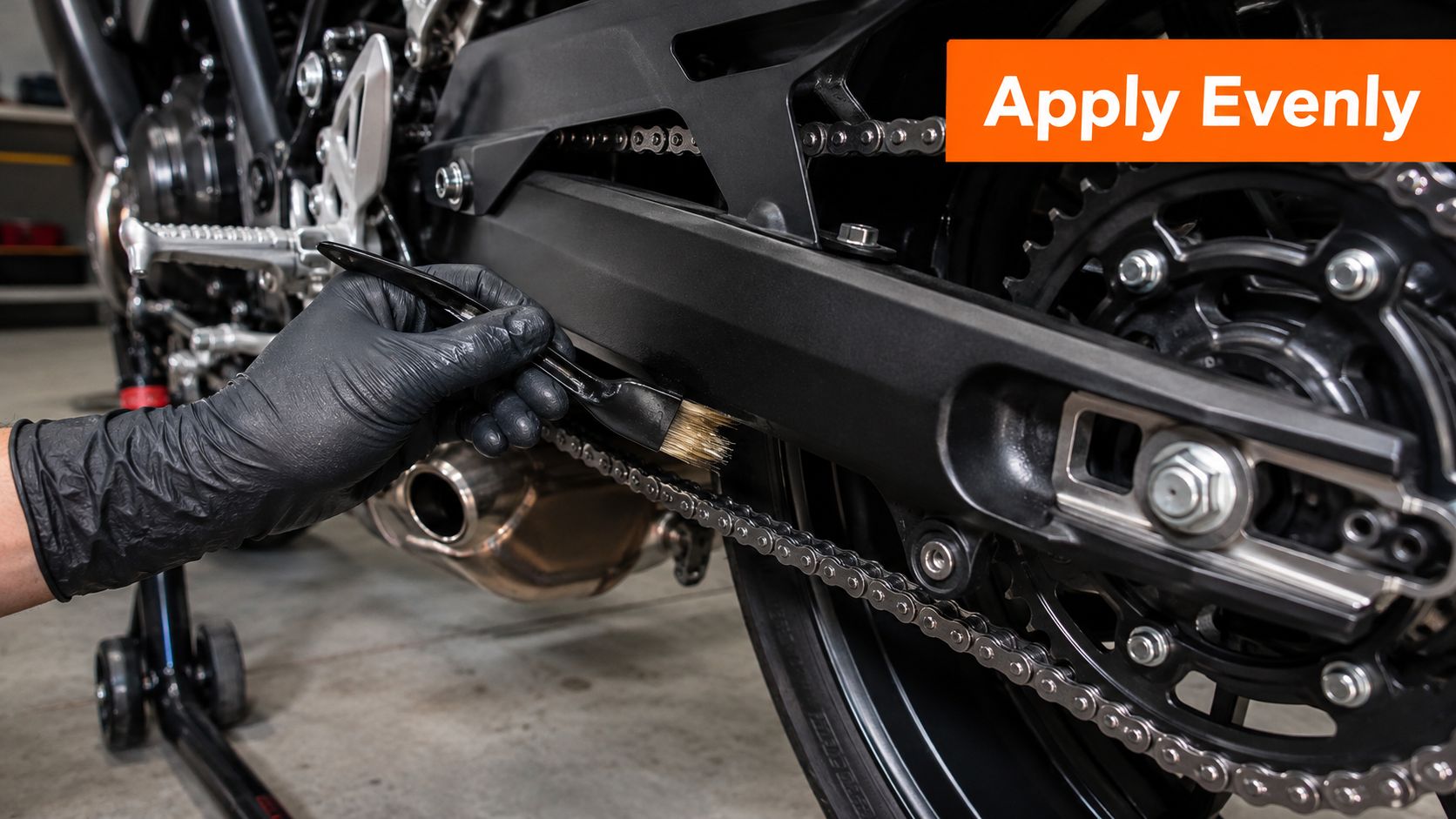
Aim at the inner run of the chain, especially around the rollers and the inner faces of the side plates. As the chain wraps around the sprocket, the lubricant spreads through the contact areas. Spraying the outside face alone mostly coats visible metal and throws excess toward the wheel.
Rotate the wheel slowly by hand. Don't run the engine in gear while applying lube. That shortcut creates an avoidable hand and clothing hazard.
A controlled sequence works best:
- Clean first. Use a chain-safe cleaner and a suitable brush or cloth.
- Let the chain dry. Residual cleaner can dilute the new film.
- Apply a narrow film. Follow the inner run, not the sprocket teeth or tire.
- Rotate slowly. Give the product time to reach the rollers.
- Allow it to settle. Wax products may need curing time stated on the label.
- Wipe excess. Remove the coating that can fling off or hold grit.
Garage rule: If the chain looks wet enough to drip, you've probably applied too much.
Over-application is one of the most common causes of a dirty, abrasive chain. Excess spray or paste catches sand and road dust, creating the grinding paste that riders are trying to prevent. This matters particularly with sealed chains, where the external lube is not replacing the grease inside the sealed joint.
Keep the surrounding components clean with a final wipe, and inspect the tire before riding. A chain guard, such as the Zieger stainless chainguard for the Honda Dominator NX 650, can help contain some debris, but it doesn't make careless application safe.
Re-Lube Intervals and the Hidden Cost of Cheap Chain Care
A premium lube will not save a chain left wet, dirty, or dry for too long. Maintenance cadence matters more than the logo on the can because rain, dust, washing, and hard acceleration all shorten the useful protection period. Choose the interval from your riding conditions, then confirm it by inspecting the chain.
Use these practical starting points:
- Mixed-weather street use: Re-lube around every 300 to 500 km.
- Track or off-road use: Re-lube around every 150 to 250 km, with track riders checking the chain after each session.
- Sustained rain: Re-lube around every 100 to 150 km, and inspect the chain after the ride.
Treat those intervals as guidance, not a substitute for inspection. A wet ride can strip protection early. A clean, dry trip may leave a sound film in place longer. The chain's condition decides when service is due.
Why skipping maintenance becomes expensive
A chain can look acceptable while its seals, rollers, or pins are already deteriorating. Frequent adjustment, tight spots, and sprocket teeth developing a hooked profile are warning signs. Once metal is worn, adding more grease will not restore it. The repair bill then includes a chain and sprockets instead of a simple cleaning and lubrication routine.
Product choice still affects friction and wear. Independent testing found a substantial difference between commercial lubricants, which supports buying a product suited to the chain and riding conditions. That advantage only matters when the rider applies the lube consistently and keeps contamination under control.
Build a routine you'll follow
Log the odometer after wet rides and longer trips. Keep a short note in your phone, and treat chain lube as a workshop consumable rather than an optional accessory. Clean when contamination builds, lubricate according to exposure, and check tension against the motorcycle manufacturer's specification.
The motorcycle chain maintenance guide from Ponzi Racing also emphasizes the practical relationship between cleaning, lubrication, tension, and drivetrain condition. Regular care gives you clearer warning signs before the complete transmission kit needs replacement. The cheapest chain-care routine is the one that prevents avoidable wear, not the one that uses the least product.
Which Chain Lube Should You Buy for Your Bike
Forget universal winners. Start with the rider profile, confirm the chain type, and select the format that solves the dominant problem without creating another one.
| Rider Profile | Recommended Lube Format | Chain Type | Re-lube Interval |
|---|---|---|---|
| Commuter in mixed weather | Light synthetic oil or dry wax | Usually O-ring or X-ring | Every 300 to 500 km |
| Weekend tarmac tourer | Chain wax or controlled paste | Usually O-ring or X-ring | Inspect regularly, then reapply when the film is depleted |
| Off-road or adventure rider | Thicker chain oil or adhesive spray, applied sparingly | Standard, O-ring, or X-ring depending on bike | Every 150 to 300 km, sooner after mud or heavy rain |
| Track-day rider | Low-friction dry lube or dedicated race product | Usually O-ring or X-ring | Check and reapply after each session |
The commuter
For a sealed O-ring or X-ring chain exposed to rain, road spray, and stop-start use, choose a seal-safe light synthetic spray if wet protection is the priority. Choose a dry wax if keeping the rear wheel clean matters more and you're prepared to clean before application. Neither choice works if you keep layering product over black, gritty buildup.
The weekend tourer
A road-focused rider who avoids severe weather can use chain wax for low mess or a moderate paste for stronger retention. The wax option demands a clean surface and adequate settling time. The paste option needs a careful wipe, because excess adhesive compound can collect dust during long trips.
The adventure rider
Adventure and off-road use punish the wrong kind of stickiness. A product must survive water and contamination, but a heavy coating that holds sandy grit is counterproductive. The Zero Friction Cycling-style chain lubricant results illustrate why wet-contamination performance deserves more attention than a product's label. In the cited comparison, the best-performing lubricant showed wear equivalent to 0.23 chains over 5000 km, while a typical dry lube reached 2.72 chains over the same distance, around 11.8 times faster, according to the manufacturer's explanation of lube selection and testing.
That result doesn't mean every rider should buy the same wet lube. It means riders who face water and grit should judge products by contamination resistance, not by how sticky the first application feels.
The track rider
Track use rewards preparation. Use a low-friction product only after confirming O-ring or X-ring compatibility, apply a thin film, and inspect the chain after each session. A dry product can reduce cleanup and fling, but it can't compensate for a dirty chain or worn sprockets.
Chain construction also deserves a separate check. Riders unsure whether a replacement is standard, O-ring, or X-ring can consult this DID motorcycle chain selection guide. For cyclists and e-bike owners comparing lubrication principles across another type of exposed chain, this e-bike chain lube selection guide is a useful adjacent reference, though motorcycle chain loads and seal requirements still need their own product specification.
Sixrace's catalog covers motorcycle accessories and model-specific replacement components, so it can be used as one place to check compatible chain-related parts alongside the lube choice. Select the chain first, confirm the seal type, then buy the lubricant that matches your weather and maintenance habits.
Visit Sixrace to check motorcycle transmission components, model-specific parts, and riding equipment in one catalog. Match the replacement chain and related hardware to your bike, then choose a seal-safe lube and put the maintenance interval on your riding log.
 Italiano
 Deutsch
 Français
 Español
 English
 Polski