
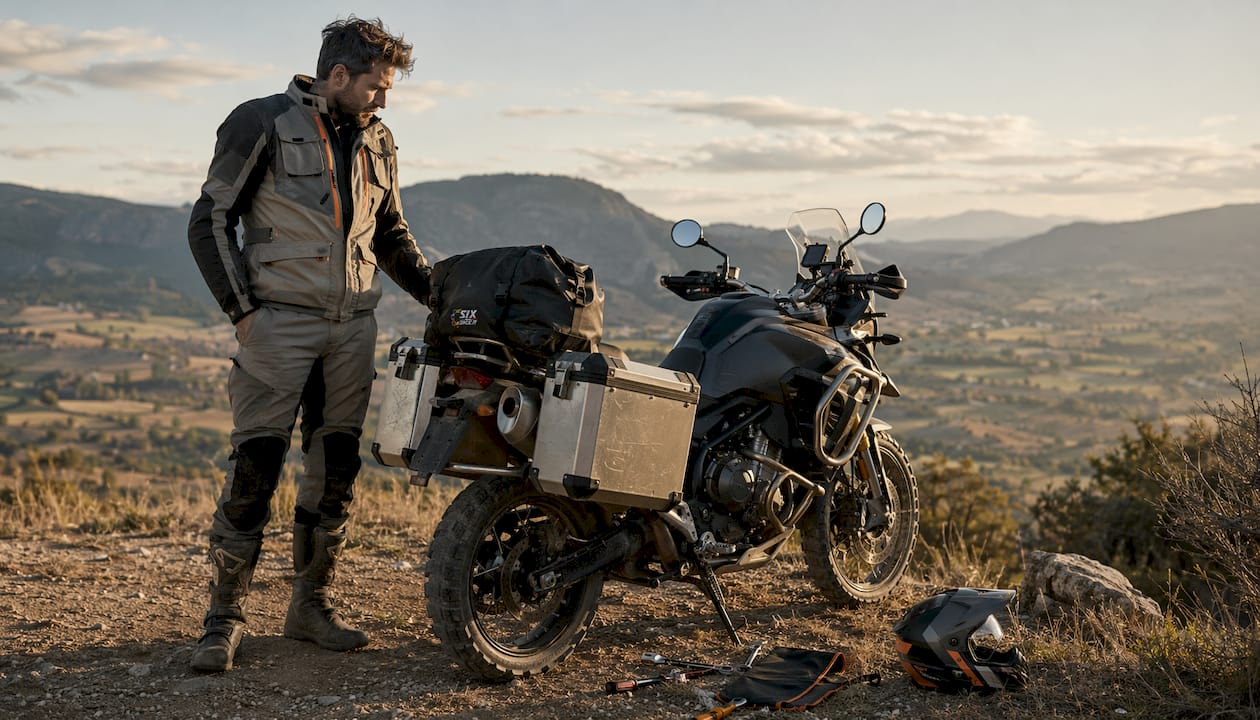
Adventure bike accessories are defined by their material composition, functional purpose, and the specific demands of mixed-terrain riding. No two accessories serve the same role, and that is precisely why adventure bike gear differences run so deep. A crash bar engineered from steel serves an entirely different purpose than a mesh-panelled riding jacket, yet both are essential to the same rider. Understanding why adventure bike accessories differ helps you make choices grounded in performance and safety rather than guesswork. The core principle is straightforward: every accessory is a response to a specific riding condition, and those conditions vary enormously.
Why do adventure bike accessories differ in design and material?
Adventure motorcycle accessories differ primarily because material performance and application dictate every design decision. Steel, aluminium, and technical polymers each behave differently under stress, and that behaviour determines where each material belongs on a bike.
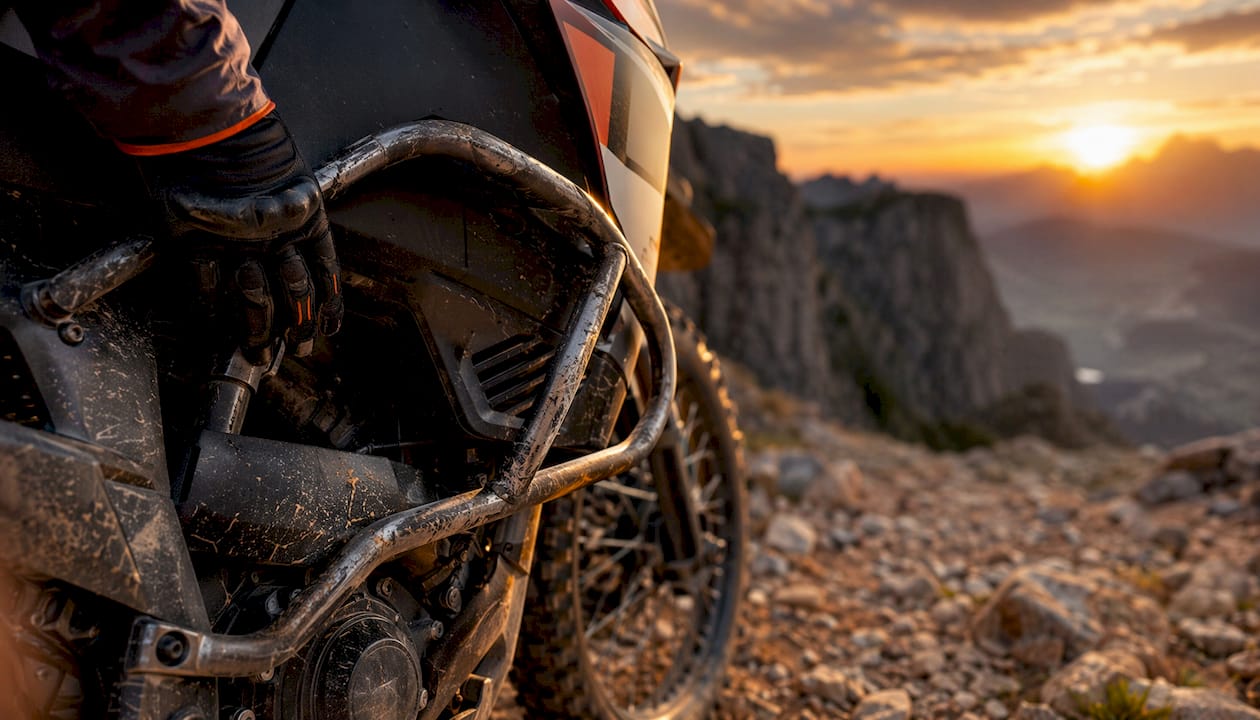
Steel is the standard choice for crash bars. It offers the impact strength needed to absorb a slow-speed tip-over without deforming catastrophically. That matters because adventure riding regularly involves low-speed falls on loose terrain, where the engine and frame face direct ground contact.
Aluminium takes a different role. Luggage racks and pannier frames built from aluminium balance durability with a weight penalty that steel cannot match. A steel rack would add unnecessary mass high on the bike, shifting the centre of gravity and making slow-speed handling more demanding.
Technical polymers, particularly thermoplastic polyurethane (TPU), appear in protective components such as knee armour and handguard shells. TPU delivers higher abrasion resistance than PVC while remaining flexible enough to absorb impact energy without shattering. That combination of toughness and flex is exactly what a rider needs when a knee meets gravel at speed.
Pro Tip: When assessing any frame protection accessory, check whether the manufacturer specifies the alloy grade or polymer type. Vague descriptions like “high-strength material” tell you nothing about real-world performance.
What are the main types of adventure bike accessories and how do their functions differ?
The functional differences between accessory categories are the clearest explanation of why bike accessories vary so significantly. Each category solves a distinct problem, and that problem shapes every design choice.
-
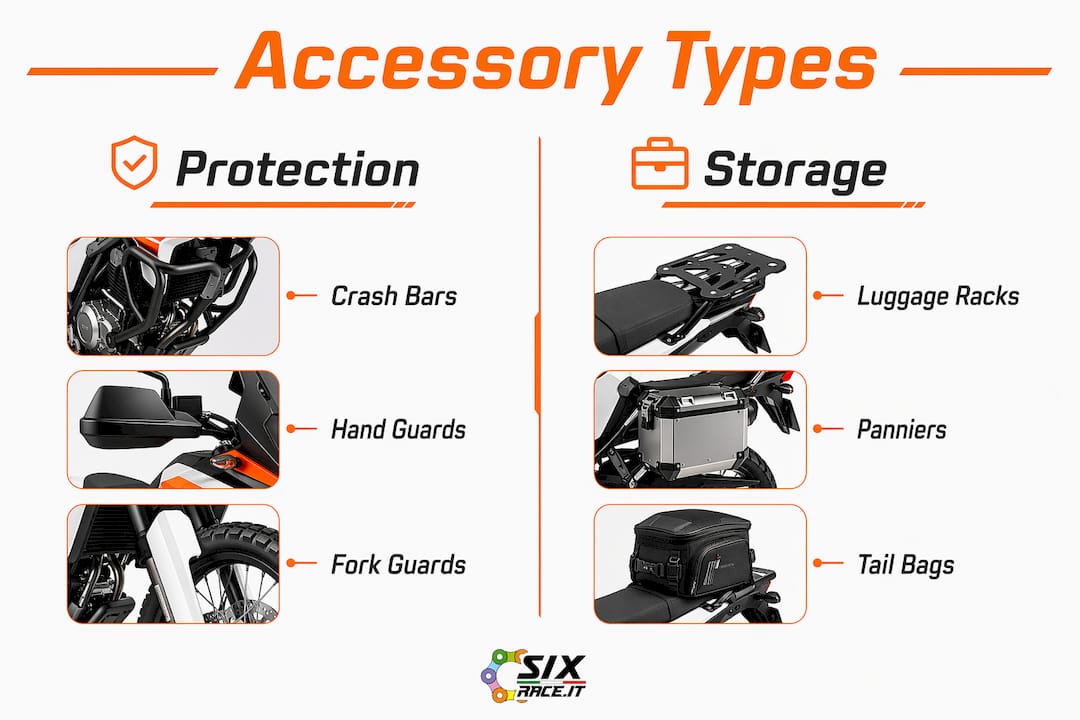
Crash bars and frame protection. Crash bars are engineered for slow-speed tip-overs, which are the most common incident type in adventure riding. They wrap around the engine and lower frame, absorbing impact before it reaches critical components. Frame sliders, by contrast, use polymers for abrasion resistance and suit street riding scenarios where sliding contact is more likely than a direct drop.
-
Luggage systems. Soft panniers and hard aluminium cases represent two distinct philosophies. Soft panniers flex and absorb impact, reducing the risk of leg trapping during a fall. Hard cases provide lockable, waterproof storage with organised internal layouts. Neither is universally superior. The right choice depends entirely on the terrain and the rider’s priorities.
-
Rider apparel. Adventure motorcycle apparel differs based on climate management and protection level. A laminated Gore-Tex jacket prevents water saturation in the outer fabric, keeping the garment light and warm during long wet-weather tours. A mesh-panelled jacket sacrifices weather resistance for airflow in hot, dry conditions. These are not interchangeable products.
-
Terrain-specific accessories. Handguards protect the rider’s hands and the brake and clutch levers from branch strikes and debris on forest tracks. Suspension guards shield fork legs from stone chips and mud ingress on rocky terrain. Both are purpose-built responses to specific off-road hazards.
| Accessory type | Primary function | Key material | Terrain focus |
|---|---|---|---|
| Crash bars | Engine and frame protection | Steel | All adventure terrain |
| Soft panniers | Lightweight, impact-safe luggage | Nylon, Cordura | Off-road, technical trails |
| Hard panniers | Lockable, waterproof storage | Aluminium | Touring, paved roads |
| Handguards | Hand and lever protection | Aluminium, TPU | Off-road, forest tracks |
| Gore-Tex jacket | Wet weather protection | Laminated Gore-Tex | Wet, variable climates |
How do off-road and touring needs create different accessory trade-offs?
The trade-off between off-road performance and road touring is the central tension in adventure motorcycle accessory selection. Riders who prioritise technical trails make fundamentally different choices than those who spend most of their time on paved roads.
Soft luggage is the preferred choice for off-road riding. Soft panniers typically weigh 2–4 kg empty, compared to heavier hard aluminium alternatives. That weight difference is significant when a rider needs to manoeuvre a loaded bike through a rocky river crossing or lift it after a fall.
Hard aluminium cases carry a different cost. Permanent rack systems can add 4–6 kg before any luggage is loaded. That mass sits high on the bike, raising the centre of gravity and making slow-speed balance more demanding on technical terrain.
Security considerations push riders in the opposite direction. Soft luggage allows easy removal and carrying indoors, reducing theft risk without requiring locks. Hard cases lock securely but attract attention to valuables and require the rider to trust the lock mechanism. The choice between soft and hard luggage is ultimately a question of rider priorities: technical riders value weight and safety, while touring riders prioritise security and organisation.
- Soft luggage compresses and flexes, reducing injury risk during falls on off-road terrain.
- Hard cases offer waterproof seals and internal organisation suited to multi-day touring.
- Mounting systems for hard cases add permanent weight, affecting handling even when the cases are empty.
- Soft bags can be carried indoors overnight, removing the need for external locks.
Pro Tip: For mixed-terrain tours, consider a hybrid approach. Use a soft tail bag for daily-access items and a single hard case on one side for valuables. This reduces total weight while maintaining lockable security where it matters most.
How do climate and terrain conditions drive adventure bike gear differences?
Environmental conditions are one of the most underappreciated reasons why adventure motorcycle accessory types diverge so sharply. The same rider on the same bike needs fundamentally different gear in the Scottish Highlands compared to the Moroccan desert.
Laminated Gore-Tex apparel is the correct choice for persistent heavy rain. The laminated construction keeps the outer fabric dry, preventing the garment from becoming heavy and cold during extended wet-weather riding. Drop-liner systems, where the waterproof membrane sits inside the jacket rather than bonded to the outer fabric, allow the outer layer to saturate first. That saturation adds weight and reduces thermal performance on long days in the rain.
Mesh-panelled gear solves the opposite problem. In hot, dry climates, airflow is the priority. Mesh panels maximise ventilation at the cost of weather resistance. A rider crossing southern Spain in july needs airflow, not waterproofing.
Luggage weatherproofing follows the same logic. Soft panniers designed for wet climates use welded seams and roll-top closures to prevent water ingress. Dry-bag style inner liners add a secondary barrier. Hard cases rely on rubber gasket seals around the lid perimeter.
- Laminated Gore-Tex prevents outer fabric saturation, maintaining garment weight and warmth.
- Mesh-panelled jackets prioritise airflow over weather resistance for hot, dry conditions.
- Welded-seam soft panniers and roll-top closures provide waterproofing without hard case weight.
- Protective armour in adventure apparel must balance thermoregulation with abrasion resistance across temperature ranges.
Terrain also shapes accessory design beyond luggage and apparel. Fork leg guards on adventure handguards and suspension protectors are direct responses to the stone-chip and mud-ingress risks of rocky trails. These accessories do not exist in road-focused gear catalogues because the hazard does not exist on tarmac.
Key takeaways
Adventure bike accessories differ because each one is engineered to solve a specific problem created by terrain, climate, or riding style, and no single accessory can solve all of them.
| Point | Details |
|---|---|
| Material drives function | Steel suits crash bars; aluminium suits luggage racks; TPU suits flexible protective components. |
| Luggage choice reflects terrain | Soft panniers weigh 2–4 kg empty and suit off-road use; hard cases prioritise security and organisation for touring. |
| Climate dictates apparel | Laminated Gore-Tex prevents outer fabric saturation; mesh panels maximise airflow in hot conditions. |
| Weight placement matters | Hard rack systems add 4–6 kg before loading, raising the centre of gravity and affecting slow-speed handling. |
| Security versus safety | Hard cases lock valuables securely; soft luggage reduces injury risk during falls and simplifies overnight security. |
Matteo’s take: the accessory decision nobody tells you about
The conversation about adventure bike gear differences almost always focuses on features. Riders debate Gore-Tex versus drop-liner, steel versus aluminium, soft versus hard. What rarely gets discussed is the cumulative effect of every accessory choice on how the bike actually feels to ride.
I learned this the hard way on a mixed-terrain tour through the Alps and into northern Italy. I had fitted a full set of hard aluminium panniers, a top box, and a steel crash bar system. The bike was well-protected and well-organised. It was also exhausting to manoeuvre at low speed. Every slow corner on a gravel track required more effort than it should have. The weight was not excessive by touring standards, but its position on the bike changed the handling character entirely.
The following year, I switched to soft panniers for the off-road sections and kept a single lockable hard case for electronics and documents. The difference in low-speed confidence was immediate. The bike felt like itself again on technical terrain.
My honest view is this: most riders over-accessorise for security and under-consider the handling consequences. The frame and protection choices you make affect every kilometre you ride, not just the moments when something goes wrong. Choose accessories that match the terrain you actually ride, not the terrain you imagine you might ride one day.
— Matteo
Sixrace’s range for every adventure riding style
Sixrace carries a broad selection of adventure motorcycle accessories matched to the full range of riding conditions and priorities described in this article.

The catalogue covers steel crash bars and aluminium luggage racks for structural protection and load-carrying, alongside soft and hard luggage systems suited to off-road and touring use respectively. Climate-adapted rider gear spans wet-weather laminated constructions and ventilated options for warm conditions. Every product in the Sixrace adventure accessories range is listed by motorcycle make, model, and year, removing compatibility uncertainty from the purchasing process. Riders can also access a reserved discount on the full catalogue, covering protection, luggage, and rider gear across all adventure motorcycle categories.
FAQ
Why do crash bars use steel rather than aluminium?
Steel provides the impact strength needed to absorb slow-speed tip-overs without deforming permanently. Aluminium is lighter but less suited to the direct impact loads that crash bars must handle.
Are soft panniers waterproof?
Soft panniers designed for adventure use typically feature welded seams and roll-top or buckle closures that resist water ingress. Many riders add dry-bag inner liners for full waterproofing in sustained heavy rain.
How much weight do hard aluminium pannier systems add?
Permanent rack systems add 4–6 kg before any luggage is loaded. That weight sits high on the bike and affects slow-speed handling, particularly on technical off-road terrain.
What is the difference between laminated Gore-Tex and a drop-liner system?
Laminated Gore-Tex bonds the waterproof membrane directly to the outer fabric, preventing the outer layer from saturating. Drop-liner systems place the membrane inside the jacket, allowing the outer fabric to absorb water before the liner provides protection.
How do I choose between soft and hard panniers for a mixed-terrain tour?
The choice depends on your terrain split and security priorities. Soft panniers suit technical off-road sections due to their light weight and impact flexibility. Hard cases suit touring stages where lockable security and organised packing matter more than weight savings.
 Italiano
 Deutsch
 Français
 Español
 English
 Polski