
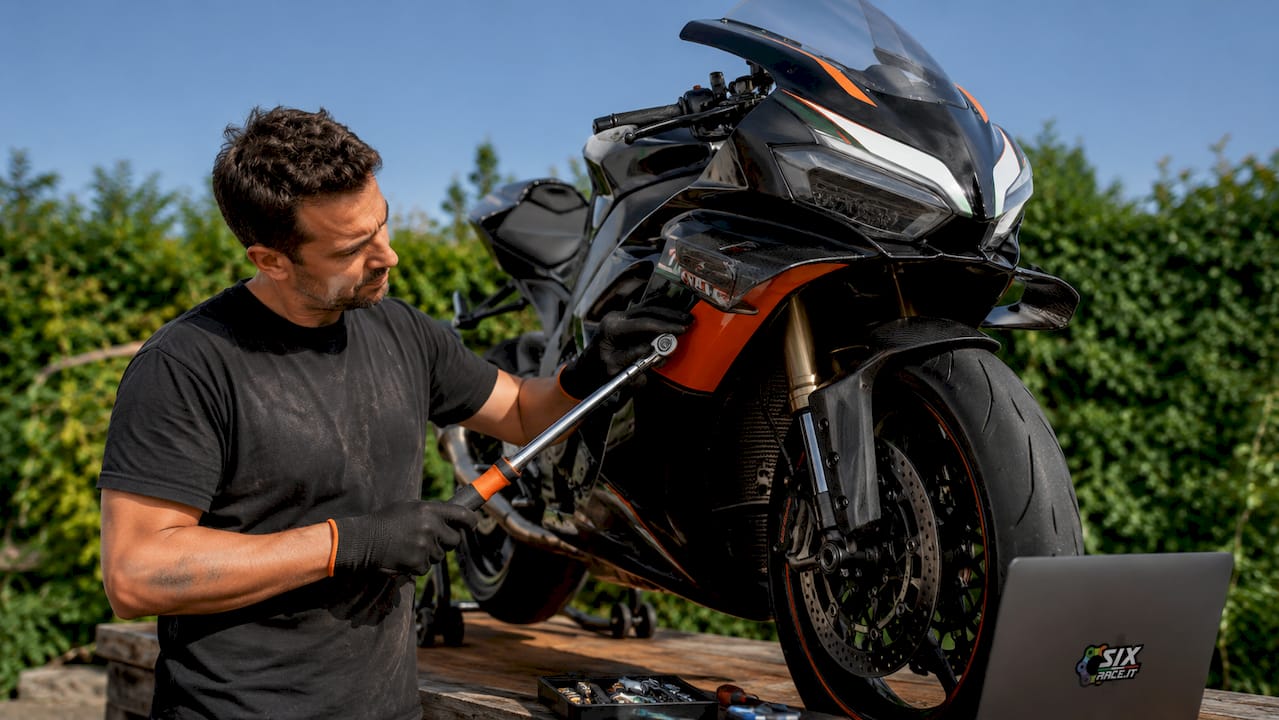
Sport bike aerodynamic accessories are specialised components designed to improve a motorcycle’s stability, speed, and handling by manipulating airflow, reducing drag, and generating downforce. These parts range from static winglets and motorcycle fairings to active wing systems that respond in real time to six-axis IMU data. For riders who push their bikes hard on track days or fast road routes, the right aerodynamic upgrades are not cosmetic choices. They are performance decisions with measurable consequences for lap times, rider confidence, and safety.
1. What are the top sport bike aerodynamic accessories?
The term “aerodynamic accessories” covers a broad family of parts. Each one targets a specific aerodynamic problem, whether that is front-wheel lift, turbulence around the rider, or excessive drag at high speed. The ten accessories below represent the most effective options available in 2026.
Winglets
Winglets are the most visible aerodynamic upgrade on modern sport bikes. Winglets improve high-speed stability by combating front-wheel lift during acceleration, which allows earlier throttle application and better corner exit. They work by generating downforce on the front axle, keeping the tyre planted under hard acceleration. On a track, this translates directly into faster drive out of slow corners and fewer unwanted wheelies.
Aerodynamic fairings
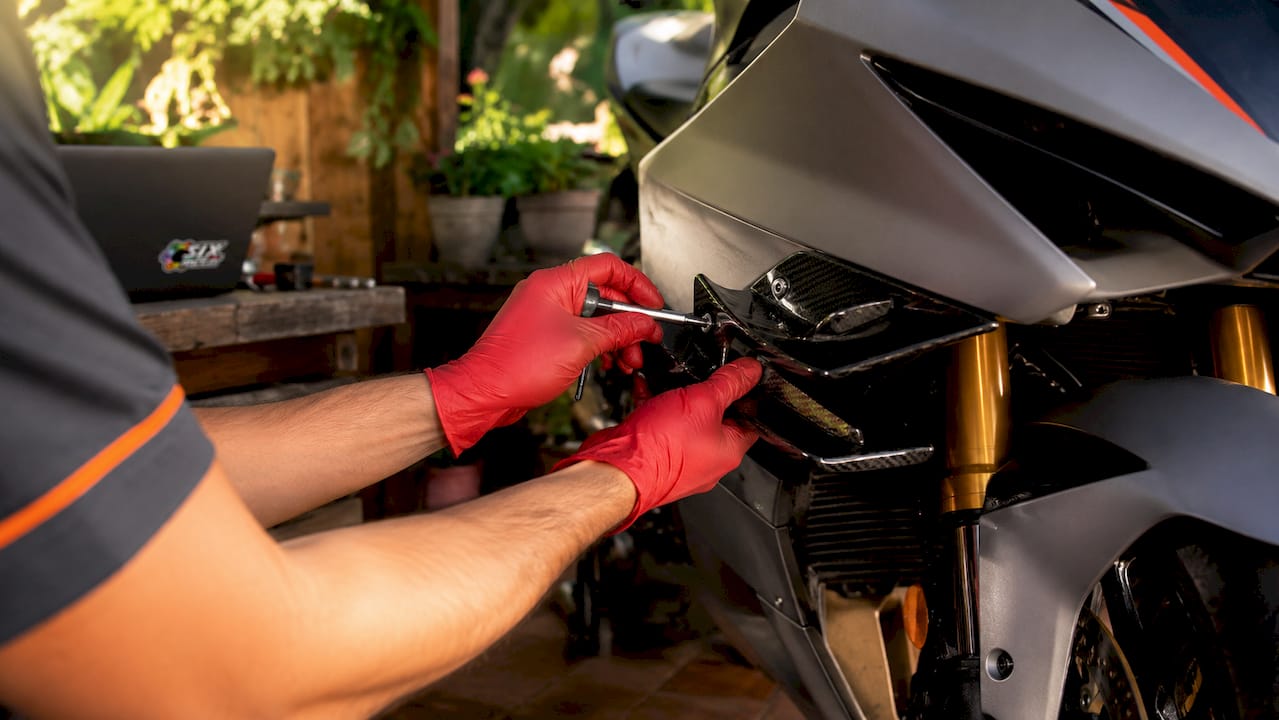
Full aerodynamic fairings reshape the entire airflow path around the bike and rider. A well-designed fairing reduces the frontal area exposed to oncoming air and channels turbulent flow away from critical mechanical components. Proper fairing shaping increasingly incorporates internal airflow channels rather than relying solely on external winglets. This trend towards subtle, integrated designs delivers performance without adding visual bulk.
Active aero wing systems
Active aero systems represent the most advanced category of aerodynamic upgrade currently available. These systems use six-axis IMU data to adjust wing angles independently on each side of the bike during acceleration, braking, and cornering. Active aerodynamic wings adjust independently per side in corners and braking, using IMU input for dynamic optimisation that improves lean and roll control. No static accessory can match this level of responsiveness.
Sport bike windshields
A sport bike windshield redirects airflow over and around the rider rather than allowing it to strike the chest and helmet directly. This reduces rider fatigue on long high-speed runs and lowers the effective drag coefficient of the rider-plus-bike system. Taller screens offer more protection at motorway speeds, while shorter, sportier screens suit track use where the rider adopts a more aggressive tuck. Choosing the correct height for your riding position is as important as the screen material itself.
Wheel deflectors
Wheel deflectors mount around the front wheel and fork area to manage the turbulent air generated by a spinning tyre. Without deflectors, this turbulence disrupts the airflow feeding the fairing and cooling the front brake. Aftermarket wheel deflectors typically mount with adhesives, making them accessible for riders who want an aerodynamic upgrade without drilling into their bodywork. The adhesive bond must be treated seriously, as a poorly prepared surface will cause the part to detach at speed.
Tail spoilers
A tail spoiler manages the low-pressure wake that forms behind the rider and seat unit. Without intervention, this wake creates drag by pulling the rear of the bike backwards. A correctly shaped tail spoiler accelerates the air leaving the rear of the bike, reducing the size of the turbulent wake and lowering overall drag. Tail spoilers also contribute to rear downforce at very high speeds, which improves straight-line stability.
Under-fairing panels
Under-fairing panels close off the underside of the engine and frame area, preventing high-pressure air from becoming trapped beneath the bike. Trapped air creates lift, which reduces tyre contact and destabilises the bike at speed. Smooth under-fairing panels also reduce aerodynamic drag by presenting a cleaner surface to airflow passing beneath the machine. Many sport bikes leave the factory with partial under-fairing coverage, making aftermarket panels a straightforward upgrade.
Belly pans
A belly pan is a close relative of the under-fairing panel but extends further rearward to cover the exhaust headers and lower frame rails. Beyond aerodynamic benefits, belly pans protect mechanical components from road debris and reduce heat exposure to the rider’s legs. On track-focused machines, belly pans are standard equipment. On road bikes, they are an underused upgrade that delivers both aerodynamic and protective gains.
Seat cowls and tail units
A seat cowl replaces the pillion seat with a streamlined cover that smooths the airflow leaving the rear of the bike. The aerodynamic benefit is modest at road speeds but becomes meaningful above 180 km/h, where the pillion seat area creates significant turbulence. Seat cowls are also among the lightest aerodynamic upgrades available, making them a popular first modification for riders who want to combine weight reduction with improved airflow. Pairing a seat cowl with a tail spoiler amplifies the benefit of both parts.
Radiator and brake duct kits
Radiator and brake duct kits channel cool air directly to the radiator and front brake caliper. This is not purely an aerodynamic upgrade. It is a thermal management solution that keeps the braking system and engine within their optimal temperature ranges during sustained high-speed use. On track days, brake fade caused by overheating is a genuine safety concern. Directing cool airflow to the caliper reduces this risk and maintains consistent braking performance across multiple hard laps.
Pro Tip: When fitting any adhesive-mounted aerodynamic part, clean the mounting surface with high-purity isopropyl alcohol and allow it to dry fully before applying the adhesive. Skipping this step is the single most common cause of premature part failure at speed.
2. How do active aerodynamic systems on sport bikes work?
Active aerodynamic systems are the most significant development in bike aerodynamics since the introduction of winglets in MotoGP. They replace fixed, static wings with movable surfaces that change angle in response to real-time data from the bike’s inertial measurement unit.
The IMU measures acceleration, braking force, lean angle, and roll rate across six axes simultaneously. The system uses this data to calculate the optimal wing angle for the current riding condition and adjusts both wings independently. During hard acceleration, the wings flatten to generate maximum downforce on the front axle. During cornering, the inner and outer wings adjust to different angles to balance aerodynamic load across the contact patches.
The performance gains from active systems are substantial. Active aero wings reduce drag by 12% during acceleration and increase front-wheel downforce by 45% at high speeds compared to conventional setups. That 45% downforce increase is the difference between a front wheel that lifts under power and one that stays planted through the exit of a fast corner.
Active aerodynamic technology represents the future of motorcycle aerodynamics, shifting from static to dynamically controlled systems for better stability and control across all riding conditions. Prototype sport bikes equipped with these systems have achieved top speeds exceeding 300 km/h by balancing drag and downforce through controlled wing angles rather than fixed compromises.
Patents filed by manufacturers including QJMotor confirm that independent per-side wing control is moving from prototype to production intent. The technology is no longer a racing experiment. It is entering the mainstream sport bike market.
3. Practical considerations when installing aerodynamic accessories
Installing aerodynamic parts correctly is as important as choosing the right parts. A poorly fitted winglet or fairing panel can create more problems than it solves.
-
Prepare the surface properly. Adhesive-mounted parts require a clean, dry, grease-free surface. Surface cleaning with isopropyl alcohol is the standard method and must not be skipped. Any contamination will compromise the bond and risk the part detaching at speed.
-
Retune your suspension after fitting aero parts. Aerodynamic accessories change the bike’s centre of pressure, which alters suspension load and handling. Adding downforce without adjusting spring preload and damping can make the bike feel heavy and unresponsive in corners. A suspension setup session after fitting significant aero upgrades is not optional for riders who value handling precision.
-
Understand the speed threshold. Aerodynamic effectiveness depends on speed. At low urban speeds, winglets and deflectors contribute almost nothing to stability or drag reduction. Their benefits become significant during high-speed or aggressive riding. Fitting a full aero kit for city commuting is a waste of money and adds unnecessary weight.
-
Consider the effect on trailing riders. Fixed winglets create turbulent wakes that can negatively affect riders following closely behind. On track days with group riding, this is a genuine consideration. Active systems that adjust wing angle reduce the severity of this wake turbulence compared to fixed winglets at maximum angle.
-
Check compatibility with your specific model. Many aerodynamic accessories are designed for specific fairing profiles and mounting points. A part designed for one generation of a model may not fit the next. Always verify fitment by make, model, and year before purchasing.
Pro Tip: If you are fitting aerodynamic upgrades ahead of a track day, do a short road session first to check for any vibration, unusual handling, or signs of poor fitment before committing to high-speed use.
4. How to choose the right aerodynamic accessories for your riding style
Choosing the right performance bike aerodynamics starts with an honest assessment of where and how you ride.
Riders who spend most of their time on track or at high-speed road events will benefit most from winglets, active aero systems, and full fairing kits. Aerodynamic accessories deliver greatest benefits in high-speed corners and racing scenarios, with diminishing returns in city riding. For these riders, investing in higher-specification parts with proven downforce and drag reduction data makes sense.
Riders who mix track days with regular road use need accessories that perform well at speed but do not compromise comfort or practicality at lower speeds. A quality windshield, a belly pan, and a set of wheel deflectors cover the most useful aerodynamic bases without requiring suspension retuning or specialist fitting.
| Riding profile | Recommended accessories | Key benefit |
|---|---|---|
| Track focused | Winglets, active aero, full fairing kit | Maximum downforce and drag reduction |
| Mixed road and track | Windshield, belly pan, wheel deflectors | Balanced performance and practicality |
| Road touring at speed | Windshield, tail spoiler, under-fairing panel | Reduced rider fatigue and drag |
| Budget upgrade | Seat cowl, wheel deflectors | Accessible gains with minimal installation complexity |
Entry-level aerodynamic kits use fixed, static parts made from ABS plastic or fibreglass. They deliver real benefits at high speed but cannot adapt to changing conditions. Advanced systems use carbon fibre construction and, in the most recent generation, active adjustment. The cost difference is significant, but so is the performance gap at the top end of the speed range.
Key takeaways
The most effective sport bike aerodynamic upgrades combine the right accessory type with proper installation, suspension retuning, and a clear understanding of the speed ranges where each part delivers real benefit.
| Point | Details |
|---|---|
| Active aero outperforms static parts | Active systems reduce drag by 12% and increase front downforce by 45% versus fixed winglets. |
| Surface preparation is critical | Clean mounting surfaces with isopropyl alcohol before fitting any adhesive-mounted part. |
| Suspension retuning is required | Adding downforce changes the bike’s centre of pressure and demands a suspension setup adjustment. |
| Speed determines effectiveness | Aerodynamic parts deliver minimal benefit below urban speeds and maximum benefit at track or high-road speeds. |
| Match accessories to riding profile | Track riders need winglets and full kits; road riders benefit most from windshields, belly pans, and deflectors. |
Aerodynamics on sport bikes: what I have actually learned
I have spent years watching riders bolt on winglets and fairings expecting an immediate transformation, only to find the bike feels different in ways they did not anticipate. The aerodynamic benefit is real. The handling change is also real, and it catches people out.
The most underestimated step in any aerodynamic upgrade is the suspension retuning that follows. Riders who skip it often report that the bike feels “heavy” or “reluctant to turn in.” That is not the aero parts failing. That is the suspension working against a changed load distribution. A single setup session with a competent technician resolves it completely.
On active aero systems, I think the industry is at an inflection point. The patents from QJMotor and the prototype work from CFMoto confirm that IMU-driven wing control is production-ready. Within two or three model cycles, active aero will be a standard feature on flagship sport bikes rather than an exotic prototype detail. Riders who understand how these systems work now will be far better placed to use them effectively when they arrive on showroom floors.
My practical advice is this: start with the accessories that match your actual riding. A windshield and belly pan on a road bike will deliver more usable benefit than a set of aggressive winglets you only use twice a year on track. Build the aerodynamic package around your riding, not around what looks fastest in photographs.
— Matteo
Upgrade your sport bike with Sixrace
Sixrace stocks a carefully selected range of aerodynamic and performance accessories for sport bikes, covering motorcycle fairings and plastics, windshields, and a broad catalogue of performance accessories from established manufacturers including Evotech Performance, Powerbronze, R&G, and Acerbis. Every product in the catalogue is matched by make, model, and year, so compatibility checks take seconds rather than minutes.

Whether you are fitting your first windshield or building a full aerodynamic package for track use, Sixrace provides the parts and the technical detail to make the right choice. Riders across Europe use Sixrace for competitive pricing, tracked shipping, and multilingual support. Visit the Sixrace discount page to access your reserved discount on the full range of sport bike aerodynamic and performance parts.
FAQ
What are sport bike aerodynamic accessories?
Sport bike aerodynamic accessories are specialised parts, including winglets, fairings, windshields, and deflectors, designed to reduce drag, increase downforce, and improve stability at high speeds.
Do winglets actually improve sport bike performance?
Winglets improve high-speed stability by reducing front-wheel lift during acceleration, which allows earlier throttle application and better corner exit on both road and track.
How do active aero systems differ from standard winglets?
Active aero systems use six-axis IMU data to adjust wing angles independently in real time during acceleration, braking, and cornering, whereas standard winglets remain fixed at a single angle regardless of riding conditions.
Are aerodynamic upgrades useful for road riding?
Aerodynamic accessories deliver their greatest benefits at high speeds and in aggressive riding scenarios. At typical urban speeds, the performance gains are minimal, making windshields and belly pans the most practical road-focused upgrades.
Do I need to retune my suspension after fitting aero parts?
Adding aerodynamic downforce changes the bike’s centre of pressure and increases suspension load, so a suspension setup adjustment is recommended after fitting significant aerodynamic upgrades to maintain correct handling balance.
 Italiano
 Deutsch
 Français
 Español
 English
 Polski