
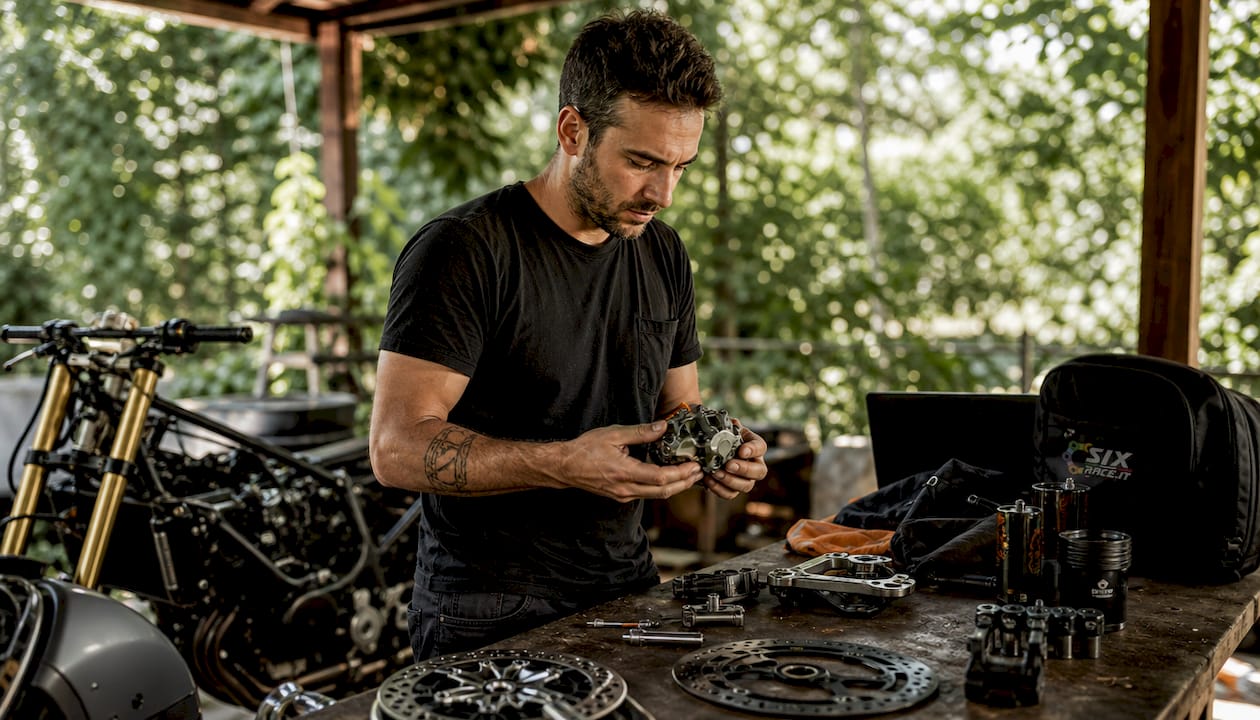
Bike-specific parts compatibility is the practice of matching replacement or upgrade components precisely to your motorcycle’s model, year, and configuration to ensure safety and correct function. The industry term for this process is “fitment verification,” and it covers far more than simply checking whether a part looks the right shape. Correct fitment depends on OEM part numbers, VIN codes, mounting point dimensions, connector types, and material interactions. Get it wrong, and you risk poor performance, premature wear, or a genuine safety hazard. Get it right, and every component works as the manufacturer intended.
What is bike-specific parts compatibility and why does it matter?
Bike-specific parts compatibility is defined as the confirmation that a replacement or aftermarket component meets the exact mechanical, dimensional, and functional specifications of your motorcycle’s original part. This goes beyond brand or model name. Two bikes sharing the same name but built in different years, for different markets, or with different factory options can require entirely different components.
The consequences of a compatibility error range from inconvenient to dangerous. A brake caliper bracket that is 2mm out of tolerance will cause uneven pad wear. An incorrectly specified chain will stretch prematurely and risk snapping under load. Understanding why model year matters for fitment is the first step every rider should take before ordering any part.
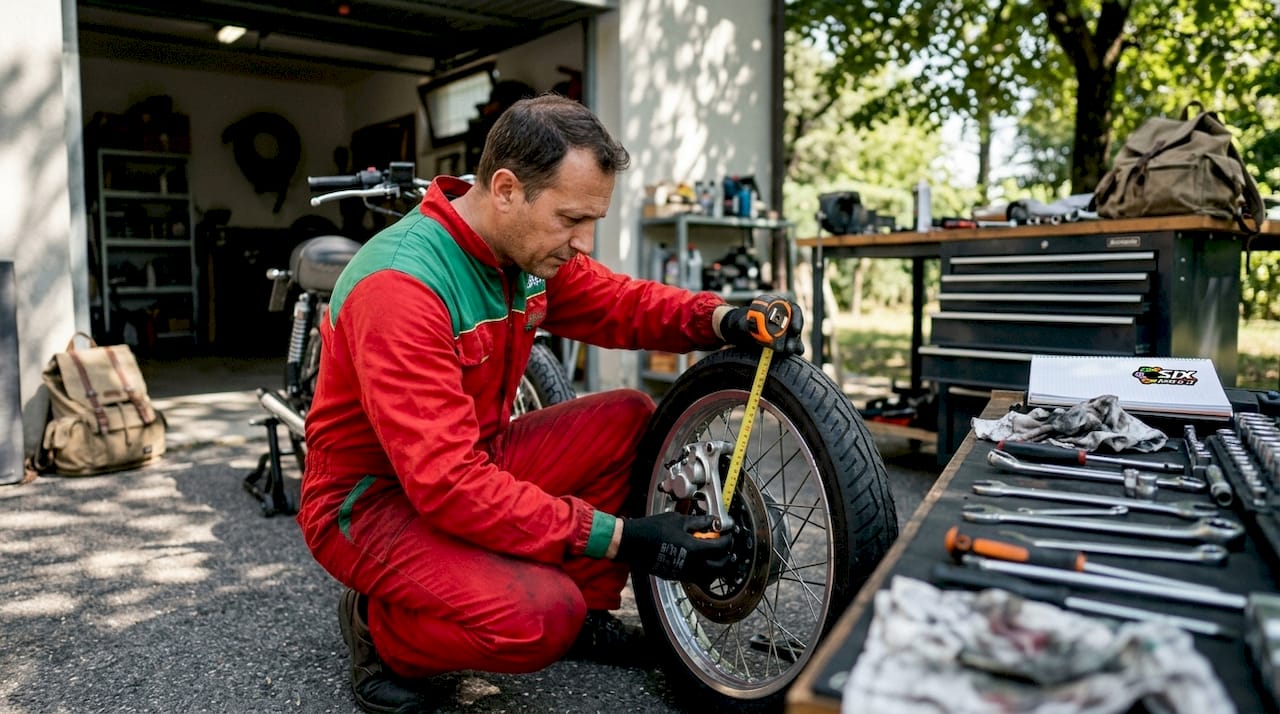
Fitment verification also has a direct cost implication. Returning a part, paying for re-shipping, and waiting for a replacement adds up quickly. Verifying compatibility before purchase is always cheaper than correcting a mistake after the fact.
How to identify compatible parts using OEM numbers, VIN, and technical references
The most reliable method for confirming bike component compatibility is cross-referencing the OEM part number. OEM stands for Original Equipment Manufacturer, and each factory component carries a unique alphanumeric code that identifies it precisely within the manufacturer’s catalogue. Searching by this number eliminates ambiguity caused by generic descriptions or model names.
The VIN is equally critical. A unique 17-character identifier, the VIN reveals your motorcycle’s model, production year, configuration, and assembly facility. Two bikes sold under the same name in the same year can have different VINs reflecting different specifications. Always locate your VIN on the frame or steering head before searching for parts.
Key identification methods include:
- OEM part number search: Enter the number directly into a manufacturer catalogue or specialist retailer search to find exact matches and any superseding numbers.
- VIN decoder: Use the manufacturer’s official VIN lookup tool to confirm your bike’s precise specification before selecting components.
- Exploded parts diagrams: These technical drawings show every component in its assembly position, making it straightforward to identify the correct part for your specific sub-variant.
- Superseding part numbers: Manufacturers update part numbers when a component is revised. Always check whether the original number has been superseded to avoid ordering an obsolete part.
- Mid-production change records: Technical drawings and updated part numbers are essential when a manufacturer changed suppliers or designs partway through a production run.
Pro Tip: Before ordering, photograph your existing part and note any markings, casting numbers, or date codes stamped on it. These details help confirm you have the correct variant, particularly on older models where catalogue data can be incomplete.
OEM vs aftermarket parts: compatibility and performance differences
OEM parts are factory original components manufactured to the exact specification used on the production line. They carry a guaranteed fit for the model and year they are listed against. OEM parts cost 30% to 100% more than reputable aftermarket alternatives, depending on the component type. That premium reflects the guaranteed fitment and the manufacturer’s liability for the part’s performance.
Aftermarket parts are produced by third-party manufacturers to OEM specifications or, in some cases, to improved specifications. They often deliver strong value, particularly for consumables. Consumables such as oil, filters, brake pads, spark plugs, and drive kits represent over 55% of EU aftermarket motorcycle parts sales. These components have relatively straightforward compatibility requirements compared to structural or electronic parts.
| Category | OEM parts | Aftermarket parts |
|---|---|---|
| Fitment guarantee | Exact factory match | Varies by manufacturer quality |
| Price | 30%–100% higher | More affordable, especially for consumables |
| Safety-critical use | Recommended | Only if certified by recognised bodies |
| Performance potential | Factory standard | Can exceed OEM in some applications |
| Availability | Limited to model lifespan | Often available long after OEM discontinuation |
Aftermarket parts should be avoided for safety-critical systems unless they carry certification from a recognised body such as ABE in Central Europe. Certification confirms that the component has been tested to verified performance and safety standards. For non-critical components such as bodywork, bar end weights, or tail tidies, quality aftermarket options from established brands are entirely appropriate.
Pro Tip: For brakes, suspension, and steering components, always choose OEM or a certified aftermarket equivalent. For consumables and accessories, reputable aftermarket brands from suppliers like Evotech Performance, R&G, or Acerbis offer excellent fitment and often better value.
Common compatibility challenges: hidden variants and installation nuances
Model year alone does not guarantee compatibility. Manufacturers frequently introduce mid-cycle changes to components, suppliers, or sub-assemblies without changing the model name or year designation. Brake pad compatibility requires matching specific caliper types and physical plate profiles via technical drawings or manufacturer part numbers. A manufacturer may switch caliper suppliers mid-production, meaning two bikes built in the same year require different pads.
Hidden variants are a particularly common source of compatibility errors. Regional specifications, special edition packages, or factory accessory options such as BMW’s Option 719 programme affect which parts fit your specific machine. A general model-year search will return results for the standard variant, which may not match your bike’s actual configuration.
Beyond physical dimensions, material interactions also affect compatibility. Brake pads require a bedding-in process of 200–300 km of gradual braking to establish proper material interaction with the disc surface. This is not a physical fitment issue. It is a functional compatibility requirement that affects safety and disc longevity.
The most common compatibility pitfalls to avoid:
- Searching by model name only: Always include the production year and, where possible, the VIN or equipment code.
- Ignoring regional variants: USA and EU specification bikes often use different components, particularly for exhaust systems and lighting.
- Assuming visual similarity confirms fit: A part that looks identical may have different thread pitch, bracket offset, or connector type.
- Overlooking mid-production changes: Check whether your bike’s build date falls before or after a known specification change.
- Skipping the bedding-in process for brakes: Installing new pads without proper bedding reduces braking efficiency and shortens disc life.
- Relying on a single catalogue source: Cross-reference at least two sources, including the manufacturer’s own documentation, before purchasing.
Practical steps to verify bike part compatibility before purchase
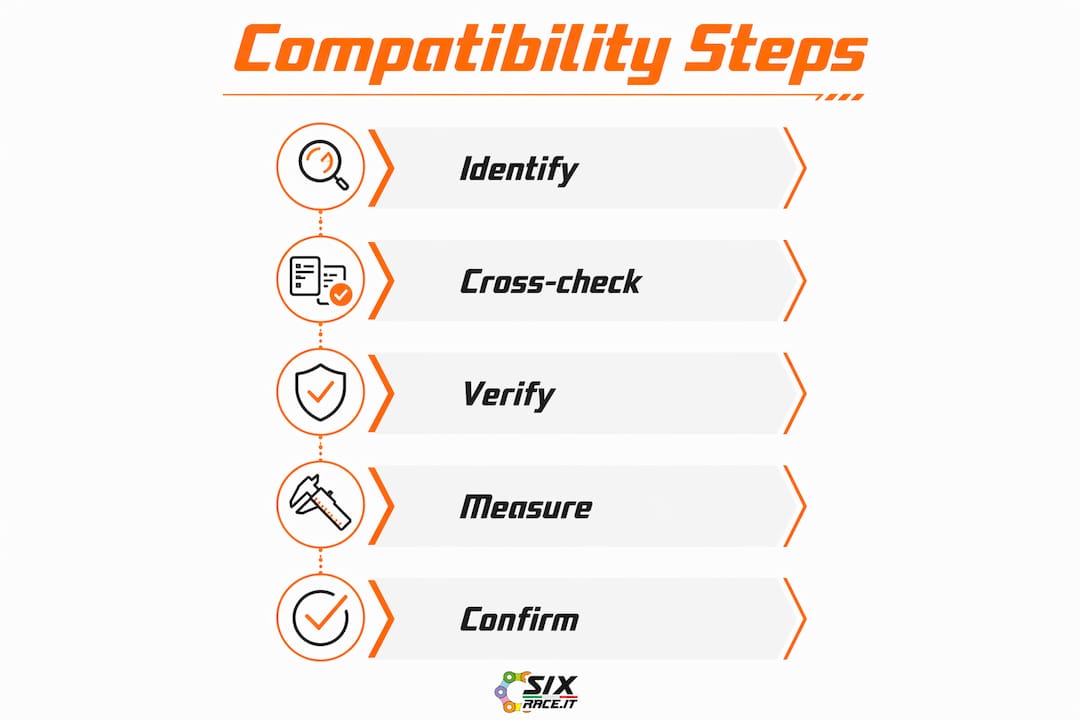
Compatibility verification is a two-way responsibility. Catalogue search tools and fitment guides reduce risk significantly, but the rider must independently confirm mounting points, connector shapes, and dimensions against the existing part. Catalogue errors do occur, and the consequences of a mismatch fall on the owner.
Practical steps for reliable fitment verification:
- Use a VIN-linked part finder: Specialist retailers and manufacturer portals allow you to filter by make, model, year, and VIN to narrow results to your exact configuration.
- Consult exploded parts catalogues: Official manufacturer documentation shows every component in its assembly context, making it straightforward to identify the correct part number.
- Cross-reference multiple sources: Compare the part number returned by a retail fitment guide against the manufacturer’s own catalogue and at least one independent source.
- Check the retailer’s return policy: Even with thorough verification, fitment errors can occur. A clear returns policy protects you if a part does not fit as listed.
- Contact specialist customer support: Retailers with dedicated technical support, such as Sixrace, can confirm compatibility for complex queries involving hidden variants or mid-production changes.
Experienced mechanics stress independent verification of technical details even when catalogue tools confirm a match. This is particularly true for safety-critical components where a fitment error carries real risk.
Pro Tip: Before purchasing a brake component, remove the existing part and measure the pad plate dimensions and caliper mounting distance directly. Compare these measurements against the manufacturer’s technical drawing for the replacement part. This takes ten minutes and eliminates the most common source of brake fitment errors.
Key takeaways
Correct bike-specific parts compatibility requires VIN verification, OEM part number cross-referencing, and independent confirmation of mounting dimensions before any component is purchased or installed.
| Point | Details |
|---|---|
| VIN is the primary identifier | Always use your 17-character VIN to confirm your bike’s exact specification before searching for parts. |
| OEM costs more but guarantees fit | OEM parts cost 30%–100% more than aftermarket but carry a guaranteed fitment for your model and year. |
| Hidden variants cause errors | Regional specs, special editions, and mid-production changes mean model year alone is not sufficient for compatibility. |
| Safety-critical parts need certification | For brakes, suspension, and steering, use OEM or aftermarket parts certified by a recognised body such as ABE. |
| Independent verification is non-negotiable | Cross-reference at least two sources and physically measure existing components before ordering replacements. |
Why I think most riders underestimate the complexity of parts compatibility
Most riders assume that knowing their bike’s make, model, and year is enough to order any part with confidence. In practice, that assumption causes a significant proportion of fitment errors. I have seen riders order brake pads for a named model and year, only to find the caliper on their specific machine was sourced from a different supplier during a mid-production revision. The pads looked correct. The part number matched the catalogue. But the plate profile was 3mm too wide.
The detail that catches most people out is the hidden variant problem. Manufacturers rarely publicise mid-cycle changes. They do not issue press releases when they switch a caliper supplier or revise a bracket design. The only reliable way to catch these changes is to use the VIN, consult exploded diagrams, and, when in doubt, contact a specialist retailer who knows the catalogue well enough to flag known discrepancies.
My honest view is that aftermarket parts get an unfair reputation for poor fitment. The fitment errors I have seen most often come from incorrect part selection, not from the aftermarket part itself being poorly made. A quality aftermarket component from a reputable brand, selected using the correct VIN and part number, will fit as well as the OEM equivalent. The problem is the selection process, not the part.
The motorcycle parts market is also changing faster than many riders realise. Electronics, ride-by-wire systems, and CAN-bus connected components mean that physical fitment is now only one dimension of compatibility. An accessory that mounts correctly but interferes with the bike’s electronic control unit creates a different kind of problem entirely. Staying current with these developments is part of what it means to be a serious enthusiast in 2026.
— Matteo
Parts you can trust, matched to your exact bike
Sixrace organises its entire catalogue by make, model, year, and part number, so you can filter directly to components confirmed for your specific configuration. Whether you need OEM-equivalent replacements or performance upgrades from brands such as Evotech Performance, R&G, Acerbis, or Gilles Tooling, every listing includes fitment information to reduce the risk of ordering errors.
The Sixrace team provides multilingual technical support for compatibility queries, including hidden variant checks and mid-production change identification. You can browse Honda motorcycle parts with full fitment filtering, or explore the Evotech Performance range for accessories matched to your model. Sixrace customers also have access to a reserved discount on the full catalogue. Claim your exclusive discount here and order with confidence.
FAQ
What does bike-specific parts compatibility mean?
Bike-specific parts compatibility means confirming that a replacement or upgrade component matches the exact mechanical, dimensional, and functional specifications of your motorcycle’s original part, verified using OEM part numbers, VIN codes, and technical drawings.
How do I use my VIN to check part compatibility?
Your VIN is a unique 17-character code found on the frame or steering head. Enter it into the manufacturer’s official catalogue or a specialist retailer’s part finder to identify your bike’s precise specification and filter compatible components.
Are aftermarket parts compatible with my motorcycle?
Quality aftermarket parts from reputable manufacturers are compatible when selected using the correct VIN and OEM part number. For safety-critical systems such as brakes and suspension, choose parts certified by a recognised body such as ABE.
Why might a part listed for my model year not fit my bike?
Mid-production changes, regional specification differences, and factory option packages mean that two bikes sharing the same model year can require different components. Always cross-reference your VIN and consult exploded parts diagrams to confirm fitment.
What is the bedding-in process for brake pads?
Brake pad bedding-in is a 200–300 km process of gradual braking that deposits an even friction layer on the disc surface. This functional compatibility step is required after fitting new pads to achieve full braking efficiency and extend disc life.
 Italiano
 Deutsch
 Français
 Español
 English
 Polski