
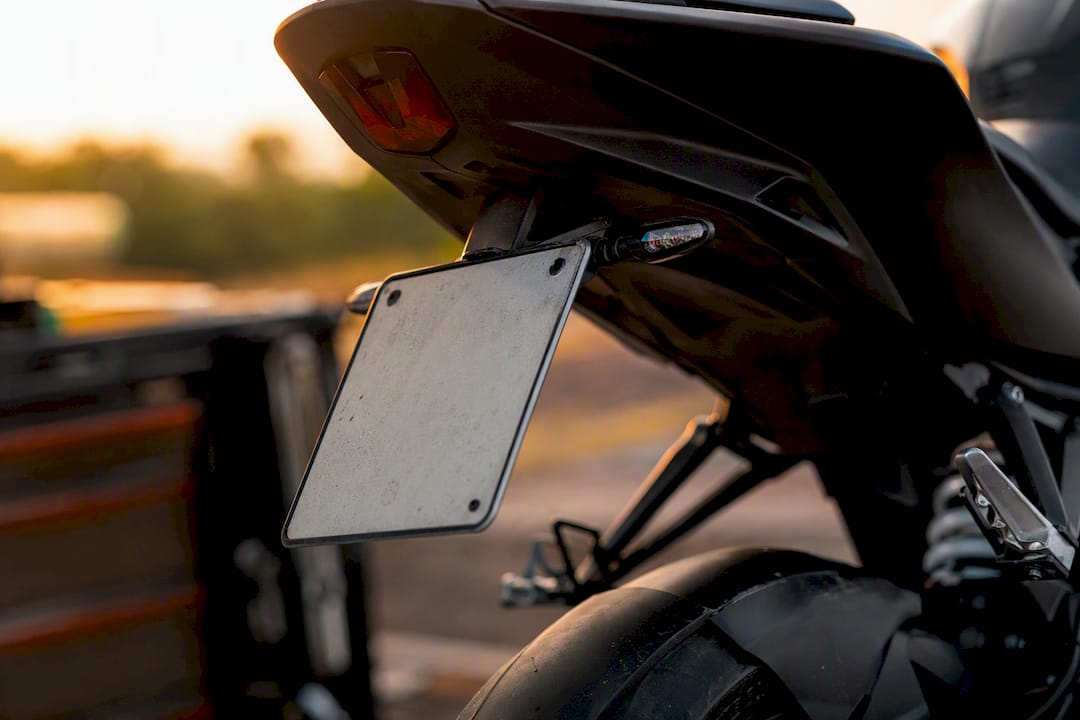
A side-mounted licence plate is not automatically illegal in Italy, but it is legal only under strict conditions. Article 100 of the Codice della Strada and Article 259 of the Regolamento di attuazione govern the matter, and together they set out exactly how a plate must sit, tilt, and remain visible regardless of where it’s fitted.
The law doesn’t ban lateral positioning outright, but bans any positioning, lateral or otherwise, that breaks the visibility, height, or angle thresholds set in the regulation. Get those wrong and you’re looking at a fine even if the plate itself is genuine and correctly registered.
- Verdict: lateral mounting is conditionally legal, not automatically legal
- Governed by: Art. 100 CdS (plate requirements, sanctions) and Art. 259 Reg. attuazione (technical geometry)
- Before fitting anything: check visibility angles, ground height, and tilt tolerances
100](https://aci.gov.it/codice-della-strada/art-100/).
Key Takeaways
Lateral licence plate mounting is legal in Italy only when it satisfies the height, angle, and visibility geometry set out in Article 259, alongside the plate rules in Article 100.
| Point | Details |
|---|---|
| Legal basis | Art. 100 CdS and Art. 259 Reg. attuazione jointly govern where and how a plate can sit. |
| Height rule | Lower edge must clear 0.20 m from the ground on motorcycles; upper edge generally at or below 1.20 m. |
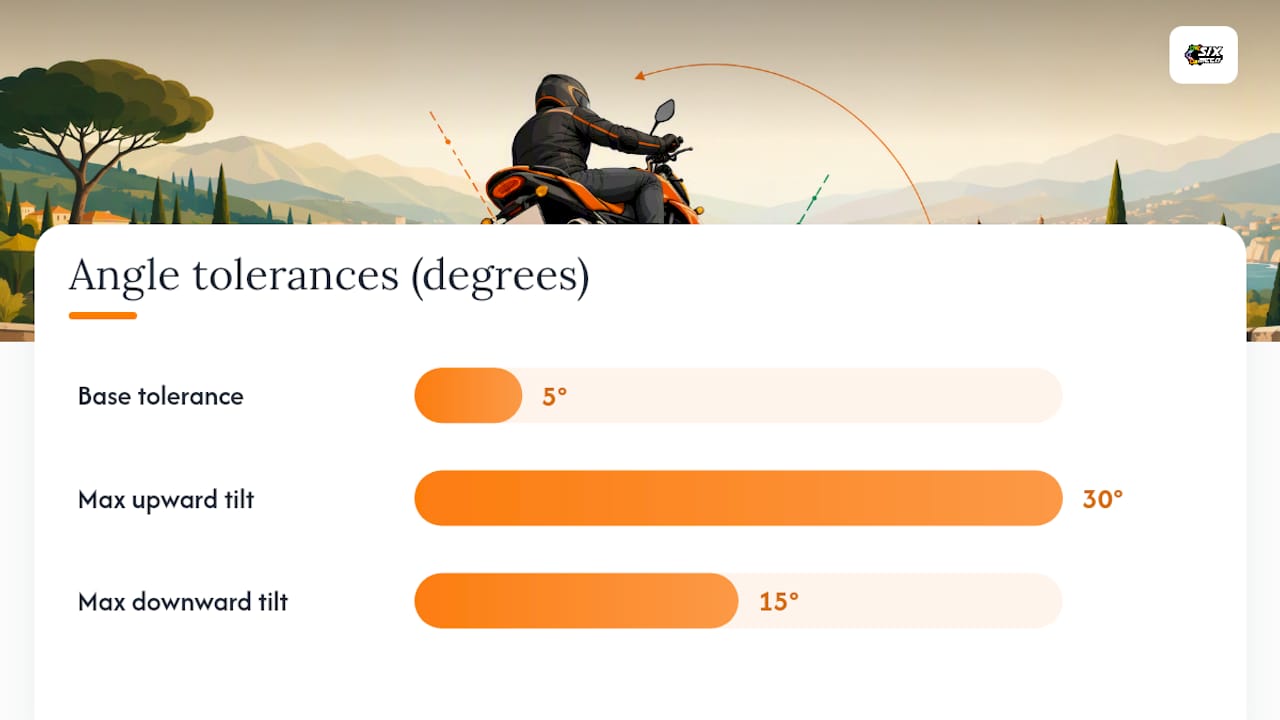
| Angle tolerance | 5° base perpendicularity tolerance, with up to 30° upward or 15° downward tilt under specific conditions. |
| Fines at stake | moderate administrative penalties for positioning faults; substantially higher fines for non-own or counterfeit plates |
| Compliant hardware | Sixrace’s model-specific plate holders and tail tidies are built to preserve the required mounting geometry. |
This article is general information, not a substitute for advice from a qualified lawyer. Consult a qualified legal professional about your own circumstances before acting on anything here.
Table of Contents
- Targa laterale normativa Italia: the legal texts you need to quote
- The measurements that decide whether your plate passes
- When does a lateral plate actually pass the legal test?
- What fines apply to non-compliant plates?
- Are there exceptions to the standard plate rules?
- How do you stay compliant before and after fitting a side plate?
- Fit a compliant plate holder without the guesswork
- Sources
Targa laterale normativa Italia: the legal texts you need to quote
Two provisions matter, and knowing them by number carries weight with a traffic officer.
Article 100 CdS requires every motoveicolo to carry a rear licence plate, treats the plate as personal to the vehicle, and lays out the sanction framework for breaches, from simple positioning faults to using someone else’s plate. The full text sits in the Codice della Strada as reproduced by ACI, with the original legislative version in the Gazzetta Ufficiale.
Article 259 of the Regolamento di attuazione handles the engineering side: perpendicularity, permitted tilt, and the geometric visibility zones a plate must sit inside no matter which side of the bike it’s bolted to.
The measurements that decide whether your plate passes
This is where side plate compliance in Italy either holds up or falls apart, because the regulation doesn’t deal in vague impressions. It deals in degrees and centimetres.
- Height from the ground. The lower edge must sit no less than 0.20 metres from the ground on motorcycles (0.30 m for other vehicle categories). The upper edge should generally stay at or below 1.20 metres, with exceptions permitted where the bike’s shape demands it, though never beyond 2 metres, per Art. 259’s height rules.
- Vertical tolerance. The plate must sit essentially perpendicular to the bike’s longitudinal axis, with a narrow tolerance either way.
- Permitted tilt. Beyond that base tolerance, the plate can lean within specified angle limits if it faces upward or downward, but only under the height conditions the regulation specifies alongside each figure.
- The four visibility planes. Legally, the plate must stay readable within two lateral planes set at 30° outward from each side, an upper plane at 15°, and a lower plane that’s either horizontal or angled to 15° downward when the plate sits above 1.20 m.
- Reflectivity and material. The plate surface must retain its retro-reflective properties. Frames are allowed only if opaque and covering no more than 3 mm of the plate’s edge, and reflective screws or covers are explicitly forbidden, as confirmed in the Prontuario Codice della Strada’s commentary on Art. 100.
Miss any one of these five points and the plate stops being a compliance question and becomes a liability, even if it’s perfectly genuine.
When does a lateral plate actually pass the legal test?
Specialist commentary on the subject agrees on one thing: a side-mounted plate can be lawful, but only if it clears every geometric hurdle simultaneously, according to Sicurmoto’s analysis. Use this as your workshop checklist before you commit to a lateral holder.
- Does the plate stay within the motorcycle’s outer silhouette, rather than protruding beyond the widest point of the bike?
- Is it readable from the side within that 30° lateral visibility plane?
- Does the lower edge clear the 0.20 m minimum height?
- Does the tilt sit within the 5° base tolerance, or within the 30°/15° allowances where the height conditions justify it?
- Are the retro-reflective properties intact, with no reflective screws or oversized frames covering the surface?
A rough field test works well here: stand at roughly 30° off the bike’s rear-side axis and check whether you can read the plate clearly without crouching or leaning. If you can’t, neither can a following vehicle, and neither can an officer.
Measure the offset from the bike’s median plane too. Most compliant lateral holders keep the plate close enough to the tail unit that it doesn’t extend past the rear light cluster or indicator, which naturally satisfies the silhouette requirement.
Pro Tip: Photograph the fitted plate alongside a tape measure showing height and offset, date the image, and keep it with your paperwork. If a traffic officer questions the mounting, you’ve got immediate, dated evidence rather than an argument.
Worth noting: enforcement in practice often looks less at millimetre-perfect angles and more at whether the plate is legible at a normal viewing distance, according to observations from FederIspettori. That doesn’t mean you can ignore the written thresholds. It means a plate that technically scrapes past the geometry but is genuinely hard to read in practice is still asking for trouble.
What fines apply to non-compliant plates?
The financial risk scales sharply depending on what’s wrong.
- Positioning or visibility breaches (wrong angle, wrong height, obstructed plate): fines generally include moderate administrative penalties.
- Using a plate that isn’t registered to your vehicle, or a counterfeit plate: fines become substantially higher, and falsification can carry criminal liability on top of the administrative penalty, per Art. 100’s sanction framework.
- Accessory sanctions: plate withdrawal, administrative immobilisation of the vehicle, and confiscation on repeated offences.
A rider who simply fits a lateral holder incorrectly faces the lower bracket. Someone running a plate that doesn’t belong to their bike faces a completely different order of magnitude.
Are there exceptions to the standard plate rules?
A handful of recognised cases sit outside the standard geometry, and it’s worth knowing them so you don’t mistake a legitimate exception for a loophole.
- Targa sostitutiva for competition use: authorised racing transfers on public roads can carry temporary yellow panels, but only under the specific event authorisation, not as a general styling choice.
- Targhe di prova (test plates): these come with their own transferability restrictions between vehicles and are not interchangeable with a standard registration plate.
- Trailers and carrelli appendice: when towed, these need a repeater plate matching the towing vehicle, with some older trailers subject to date-specific rules depending on original registration, as outlined in Art. 100’s provisions on rimorchi.
- Foreign-plated vehicles: these follow their own import and circulation timelines rather than domestic lateral-mounting rules, and shouldn’t be treated as a template for a domestically registered bike.
How do you stay compliant before and after fitting a side plate?
- Check the silhouette. Confirm the plate, once mounted, doesn’t project beyond the bike’s maximum width, viewed from directly behind.
- Set height and tilt. Measure the lower edge against the 0.20 m minimum, then check tilt against the 5° base tolerance or the wider 30°/15° allowances where applicable.
- Confirm reflectivity. Use only approved frames within the 3 mm edge limit, and never fit reflective screws or covers.
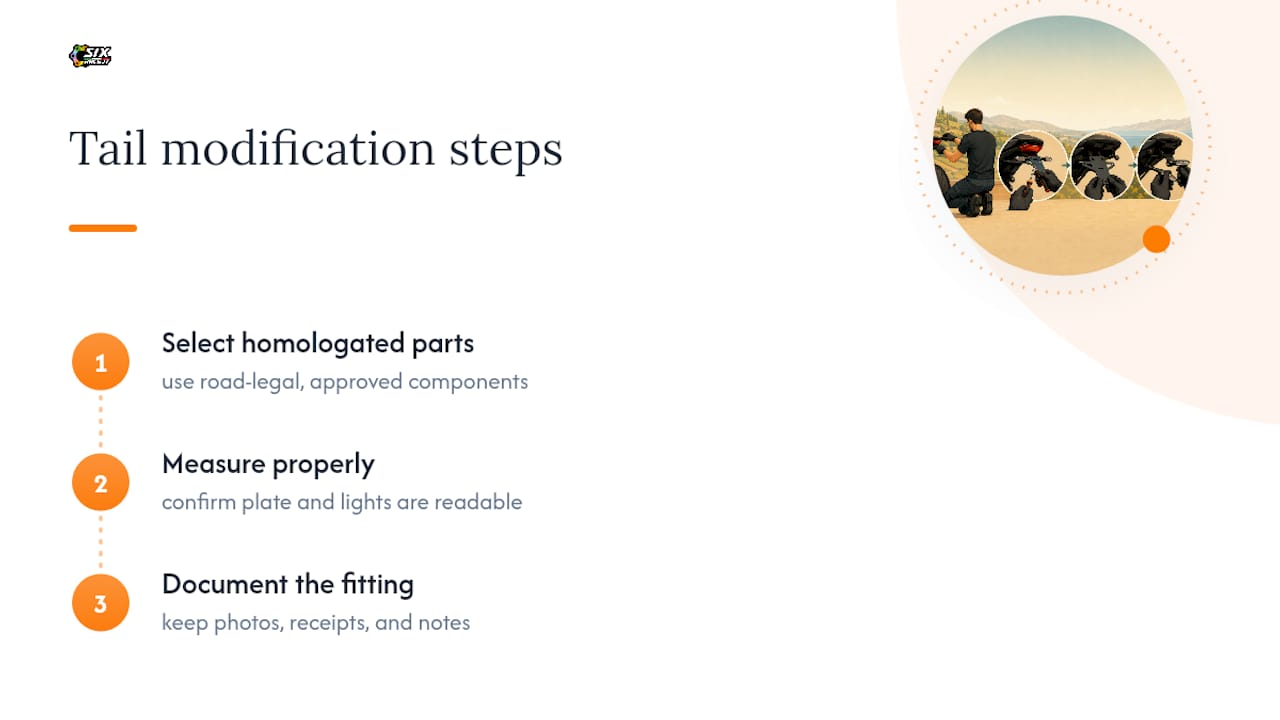
- Document everything. Photograph the finished mount with a tape measure in shot, note the date, and record the holder’s model and supplier.
Pro Tip: If you’re unsure whether your specific bike and holder combination clears all four geometry planes, ask a local motoring club or a private vehicle inspector to check it before you ride on public roads. Five minutes of inspection beats a roadside dispute.
A rider’s take on style versus the rulebook
Customising a tail section is one of the most satisfying jobs on a bike, and I understand the pull towards a cleaner, tucked-in look. But readability isn’t negotiable: choose homologated parts, measure properly, and keep your fitting documented.
Fit a compliant plate holder without the guesswork
Getting the geometry right starts with hardware built to hold it. Sixrace stocks tail tidies and licence plate holders designed around specific make, model, and year combinations, so the mounting angle and height are engineered into the part rather than left to a workshop guess.
Model-specific fitment matters here more than it does with most accessories: a holder built for a Ducati Panigale V4 won’t carry the same geometry as one designed for a BMW M1000 XR, and fitting the wrong one is how riders end up outside the visibility planes without realising it. Check your bike’s exact fitment against the catalogue, and browse the full accessories range if you’re sorting out lighting or reflectors at the same time. Head to the Sixrace discount page to claim your reserved discount before you order.
Sources
- Articolo 100 - Codice della strada | ACI
- Articolo 259 - Regolamento di Attuazione
- Articolo 100 – Targhe di immatricolazione degli autoveicoli, dei motoveicoli e dei rimorchi | Prontuario Codice della Strada
- Porta targa moto laterale: è legale? | Sicurmoto
 Italiano
 Deutsch
 Français
 Español
 English
 Polski