
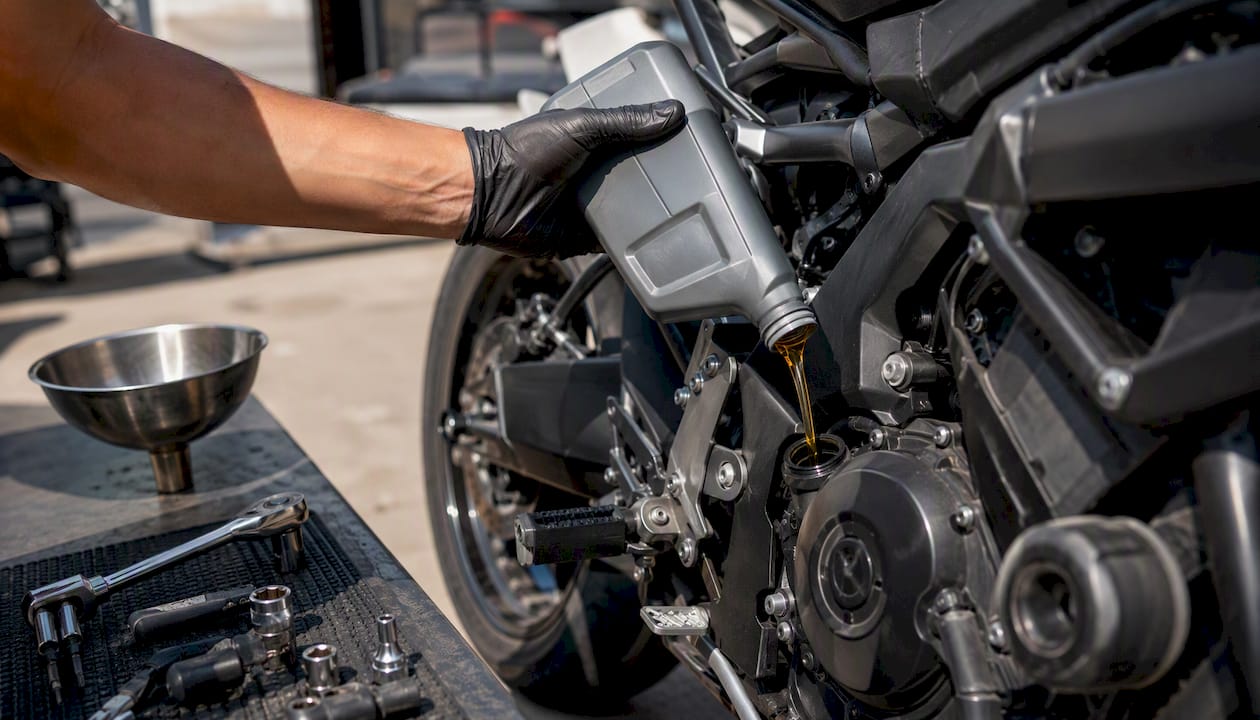
For most modern 4-stroke motorcycles, a mid-grade viscosity oil with JASO MA or MA2 classification is typically recommended as a starting point. It covers the majority of road, sport, and touring engines across Central Europe’s climate range, protects the wet clutch, and meets the transmission shear requirements that car oils simply cannot satisfy. Check your owner’s manual first, then match the SAE grade and JASO rating printed on the label before anything else.
Quick shortlist for Central Europe:
- Castrol POWER1 4T 10W-40 — widely available full-synthetic option with JASO MA2 labelling, suited to general road and touring use
- Castrol POWER1 ULTIMATE 4T 10W-40 / 10W-30 — premium formulation for high-revving or performance engines where reduced friction and faster warm-up matter
- Motul 5000 4T 10W-40 — long-standing semi-synthetic line carrying JASO MA; a reliable choice for sport and touring bikes
- Motul 5100 and 7100 lines — step up to 5100 (ester-blended semi-synthetic) or 7100 (full synthetic) for higher-stress applications
- Liqui Moly motorcycle oil range — strong European distribution, available in mineral, semi-synthetic, and full-synthetic grades; well suited to both classic and modern bikes
- Sixrace motor oil category — Central-European online retailer with model/year compatibility filters, verified product sourcing, and tracked shipping
TL;DR: open your owner’s manual, confirm the SAE viscosity and minimum JASO rating, then buy an oil from a verified retailer that prints both on the container.
Table of Contents
- Which motorcycle engine oils should you buy in Central Europe?
- How do you choose the correct engine oil for your motorcycle?
- Why motorcycle oil differs from car oil: JASO, shear stability, and the triangle of compromise
- Sixrace: a reliable source for motorcycle oil in Central Europe
- Key takeaways
- A practical note on buying motorcycle oil in Europe
- Further reading and technical sources
Which motorcycle engine oils should you buy in Central Europe?
The table below covers the main products available to Central-European riders. Pack sizes and price bands reflect typical online retail in the region; confirm current pricing at checkout.
| Product | Best for | SAE grades | JASO / API | Base oil | Pack sizes / price band (per litre) | Central Europe availability |
|---|---|---|---|---|---|---|
| Sixrace retail selection | All categories via model/year filter | Multiple | Varies by product | Varies | Multiple options | Online, tracked shipping |
| Castrol POWER1 4T 10W-40 | General road and touring | 10W-40 | JASO MA2 / API SN | Full synthetic | 1 L, 4 L / €10/L | Widely stocked online and in shops |
| Castrol POWER1 ULTIMATE 4T 10W-40 | Performance and high-revving engines | 10W-40, 10W-30 | JASO MA2 / API SN | Full synthetic | 1 L, 4 L / €14/L | Online retailers, specialist shops |
| Motul 5000 4T 10W-40 | Sport and touring, budget-conscious | 10W-40 | JASO MA / API SL | Semi-synthetic | 1 L, 4 L / €9/L | Widely stocked online and in shops |
| Motul 5100 4T 10W-40 | Mixed road and track use | 10W-40, 10W-30 | JASO MA / API SL | Ester-blended semi-synthetic | 1 L, 4 L / €12/L | Online retailers, specialist shops |
| Motul 7100 4T | High-performance and track | 10W-40, 10W-50, 20W-50 | JASO MA2 / API SN | Full synthetic | 1 L, 4 L / €16/L | Online retailers, specialist shops |
| Liqui Moly motorcycle oil | Classic and modern bikes, broad range | 10W-40, 15W-50, 20W-50 | JASO MA / MA2 | Mineral, semi, full synthetic | 1 L, 4 L / €9/L | Strong European distribution |
| Castrol Act>evo 4T | Commuter and scooter (4-stroke) | 10W-40, 20W-50 | JASO MA / API SL | Mineral / semi-synthetic | 1 L / €8/L | Widely stocked |
Who each pick suits best:
- Castrol POWER1 4T 10W-40 covers the largest share of modern road bikes without overspending.
- POWER1 ULTIMATE 4T is the correct choice when your engine runs hot, revs hard, or the manufacturer specifies a premium synthetic grade.
- Motul 5000 4T 10W-40 is the practical semi-synthetic option for riders who change oil on schedule and want a reputable brand at a moderate price.
- Motul 7100 is the full-synthetic pick for track days or high-displacement engines where thermal stability is non-negotiable.
- Liqui Moly’s range is particularly well distributed across Central Europe and covers older air-cooled engines that benefit from a mineral or semi-synthetic base.
Pro Tip: Buy the largest pack size that matches your drain interval. A 4-litre bottle typically costs less per litre than two 1-litre bottles, and you will have enough for a top-up between changes. Always verify that the JASO classification appears on the container itself, not just in the product description online.
How do you choose the correct engine oil for your motorcycle?
The owner’s manual is the single most authoritative source for oil selection. Honda’s aftersales guidance identifies five roles engine oil must perform simultaneously: lubrication, cooling, sealing, cleaning, and corrosion prevention. The manual specifies the SAE viscosity grade and the minimum performance standard (JASO, API, or ACEA) that satisfies all five. Deviating from those specifications can void warranty coverage and accelerate wear.
Mineral, semi-synthetic, or full synthetic?
Valvoline’s complete guide notes that synthetic oils typically offer superior high-temperature protection and longer drain intervals than mineral equivalents. The practical breakdown:
- Semi-synthetic: — a balanced choice for most standard road bikes. Motul 5000 4T is a representative example.
One important caveat: if your manual does not specify synthetic and the bike is under warranty, check the guidance before switching base oil types, as changing from mineral to full synthetic can alter seal behaviour in some older engines.
Step-by-step purchase checklist
- Open the owner’s manual and note the specified SAE grade and minimum JASO/API/ACEA rating.
- Confirm whether the engine uses a wet clutch (most 4-stroke motorcycles do) — this requires JASO MA, MA1, or MA2, not MB.
- Select the base oil type (mineral, semi-synthetic, full synthetic) based on engine age, usage intensity, and drain interval preference.
- Check the product label for the JASO classification mark and the API/ACEA code — both must appear on the container, not only in the product listing.
- Choose the correct pack size for your engine capacity plus a small reserve for top-ups.
- Add a compatible oil filter to the order — replacing the filter at every oil change is standard practice and prevents contamination of fresh oil.
- Note the manufacturer’s recommended drain interval and set a reminder.
Why motorcycle oil differs from car oil: JASO, shear stability, and the triangle of compromise
Most 4-stroke motorcycles share a single oil sump between the engine, gearbox, and wet clutch. That shared-sump design creates a fundamental engineering problem: the same oil must simultaneously protect metal surfaces under high load, resist mechanical shear through the gearbox, and maintain the correct friction level so the clutch engages cleanly. Castrol describes this as the “triangle of compromise” — improving performance on one axis typically affects the others, which is why motorcycle-specific formulations exist and why car oils are not a substitute.

Passenger-car oils often contain friction modifiers designed to reduce internal drag and improve fuel economy. In a motorcycle wet clutch, those same friction modifiers cause clutch slippage and, over time, glazing of the clutch plates. The shared-sump design also means less total oil volume and higher thermal and mechanical stress per litre compared with a typical car engine, so the oil degrades faster under equivalent conditions.
JASO classifications explained
The JASO T 903 standard defines four motorcycle oil categories. Container markings must indicate the oil’s JASO classification per the standard’s rules:
- JASO MA2: — higher friction coefficient within the MA band; preferred for bikes with more aggressive clutch engagement requirements
- JASO MB: low-friction category for scooters and motorcycles with dry clutches or automatic transmissions — using MB oil in a wet-clutch engine causes clutch slippage
Shear stability and drain intervals
High-rpm, high-stress operation accelerates viscosity loss through mechanical shear, particularly in the gearbox. An oil that enters service at 10W-40 can thin significantly before the drain interval is reached if the engine is used hard or the interval is extended beyond the manufacturer’s recommendation. Riders who frequently use the upper rev range or carry heavy loads should favour full-synthetic oils with strong shear-stability ratings and adhere strictly to drain intervals rather than extending them.
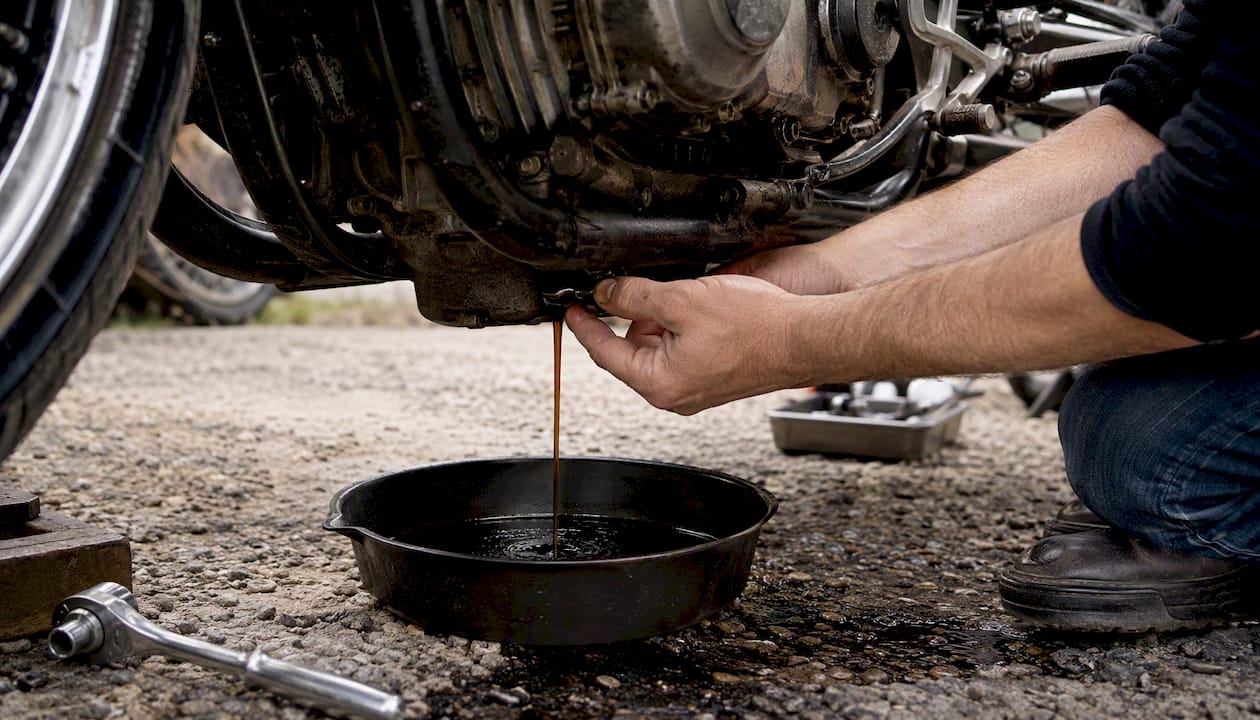
Pro Tip: When buying online, look for the JASO classification printed on the container image, not just listed in the product description text. Some listings carry the correct specification in the description but show a generic container image — always confirm the label before purchasing.
Sixrace: a reliable source for motorcycle oil in Central Europe

Riders in Central Europe who want verified product sourcing without uncertainty about authenticity will find Sixrace a practical option. The platform’s motor oil category uses make, model, and year filters, so you can confirm compatibility before adding anything to the basket. Tracked shipping and secure payments are standard, and the catalogue covers the main brands covered in this guide: Castrol POWER1 lines, Motul 5000/5100/7100, and Liqui Moly across multiple viscosity grades.
Checkout checklist when ordering from Sixrace:
- What oil does my motorcycle need? Complete guide
- Differences in the lubrication of passenger cars and motorbikes | Castrol UK & Ireland
- SUZUKI-JASO-Standard-Sheet_EN.pdf
- How to Choose the Right Engine Oil | Plus ONE | Motorcycle Aftersales | Honda Global
- The Complete Guide to Choosing Motorcycle Engine Oil — Valvoline™ Global Europe - EN
- How To Select The Correct Motorcycle Oil — Cycle News
- Car engine oil vs motorcycle engine oils — Global Formulation
Sixrace also stocks spray cleaners and lubricants and a broad range of consumables for riders who want to complete a full service order in one place. To claim your reserved discount on motorcycle oils and accessories, visit the Sixrace discount page and apply it at checkout.
Key takeaways
For most wet-clutch 4-stroke motorcycles, 10W-40 JASO MA2 full synthetic is the correct starting specification, but the owner’s manual overrides every general recommendation.
| Point | Details |
|---|---|
| Check the owner’s manual first | The manual specifies the exact SAE grade and minimum JASO/API rating your engine requires. |
| Match JASO to clutch type | Wet-clutch bikes need JASO MA, MA1, or MA2; JASO MB causes clutch slippage in these engines. |
| Choose base oil by usage | Full synthetic suits high-stress and performance engines; semi-synthetic covers most road bikes; mineral is appropriate for older engines where specified. |
| Verify the label, not just the listing | The JASO classification must appear on the container itself, not only in the product description text. |
| Use Sixrace’s model filters | Sixrace’s motor oil category lets you filter by make, model, and year for verified compatibility before purchase. |
A practical note on buying motorcycle oil in Europe
The volume of motorcycle oil products available in Central Europe is genuinely large, and the technical terminology can make selection feel more complicated than it needs to be. In practice, the decision reduces to three verified facts: what your manual specifies, whether the container carries the correct JASO mark, and whether you are buying from a source that stocks genuine product.
What riders consistently underestimate is the importance of drain interval adherence over brand loyalty. Even a premium full-synthetic oil loses shear stability and accumulates combustion by-products over time. Changing on schedule with a mid-range oil that meets your specification will protect your engine more reliably than extending intervals with the most expensive product on the shelf.
Sixrace’s model/year compatibility filters are a practical tool for riders who want to confirm they are ordering the right product for their specific bike rather than relying on a generic grade recommendation. The consumables section covers oil, filters, and related maintenance items in a single order, which simplifies the process for riders who service their own machines.
Further reading and technical sources
The following sources were used to compile this guide and are worth consulting directly for manufacturer-specific guidance and technical standards verification.
- JASO MA vs MB classifications: Oil Specifications — JASO MA / JASO MB — detailed explanation of friction class differences and clutch slippage risk
- Viscosity selection and drain intervals: Gandoil — What oil does my motorcycle need? — grade mapping by usage and climate
- Triangle of compromise and car vs motorcycle oil: Castrol UK — Differences in lubrication of passenger cars and motorbikes
- JASO T 903 container marking rules: Suzuki Canada — JASO Standard Sheet (PDF)
- Honda owner’s manual guidance: Honda Global — How to Choose the Right Engine Oil
- Synthetic vs mineral and drain interval trade-offs: Valvoline Global Europe — Complete Guide to Choosing Motorcycle Engine Oil
- Manufacturer spec adherence and oil type by usage: Cycle News — How to Select the Correct Motorcycle Oil
- Shared sump design and car oil risks: Global Formulation — Car engine oil vs motorcycle engine oils
 Italiano
 Deutsch
 Français
 Español
 English
 Polski